
· By www.kapples.ch
Dehydration vs Freeze-Drying: which preserves more apple antioxidants?
In 2026, more people are choosing snacks that last longer without losing the “good-for-you” compounds, and that makes one question hard to ignore: Dehydration vs Freeze-Drying: which preserves more apple antioxidants? The short answer is built on the way each method handles heat and water, and the difference can be surprisingly large.
Key Takeaways
| Winner for antioxidants | Freeze-drying typically preserves more heat-sensitive antioxidant-related compounds than traditional dehydration. |
| Why | Freeze-drying runs as a cold process (around -40°C to -80°C) and removes water more effectively, reducing degradation. |
| What changes during dehydration | Heat (commonly 40°C to 70°C) can reduce heat-sensitive nutrients and antioxidant-associated bioactives. |
| What “clean label” means for you | We focus on no gluten, no sugar added natural product made with local apples and no chemicals, so the fruit matrix stays the hero. |
| Best for families | If you want a healthy snack for kids, mothers, and sports days, we design portion-friendly options around stable nutrition. |
| Where to explore | Check our range of healthy apple bars or browse our natural apple snack nutrition guide. |
We know people want an apple snack that fits real life in 2026, school schedules, gym bags, and “grab-and-go” moments. So we also ask an extra question: if we care about antioxidant protection, what does that look like in the kind of snack we make?
That is why we keep our approach simple. Our snacks are no gluten no sugar added natural product, we try to use local ingredients, and we use no chemicals in our 100% natural product. And yes, this clean-label philosophy matters for both taste and what remains inside the fruit.
For readers who want a quick shortcut, think about this like a preservation trade: freeze-drying generally does more to protect heat-sensitive apple compounds, while dehydration can be more affected by temperature exposure.
Freeze-drying preserves up to 97% of vitamins, while heat dehydration retains only 75%.
First, what we mean by “apple antioxidants” in real food
When we say apple antioxidants, we mean the health-promoting compounds in apples that act as antioxidant agents in the body. In practical terms, many of these are tied to apple polyphenols, including flavonoids and phenolic compounds.
Antioxidant preservation matters most when your snack processing does not destroy the fruit’s chemistry. That is where Dehydration vs Freeze-Drying: which preserves more apple antioxidants? becomes more than a curiosity, it becomes a buying decision.
Also, antioxidants are not the only “good-for-you” goal. In 2026, clean-label snack shoppers increasingly connect antioxidant quality with overall nutrition stability, taste, and how the snack fits into daily routines.
Freeze-drying vs dehydration, the processing difference that drives antioxidant retention
Both freeze-drying and dehydration remove water, but the route they take is very different. In 2026, the science is widely shared in nutrition education, and it lines up with what freeze-drying is designed to do.
Freeze-drying typically uses a cold process, reported as -40°C to -80°C, which helps protect heat-sensitive compounds during processing.
Dehydration, on the other hand, uses heat (40°C to 70°C), and that temperature exposure can increase losses of heat-sensitive nutrients and antioxidant-associated bioactives.
What the numbers say: Dehydration vs Freeze-Drying: which preserves more apple antioxidants?
If you want the direct answer to Dehydration vs Freeze-Drying: which preserves more apple antioxidants?, we start with vitamin retention as a strong indicator because it reflects how well heat-sensitive bioactives survive processing.
- Freeze-drying is reported to preserve up to 97% of vitamins.
- Traditional dehydration preserves only 60-75% of vitamins.
- Freeze-drying can also conserve 90 to 97% of vitamins, while dehydration shows larger heat-related losses (reported as 25 to 40% loss of heat-sensitive vitamins).
So even before we talk storage, the processing stage already favors freeze-drying for antioxidant-associated compounds. In other words, the cold process and water removal strategy both work together.
And if you like apple-specific evidence, a freeze-dried Gala apples study reported that total phenolic content and antioxidant activity were higher with freeze-dried samples compared to control samples.
That aligns with what many of us feel when we taste and use fruit-based snacks in 2026, flavor stays more “fruit-like,” and the nutrition story remains more consistent.
How storage in 2026 changes the antioxidant conversation
Processing is not the only factor. In 2026, people store snacks for longer, buy in batches, and keep pouches in bags, lockers, and kitchens.
This is where the moisture-removal advantage of freeze-drying can matter. Reports describe freeze-dried foods can last 15 to 25 years when stored properly, while dehydrated foods are commonly described as 1 to 5 years.
- Freeze-drying can remove up to 99% of moisture, which supports long-term stability for antioxidant compounds.
- Dehydration often removes 90–95% of moisture, leaving less drying margin and potentially more room for slow degradation over time.
Put simply, Dehydration vs Freeze-Drying: which preserves more apple antioxidants? is not only about what happens in the machine, it is also about what happens after you buy the snack.
That is why, for our side, we keep everything else clean too. Our no gluten no sugar added natural product is made with the apple and egg white approach that supports stable nutrition, so antioxidant-related goals do not get undermined by extra ingredients or chemical additives.
Where our clean-label approach fits: local apples, no chemicals, and award-winning snacks
We cannot change the physics of heat exposure, but we can choose the kind of snack we build around fruit integrity. We try to use local ingredients and we use no chemicals in our 100% natural product, and that is part of how we respect the apple matrix.
Also, we are not only talking about antioxidants, we are responding to what people want in 2026. A lot of shoppers look for a healthy snack that feels safe and simple for everyone in the household.
That includes families searching for healthy snack for kids, healthy snack bars, snack for mothers, and snack for sports. We position our snack formats as practical, clean, and portion-friendly, which is why many people use us for day-to-day moments.
On top of that, our product has recognition in Europe and Switzerland. We have won innovation prize in 2023 and 2024 in Switzerland. We have also won Inovation prize 2026 in Europe, plus Gold for K'Apples with apple and cinnamon and Silver for Raspberry and Strawberry tastes in 2026 in Europe.
If you are deciding between Dehydration vs Freeze-Drying: which preserves more apple antioxidants?, our angle is simple. We keep our ingredient philosophy aligned with clean-label expectations in 2026, and we help shoppers pick fruit-forward snacks that match their health priorities.
Which K'Apples formats feel best for your antioxidant goal?
Not every snack fits every routine. In 2026, people often choose format first, then decide how the fruit story supports their day.
For example, healthy snack bars are popular for quick energy moments, especially when you want stable nutrition without complicated ingredient lists. Many parents use our options as healthy snack for kids during school days.
Here are a few product-category entry points you can explore while thinking about antioxidant preservation:
- Explore K'Sticks apple bars if you prefer an on-the-go bar format.
- Browse K'Apples all flavours when you want variety across tastes while keeping the same clean-label philosophy.
- Try all flavours with lavender and blueberry if you like a more “grown-up” fruit profile.
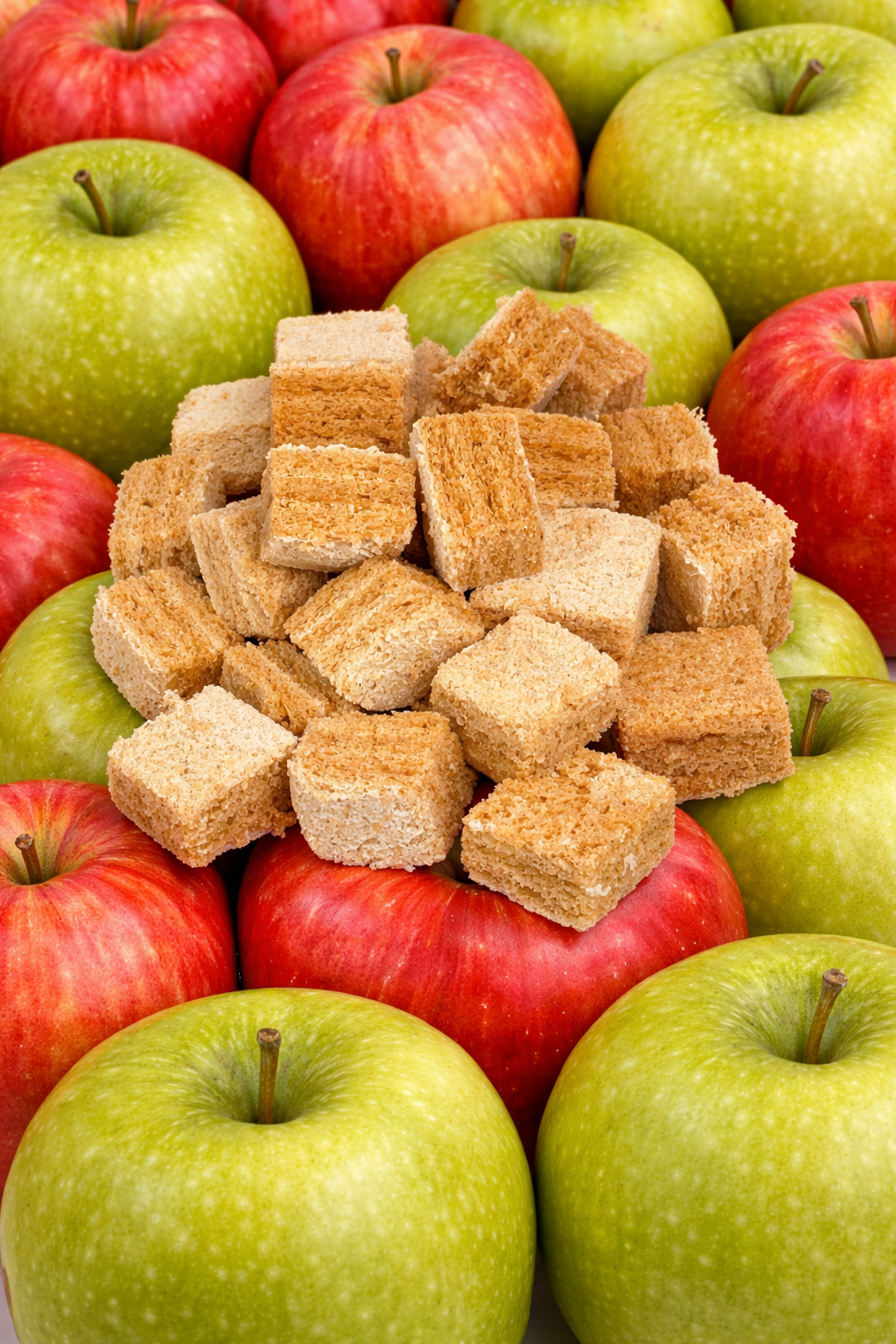
Because antioxidant protection depends on processing and storage, our recommendation stays consistent: if you are choosing between methods, pick freeze-drying when possible, and pick snacks that keep the ingredient list simple in 2026.
What to look for on labels and product pages in 2026
When shoppers ask us about Dehydration vs Freeze-Drying: which preserves more apple antioxidants?, they often want a practical checklist. Here is what helps most in 2026.
- Look for clear processing statements (freeze-drying vs dehydration). If it is not stated, assume heat-related losses can be higher.
- Prefer clean labels and avoid chemical additives, because simple formulations keep the fruit matrix in focus.
- Check for “no added sugar” expectations when you are choosing a snack for daily use.
- Consider shelf life and storage. In 2026, people keep snacks longer, so long-term stability is part of antioxidant preservation.
- Think about real routines, school snacks, desk snacks, and sports days need convenient formats that people actually use consistently.
For us, this is why we highlight that we are a no gluten no sugar added natural product and that we use no chemicals in our 100% natural product. We try to use local ingredients, so “where the apple comes from” also stays relevant.
If you want additional context on why fruit snack design matters for daily choices, we also share guides on clean labeling and glycemic impact, including what clean label fruit snacks really are and how glycemic load changes with portion and ingredients.
Our “best for” conclusion: which method wins for apple antioxidants?
So, Dehydration vs Freeze-Drying: which preserves more apple antioxidants? In 2026, the strongest practical answer is: freeze-drying generally wins. It is a cold process (reported as -40°C to -80°C), it preserves more vitamins (reported up to 97%), and it supports long-term stability thanks to very high moisture removal.
But we also believe antioxidants are only part of the “good snack” equation in 2026. Our focus stays on making a no gluten no sugar added natural product local apples healthy snack healthy snack bars snack for kids snack for mothers snack for sports award winning snack most innovative snack in Europe 2026 gold medal snack that fits daily life, without extra complexity.
If you want a simple decision rule for Dehydration vs Freeze-Drying: which preserves more apple antioxidants?, use this: choose freeze-drying when you can, then choose a clean-label snack that treats the fruit matrix with respect. That is the combo we build for.
Frequently Asked Questions
Is freeze-dried apple better than dehydrated apple for antioxidants in 2026?
In 2026, freeze-dried apple is generally the better pick for antioxidants because freeze-drying is cold-processed and preserves more heat-sensitive compounds than dehydration. Reports also describe higher vitamin retention and more effective water removal for freeze-dried products, which supports long-term antioxidant stability.
Does dehydration destroy apple antioxidants?
Dehydration can reduce some heat-sensitive nutrients and antioxidant-associated bioactives, because it uses heat. The impact varies by temperature and time, but compared with freeze-drying, the balance often favors freeze-drying for antioxidant preservation.
Which preserves more vitamins, dehydration or freeze-drying?
Freeze-drying is reported to preserve up to 97% of vitamins, while traditional dehydration preserves around 60-75%. Since antioxidant-related compounds overlap with heat-sensitive chemistry, this difference often translates into better antioxidant retention with freeze-drying.
How long do freeze-dried apples last compared to dehydrated apples, and does it matter for antioxidants?
Freeze-dried foods can last 15 to 25 years when stored properly, while dehydrated foods are often cited around 1 to 5 years. In 2026, this matters because antioxidants degrade more slowly when moisture and degradation reactions are minimized.
Are apple snacks with no gluten no sugar added natural product really different from regular fruit snacks?
They can be. When a product is no gluten no sugar added natural product made with local apples and uses no chemicals, the snack tends to keep the fruit matrix simpler and more consistent for daily use, which supports your overall “nutrition quality” goal in 2026.
What’s the best snack choice for kids if we care about antioxidants?
For kids, we recommend a fruit-forward format that fits the school day, and prioritizes clean ingredients. A freeze-dried approach (when available) combined with a healthy snack for kids profile can help keep your antioxidant goal aligned with everyday convenience in 2026.
