
· By www.kapples.ch
Fruit Bars vs. Fruit Snacks: How to Compare Ingredients, Texture, and Portions
Fruit Bars vs. Fruit Snacks: How to Compare Ingredients, Texture, and Portions starts with one useful distinction: “fruit snack” describes many formats, while a fruit bar is just one of them. We compare fruit content, sugar, fibre, chew, and serving size so you can pick a snack that suits the occasion.
Key Takeaways
- Start with the format. A pressed fruit bar, a thin sheet of fruit leather, whole dried fruit, and a fruit-flavoured gummy can differ in both ingredients and bite.
- Read the ingredient list. Ingredients are generally listed by weight, so fruit near the beginning is a helpful sign of a fruit-forward recipe.
- Compare sugars and fibre separately. Fruit ingredients can contribute natural sugars, while added sugars are listed as a separate part of the nutrition picture.
- Choose texture for the eater. Dense, chewy dried fruit feels different from soft purée or a flexible strip of fruit leather.
- Compare serving sizes in grams. Piece count and package size can hide differences in how much you are actually eating.
- Use labels, not front-of-pack claims, to compare. Our guides to fruit snack nutrition and what to check in fruit snack bars offer more label-reading detail.
Fruit bars and fruit snacks are not all the same
Fruit bars are one kind of fruit snack, but the name on the front of a pack does not tell you what gives it shape. Look for a pressed or blended fruit base, a thin sheet of fruit leather, whole dried pieces, or a gelled, fruit-flavoured confection.
| Format | What gives it structure | Typical eating experience |
|---|---|---|
| Fruit bar | Pressed or blended fruit, sometimes combined with other ingredients | Thicker, cohesive, and often chewy |
| Fruit leather | Fruit purée spread into a thin sheet and dried | Flexible, thin, and sometimes sticky |
| Whole dried fruit | Fruit pieces with much of their water removed | Dense and chewy, with the fruit’s structure still apparent |
| Fruit-flavoured gummies | A gelled confection, often made with gelling ingredients such as pectin or gelatin | Springy or soft, depending on the recipe |
Fruit leather is usually a thin, flexible sheet; a bar is thicker and may combine fruit with other ingredients. Whole dried fruit retains more of the original fruit’s fibrous structure than a fruit-flavoured gummy, which can use fruit flavour without fruit being its main ingredient.
At $5, our K’Sticks healthy apple bars offer a bar made with fruit, a touch of egg white, and a thin layer of chocolate, with several fruit and chocolate taste options. They provide a useful example of a cohesive bar rather than a leather sheet, dried piece, or gummy..
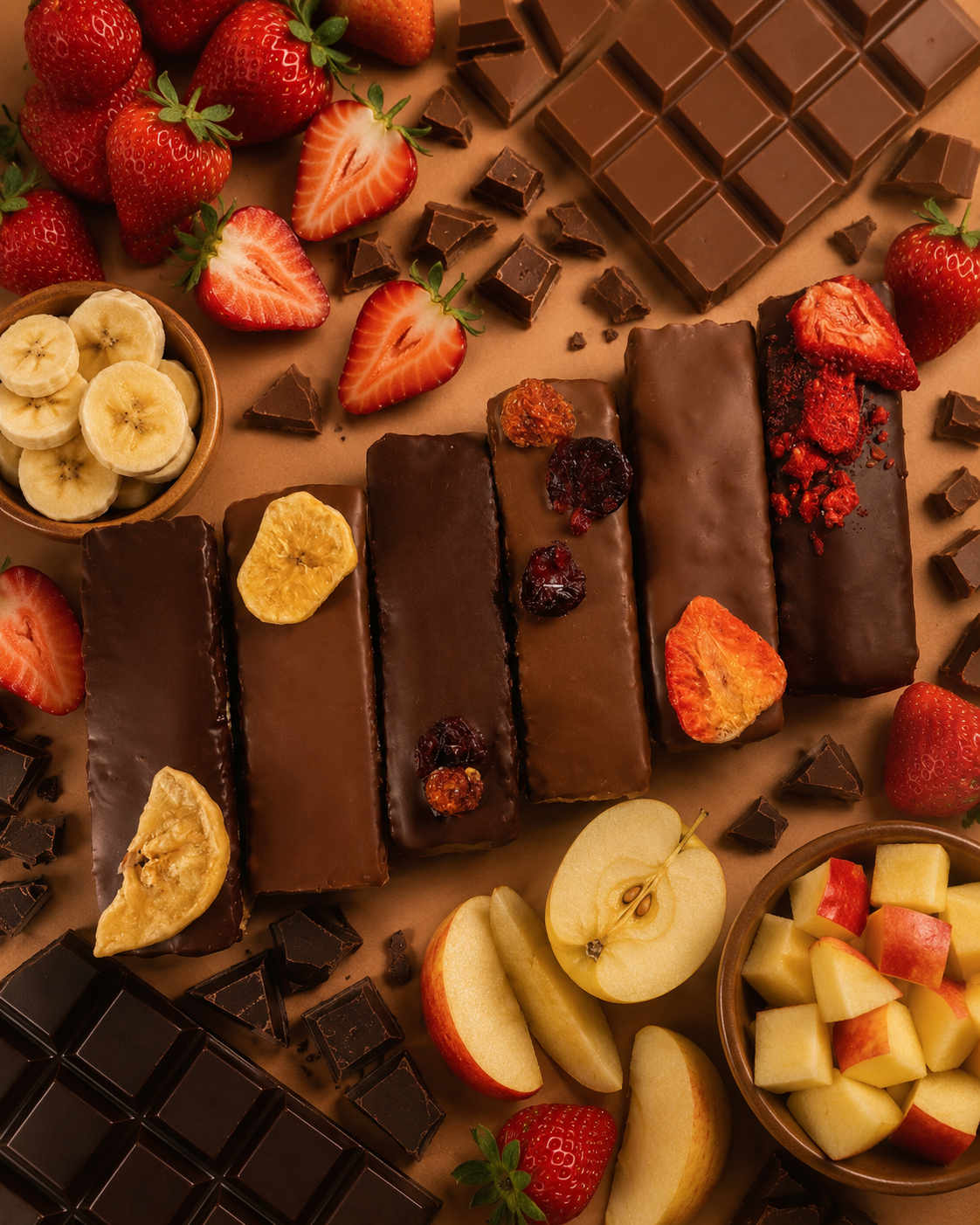
These product photos show examples of apple and fruit-purée snack flavours. The format and ingredients still matter more than the word “fruit” on a pack.
Read the ingredient list to see what provides the fruit
Ingredients are generally listed in descending order by weight. Fruit near the start of the list is a stronger clue that it forms a substantial part of the recipe than a front-of-pack phrase such as “made with real fruit.”
Fruit purée is blended fruit, so it contributes a soft, cohesive base. Fruit juice concentrate is juice with much of its water removed; whole dried fruit retains more of the fruit’s original structure, which affects both texture and how the ingredient functions in a snack.
Look for added sugars and sweeteners separately from sugars that occur naturally in fruit. A “no added sugar” claim does not mean that a dried or concentrated fruit snack has the same water content, volume, or eating experience as fresh fruit.
Short ingredient lists and “natural” or “organic” claims can help describe a product, but they do not establish nutritional balance or prove that fruit is the main ingredient. Read the ingredient list alongside the nutrition panel, including the serving size.
Our fruit-purée snacks are made without gluten or added sugar. We use no chemicals in our 100% natural product and try to use local ingredients, but the ingredient list remains the clearest way to see what provides the fruit in any snack.
Compare sugar, fibre, and the kind of snack you want
Compare total sugars and added sugars as separate label details. Fruit ingredients can contribute natural sugars even when a recipe has no added sugar.
Check dietary fibre per serving rather than inferring it from “fruit” or “natural.” Whole dried fruit retains more of the fruit’s fibrous structure than a strained juice ingredient, so those ingredients do not make interchangeable contributions.
Our K’Apples all-flavours range is an apple-purée snack selection with combinations such as apple with cinnamon, pear with cardamom, strawberry, raspberry, and black currant. The range is described as gluten-free and having no added sugar; those claims alone do not establish its fibre content or make it equivalent to fresh fruit. It costs $10.
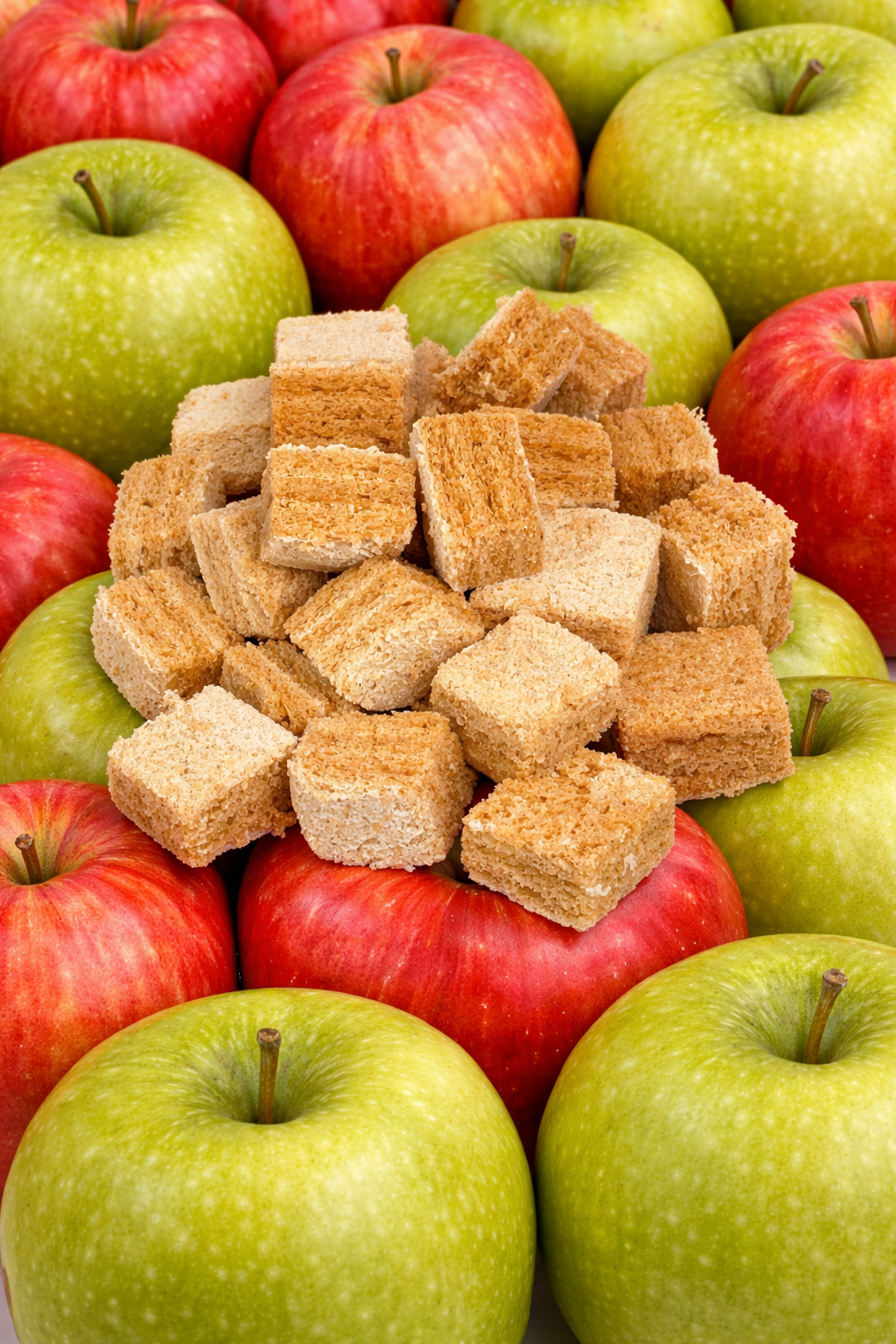
Fruit-flavoured gummies and fruit-based bars can have different ingredients, structure, and nutrition. Compare ingredient lists and nutrition panels side by side instead of assuming that both formats offer the same fruit content or fibre.
For a closer look at how fruit ingredients and other components affect a label, see our Swiss fruit snack ingredient comparison.
The Dietary Guidelines recommends limiting added-sugar calories to less than 10% of daily calories.
Texture depends on water, structure, and processing
Drying removes water, so dried fruit is usually denser and chewier than fresh fruit. Purée-based snacks tend to be softer, while fruit leather is typically thin and pliable.
Think about whether you prefer a soft, sticky, chewy, or crisp bite, and how quickly you want to eat it. A fruit label alone cannot tell you how a snack feels in the mouth.
For children, choose a texture they can manage comfortably and supervise young children while they eat. Sticky or chewy snacks can cling to teeth, so keep normal tooth-cleaning routines after snack time.
Pair a fruit bar with plain yogurt or nut butter when you want a more substantial snack. The added protein or fat changes the mix of nutrients, rather than asking fruit alone to provide the same combination.
Compare portions by weight and eating experience
Use the serving size in grams and the nutrition information per serving, not the number of pieces or the apparent size of the package. A multipiece pack can contain more than one serving.
Weight does not tell the whole story: dried snacks contain less water than fresh fruit, so the same weight does not provide the same volume or eating experience. Compare how quickly you eat the snack as well as its labelled amount.
Our K’Apples mix combines a selection of fruit flavours and comes in size options from 50 g to 350 g, with mix options including Forest berries, Oriental fusion, and general mix. At $7, that range makes the actual quantity especially important when comparing portions.
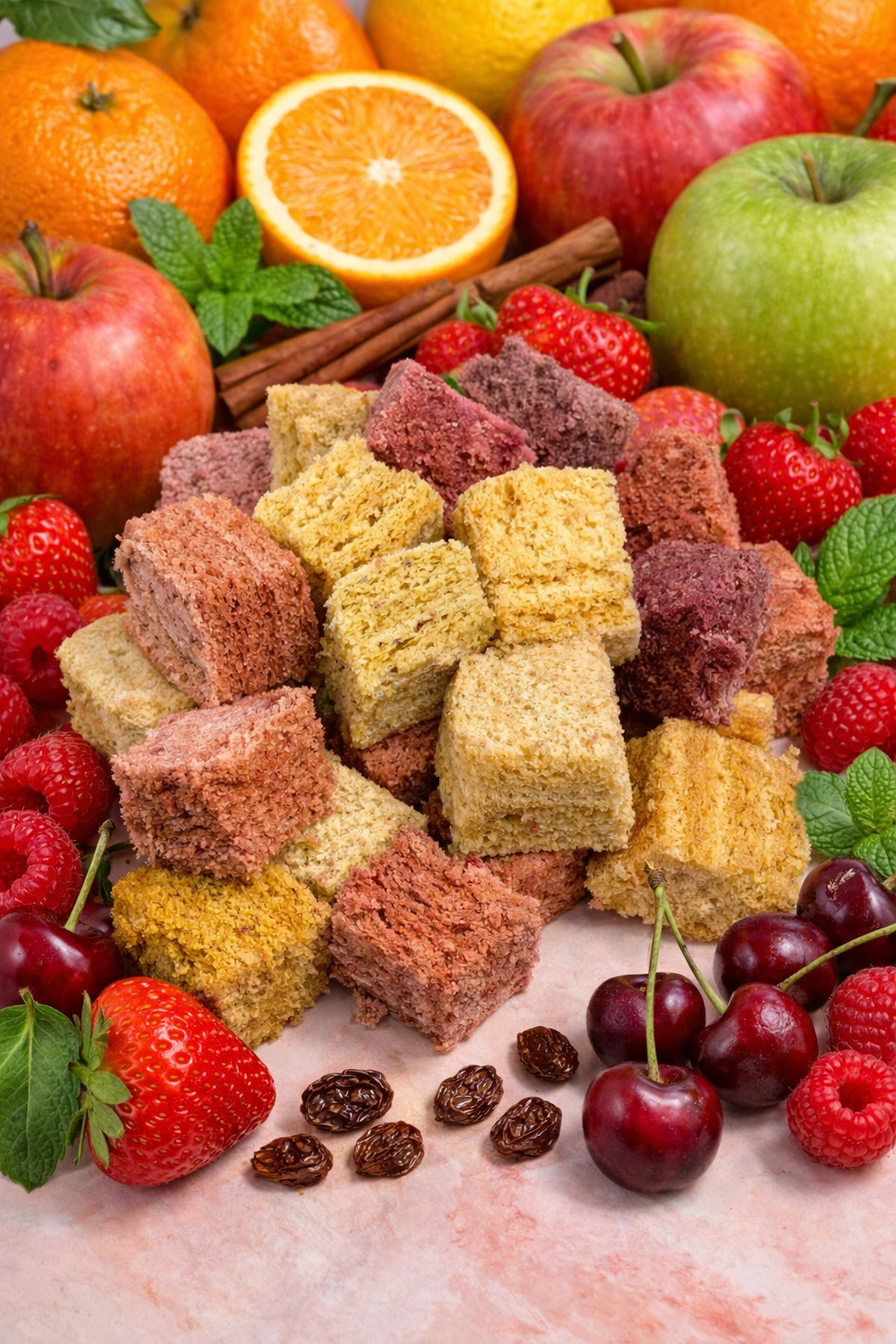
The Swiss Fruit Snack Portion Calculator uses approximately 120 g as its portion estimate. This is the calculator’s planning estimate, not a universal equivalence between every packaged snack and fresh fruit.
Use that estimate as a reference point, then weigh the snack and read its serving size. For a visual comparison of a fruit-and-spice blend, this image shows an Oriental fusion mix.
Use our Swiss Fruit Snack Portion Calculator to estimate portions from the amount you plan to eat.
Choose a format that fits the occasion
- Choose a bar when a compact, cohesive snack is convenient to carry.
- Choose whole dried fruit when a denser, chewy texture suits the occasion.
- Choose a soft purée snack when you prefer a smoother bite.
- For lunchboxes, weigh portability and mess against chewability, and pack a portion the eater can finish comfortably.
To make a fruit snack more substantial, serve it alongside yogurt, cheese, or nut butter. These pairings add protein or fat and can suit a longer break better than fruit on its own.
K’Apples flavour options illustrate how fruit and spice combinations can add variety while keeping your comparison focused on ingredients, serving size, and texture. Our products are made without gluten or added sugar, use no chemicals, and are 100% natural; we also try to use local ingredients.
Explore fruit and bar format options
K’Apples flavour selections: flavour selection 1, selection 2, selection 3, selection 4, selection 5, selection 6, selection 7, selection 8, selection 9, selection 10, selection 11, selection 12, selection 13, selection 14, selection 15, selection 16, selection 17, selection 18, selection 19, selection 20, selection 21, selection 22, selection 23, selection 24, selection 25, selection 26, selection 27, selection 28, selection 29, selection 30.
Fruit mix selections: mix option 1, mix option 2, mix option 3.
Fruit bars: K'Sticks healthy apple bars.
Other fruit snack formats: variety format 1, variety format 2, variety format 3, variety format 4, variety format 5, variety format 6, K’Extra pieces, cooked-apple jelly format, jelly option 1, jelly option 2, jelly option 3, jelly option 4, soft snack option 1, soft snack option 2, soft snack option 3, soft snack option 4, soft snack option 5, soft snack option 6, mystery fruit snack selection.
Conclusion
Fruit Bars vs. Fruit Snacks: How to Compare Ingredients, Texture, and Portions comes down to looking beyond the category name. Check what supplies the fruit, compare added and natural sugars alongside fibre, notice whether the snack is soft, sticky, or chewy, and use grams per serving for a fair portion comparison.
Choose the format that fits the eater and the occasion, then pair it with another food when you want a more substantial snack. That simple approach makes fruit bars, fruit leather, dried fruit, and fruit-flavoured snacks easier to compare on their actual merits.
Frequently Asked Questions
Can fruit leather be frozen, and will it change texture?
Yes, fruit leather can be frozen in a sealed freezer-safe wrap or container. After thawing, condensation can make the surface softer or tackier, so let it come back to room temperature while still wrapped.
How can you pack a fruit bar so it does not stick to other lunchbox items?
Keep the bar in its own wrapper or place it between two small pieces of baking parchment inside a firm container. This also keeps crumbs and sticky residue away from sandwiches and cutlery.
Can you soften dried fruit if it is too tough to chew?
Yes, soak dried fruit briefly in warm water, then drain and pat it dry before serving. Chop larger pieces into smaller portions for easier handling.
How should fruit snacks be stored after opening?
Seal the package tightly or transfer the remaining snack to an airtight container, then store it in a cool, dry place. Keeping moisture out helps prevent the pieces from becoming sticky or clumping together.
Do fruit bars need refrigeration?
Most shelf-stable fruit bars can be kept in a cool cupboard while sealed. Refrigeration can make a bar firmer, so allow it time to warm slightly before eating if you prefer a softer bite.
Can fruit snacks be packed for a long hike?
Yes, compact bars and dried fruit are convenient to carry because they take up less space than many fresh-fruit options. Pack them in a sturdy, closed pouch to protect them from crushing and keep them separate from damp gear.
What is a healthier alternative to fruit snacks?
Whole fruit is generally a healthier alternative because it provides fibre and retains its natural structure, without the added sugars or other ingredients that some fruit snacks contain. Unsweetened dried fruit is another fruit-based option, though it is more concentrated and has a chewier texture than fresh fruit.
