
· By www.kapples.ch
Fruit Snack Ingredient Glossary: What Common Label Terms Mean
This Fruit Snack Ingredient Glossary: What Common Label Terms Mean explains how to read fruit ingredients, sweeteners, texture agents and nutrition information together. We can use the front of a package to spot a flavor or claim, but the ingredient list and Nutrition Facts panel tell us more about what is inside.
Key Takeaways
- What does the ingredient list mean? It usually lists ingredients from greatest to least weight, not by how many times each ingredient appears. Our guide to reading snack ingredient labels explains how to scan it from top to bottom.
- What does fruit juice concentrate mean? It is juice with some water removed, and it may contribute flavor or sweetness. The term alone does not show how much whole fruit a snack contains.
- How are fruit puree and fruit juice different? Puree is thicker fruit pulp; juice is the liquid extracted from fruit. Check where either one appears in the list.
- What are pectin and gelatin used for? They can help set a fruit snack, but pectin is plant-derived and gelatin is animal-derived. Our food label dictionary covers more ingredient functions.
- How do we spot sweeteners? Scan the whole ingredient list for names such as glucose syrup, dextrose and concentrate, then compare total sugars with added sugars. See our guide to sugar-free labels and sweeteners.
- How do we compare fruit snack claims? Match front-of-pack language with the ingredient list, serving size and nutrition information. Our ingredient comparison table and clean-label snack guide offer more label-reading context.
Start with the ingredient list
An ingredient list names what goes into a food and, in many countries, orders ingredients from greatest to least weight. An ingredient near the beginning therefore makes up more of the product by weight than one near the end; the list is not ranked by ingredient count.
Read the ingredient list alongside the serving size, Nutrition Facts panel, net quantity and allergen information. These are separate but complementary parts of a label, and their exact requirements and layouts vary by country.
A fruit name or picture on the front is a clue about flavor, not proof of how much fruit the snack contains. Compare the front with the ingredient list and nutrition information, a practical approach also covered in our guide to spotting sugar in fruit snacks.
Fruit juice, puree, concentrate and extract
Fruit puree is fruit crushed or blended into a thicker pulp, while fruit juice is the liquid extracted from fruit. Puree usually retains more pulp and texture, so the two terms describe different forms of fruit.
| Label term | What it describes | What it does not establish |
|---|---|---|
| Fruit puree | Crushed or blended fruit pulp. | Its position in the ingredient list still matters when judging how much is used. |
| Fruit juice | Liquid extracted from fruit. | The word alone does not establish the snack’s overall fruit content. |
| Fruit juice concentrate | Juice with some water removed, making it more concentrated. | It does not prove the snack contains a substantial amount of whole fruit. |
| Fruit extract | A component taken from fruit, often used for flavor or other specific components. | The word extract does not establish a substantial amount of fruit in the snack. |
Concentrate can add flavor or sweetness, so its presence alone does not tell us how much whole fruit a snack contains. Fruit extracts have their own purpose, but the term does not tell us that a snack contains a large quantity of the source fruit.
For a varied assortment of fruit snack flavors, K'Apples mix has size options from 50 g to 350 g, with mix choices including Forest berries, Oriental fusion and general mix. It suits this section because it shows why a flavor assortment and the ingredient details are distinct pieces of information; the mix is priced at $7.
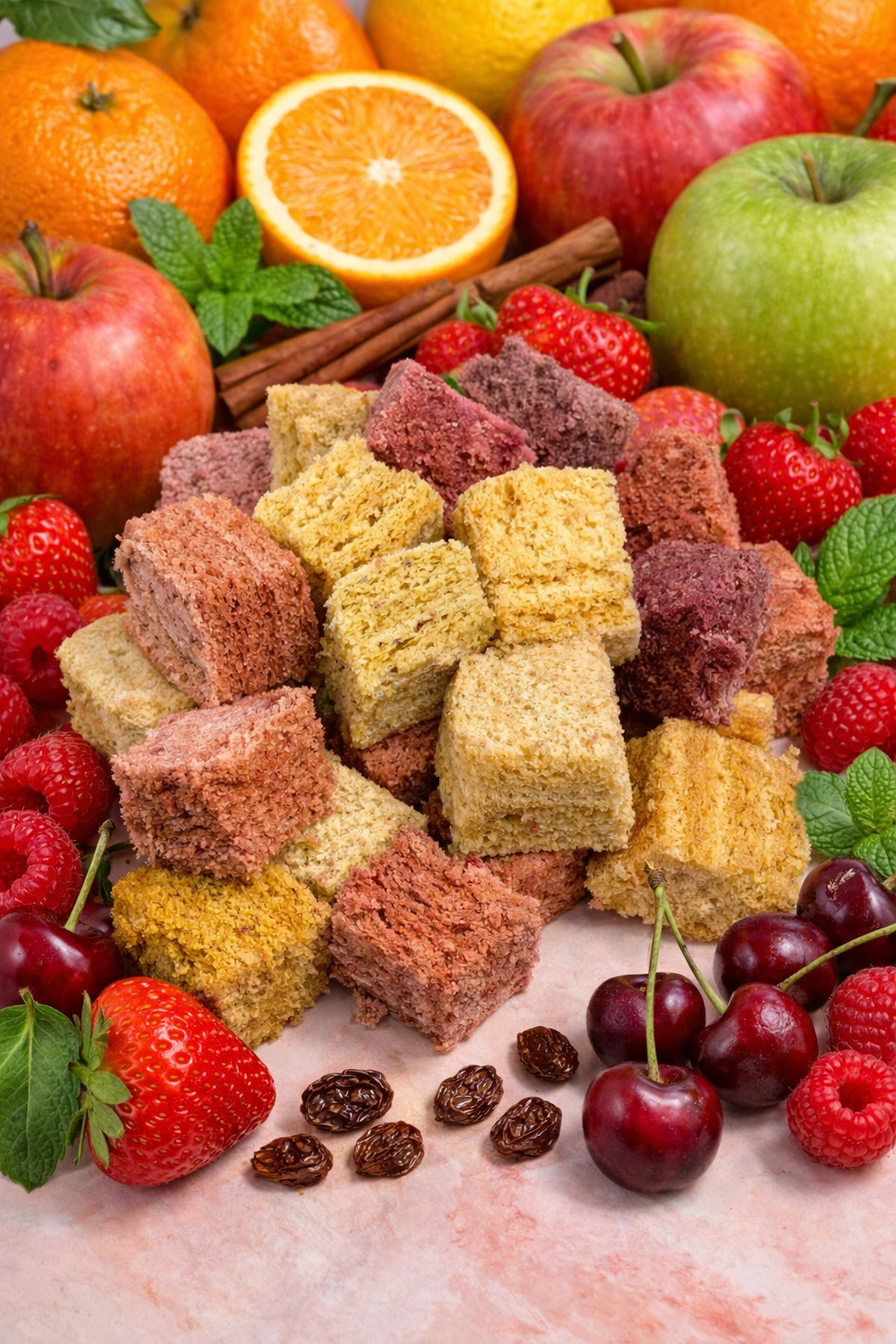
To assess a made-with-real-fruit claim, identify the fruit ingredients and their positions in the list, then use the nutrition panel to understand sugars and serving size. A fruit picture or flavor name cannot supply that information by itself.
Sugar names and sweetener clues
Scan the full ingredient list for sweeteners such as sugar, corn syrup, glucose syrup, dextrose and fruit juice concentrate used for sweetness. Several sweeteners can appear separately, so checking only the first few entries can miss other sources.
Total sugars on a Nutrition Facts panel can include sugars naturally present in fruit ingredients. Where the label provides added sugars, that amount identifies sugars added during processing; fruit-based ingredients do not automatically mean a snack has no added sugars.
In the United States, Rutgers Cooperative Extension of Cape May County explains that sugar free means one serving contains less than 0.5 grams of sugar from either natural sugar or added sugar. Interpret the claim within its jurisdiction and alongside the serving size and complete nutrition panel.
The term covers sugar from natural and added sources in one serving.
No added sugar and sugar free are not interchangeable. A product with no sugar added can still contain sugars from fruit ingredients, while the sugar-free claim refers to the amount of sugar per serving under the applicable rules.
Pectin, gelatin, starches and acids
Pectin is a plant-derived gelling fibre commonly used to set fruit jellies. Gelatin is an animal-derived protein that can form a soft, elastic gel, so people avoiding animal-derived ingredients should look for it by name in the ingredient list.
Starches can thicken a mixture or contribute to a chewy texture, and labels can name different kinds of starch. Citric acid and other food acids add tartness and help control acidity; their presence does not show how much fruit a snack contains.
For dietary preferences and sensitivities, read named ingredients and declared allergens, as well as any applicable cross-contact statement. The rules and wording for allergen declarations differ by location.
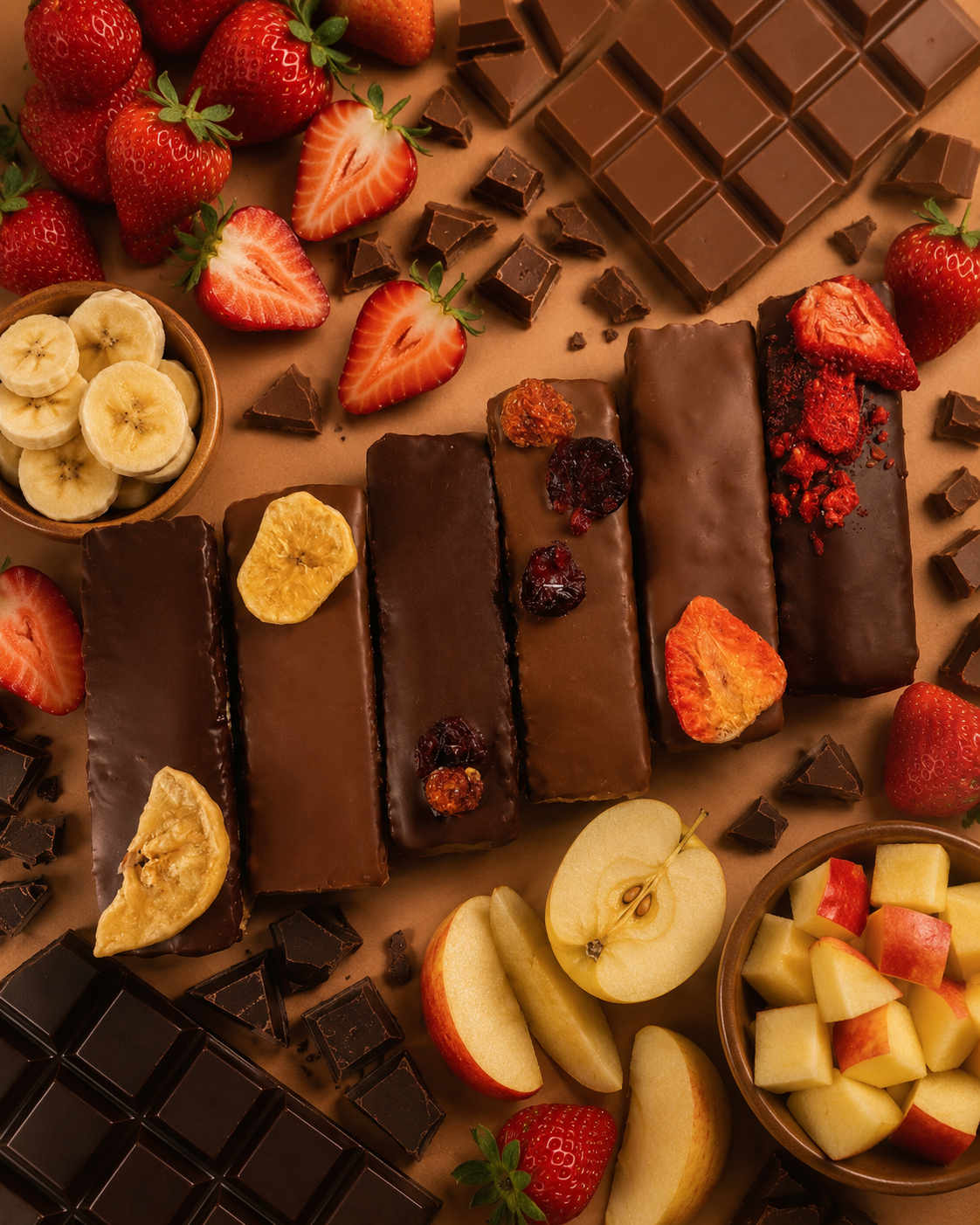
Fruit bars offer a useful example of why it helps to identify each named component rather than lumping texture ingredients together. K'Sticks. Healthy apple bars are described as made with fruits, a touch of egg white and a thin layer of chocolate, with listed flavors including apple, strawberry, banana and forest berries and specified chocolate options; they cost $4. This combination makes the bars a concrete example of a multi-component fruit snack label.
Natural flavors, colors and front-of-pack language
Natural flavor describes a flavoring ingredient under applicable food rules, but the phrase alone does not identify a fruit source or tell us how much fruit the snack contains. Likewise, colors can come from different sources, so look for the named color or coloring ingredient instead of inferring its source from the package image.
Words such as natural and healthy do not provide a complete account of a snack’s ingredients or nutrition. Judge them alongside the full list and Nutrition Facts panel, and compare made-with-real-fruit language with the position of fruit ingredients, sugars and serving size.
We make our products without gluten or added sugar, try to use local ingredients, and use no chemicals. These are product claims; as with any front-of-pack statement, readers can use the ingredient list and nutrition information to understand the specific food described.
Awards are another kind of front-of-pack claim, not a substitute for ingredient information.
Use serving size to compare nutrition
Nutrition values are reported per stated serving, so compare serving sizes before comparing calories, total sugars or added sugars between snacks. A package may contain more than one serving; multiply the per-serving values by the number of servings eaten to estimate the amount consumed.
Reduced sugar describes a comparison with a reference product, not a synonym for low sugar. Rutgers Cooperative Extension of Cape May County states that a reduced-sugar product contains at least 25% less sugar than the regular product.
When using a reduction claim, identify the regular product used for comparison and consider the serving size shown for each. Then compare the sugar amounts on the panels, since the claim describes a relative difference rather than the total sugars in a serving.
This fruit snack label glossary works best as a sequence: identify ingredients, understand their roles, then interpret the nutrition values using the stated serving. That approach keeps flavor language, ingredient functions and nutrition claims in their proper context.
Frequently Asked Questions
Why can the same ingredient have different names on labels in different countries?
Countries can set different rules for ingredient names, additive names and language on packaging. A label may use a locally accepted common name or a technical name for the same substance.
Are processing aids always listed in a fruit snack’s ingredients?
No. Some jurisdictions exempt certain processing aids from ingredient declarations when they are removed or remain only at a level that has no technical effect in the finished food. The exemption criteria vary by location.
Does a longer ingredient list automatically mean a snack is less healthy?
No, ingredient count alone does not describe nutritional value or the purpose of each component. A longer list can reflect a more complex recipe, so consider the ingredients’ functions and the nutrition panel rather than counting entries.
What should I consider when choosing fruit snacks for a toddler?
Choose a texture and piece size suited to the toddler’s chewing skills, and have the child eat seated and supervised. Avoid hard, round, sticky or oversized pieces that can create a choking hazard.
What does percent Daily Value tell me on a Nutrition Facts label?
On U.S. labels, percent Daily Value shows how much a nutrient in one serving contributes to a daily reference amount. It helps put the amount in context, while the grams per serving show the actual quantity.
Does a fruit snack count as a serving of fruit?
That depends on the dietary guidance used and the snack’s fruit content and form. A fruit flavor or package image does not by itself establish that the snack meets a particular fruit-serving definition.
See also: K Extra New Photo, K'Apples. All the flavours.
Conclusion
This Fruit Snack Ingredient Glossary: What Common Label Terms Mean gives us a practical way to interpret fruit ingredients, sweeteners, texture agents and front-of-pack language. Read the ingredient list for composition and order, then use serving size and the Nutrition Facts panel to understand sugars and compare products with care.
