
· By www.kapples.ch
Is gentle dehydration a better choice than heavily processed fruit snacks for preserving fibre?
In 2026, the “healthy fruit snack” shelf looks louder than ever, but the numbers still tell the same story, processed foods supply far more dietary fiber than we think, while they also tend to bring along added sugars and other processing baggage. Is gentle dehydration a better choice than heavily processed fruit snacks for preserving fibre? We say yes, when the process respects the fruit’s natural structure instead of rebuilding it with concentrates and chemicals.
Key Takeaways
| Question readers ask | Short answer |
| Is gentle dehydration better for preserving fibre than heavily processed fruit snacks? | Usually, because drying can keep much of the fruit’s naturally-occurring fiber intact, while heavily processed snacks often lose fiber integrity or dilute it with added ingredients. |
| How much fibre should we aim for in 2026? | WHO recommends at least 25 grams of naturally-occurring dietary fibre as found in foods for people older than 10 years. |
| Do “apple chips” keep the same fibre as fresh apples? | WebMD notes dehydrated apple chips can have the same calorie, protein, fat, carbohydrate, fiber, and sugar content as the fresh fruit (example level). |
| Why do ultra-processed fruit snacks often miss the fibre target? | Ultra-processed foods tend to be lower in fiber, micronutrients, and phytochemicals compared with less processed foods. |
| What does clean label mean in practice? | Minimal ingredients you could find in a kitchen, minimal processing, and a clear two-ingredient logic. This is exactly what we build into our Definitive Guide to Clean Label Fruit Snacks. |
| Is gluten-free automatically fibre-friendly? | No. Being gluten-free is separate from preserving fibre. You still need gentle processing and an honest ingredient list. |
If you have ever reached for a “healthy” fruit bar to add fibre, then checked the ingredients and felt disappointed, you are not alone. In 2026, fibre is a target, but processing choices decide whether that fibre stays biologically meaningful or gets turned into a sweet snack with a fibre story on the label.
Processed foods supply far more dietary fiber than we think, yet heavily processed fruit snacks are also where added sugars often cluster. So the real question becomes simple, is gentle dehydration a better choice than heavily processed fruit snacks for preserving fibre, and keeping the rest of the snack clean too?
Processed foods supply far more added sugar than dietary fiber.
What “preserving fibre” actually means in 2026
Preserving fibre is not only about the number on a label. It is about keeping the apple’s or fruit’s natural structure intact so fibre can do what it is meant to do in the gut. Full stop.
Fibre in fruit is naturally occurring dietary fibre, it is wrapped inside a cellular matrix. When that matrix is aggressively broken, rebuilt, or diluted, the fibre experience changes. You can still end up with something “fruit-flavoured”, but not the same fibre integrity.
In 2026, WHO still gives us the practical benchmark, everyone older than 10 years should aim for at least 25 grams of naturally-occurring dietary fibre as found in foods. So the snack has to genuinely contribute.
Gentle dehydration vs heavily processed fruit snacks, the real trade-off
Is gentle dehydration a better choice than heavily processed fruit snacks for preserving fibre? The clearest reason is that gentle dehydration focuses on water removal, not on reformulation. When we dry fruit in a controlled way, the fibre remains part of the original fruit structure.
WebMD highlights that dehydrating (example: apple chips) can keep the same fibre content as fresh fruit. That is the key difference to heavily processed fruit snacks that often include added sugars, starches, concentrates, and other ingredients that can shift the fibre story.
- Gentle dehydration: preserves fruit identity and fibre integrity by concentrating the original fruit, mainly by removing water.
- Heavily processed fruit snacks: often rebuild texture and taste with added ingredients, which can dilute fibre quality and push the product toward sweetness.
Why ultra-processed “fruit snacks” often miss the fibre goal
Let’s be direct. Ultra-processed food tends to be lower in fibre, micronutrients, and phytochemicals. That matters because fibre does not work alone, it interacts with fruit compounds like pectin and the cellular matrix.
So when a snack leans on heavy processing to create a soft bite or a candy-like sweetness, it is usually trading away something. The fibre may become less satisfying, and the snack can become easier to overeat.
In 2026, parents and athletes notice this fast. They want a healthy snack bars option that supports digestion and energy, not a sugar-first treat. And that is exactly why we focus on clean label and fibre integrity, not just on “fruit flavour”.
What we do differently, clean label, no gluten no sugar added natural product
This is exactly the philosophy behind every single product we make at Kapples, a natural product that respects the fruit, keeps the fiber, and adds nothing unnecessary. We are without gluten or sugar added. We try to use local ingredients and we use no chemicals in our 100% natural product.
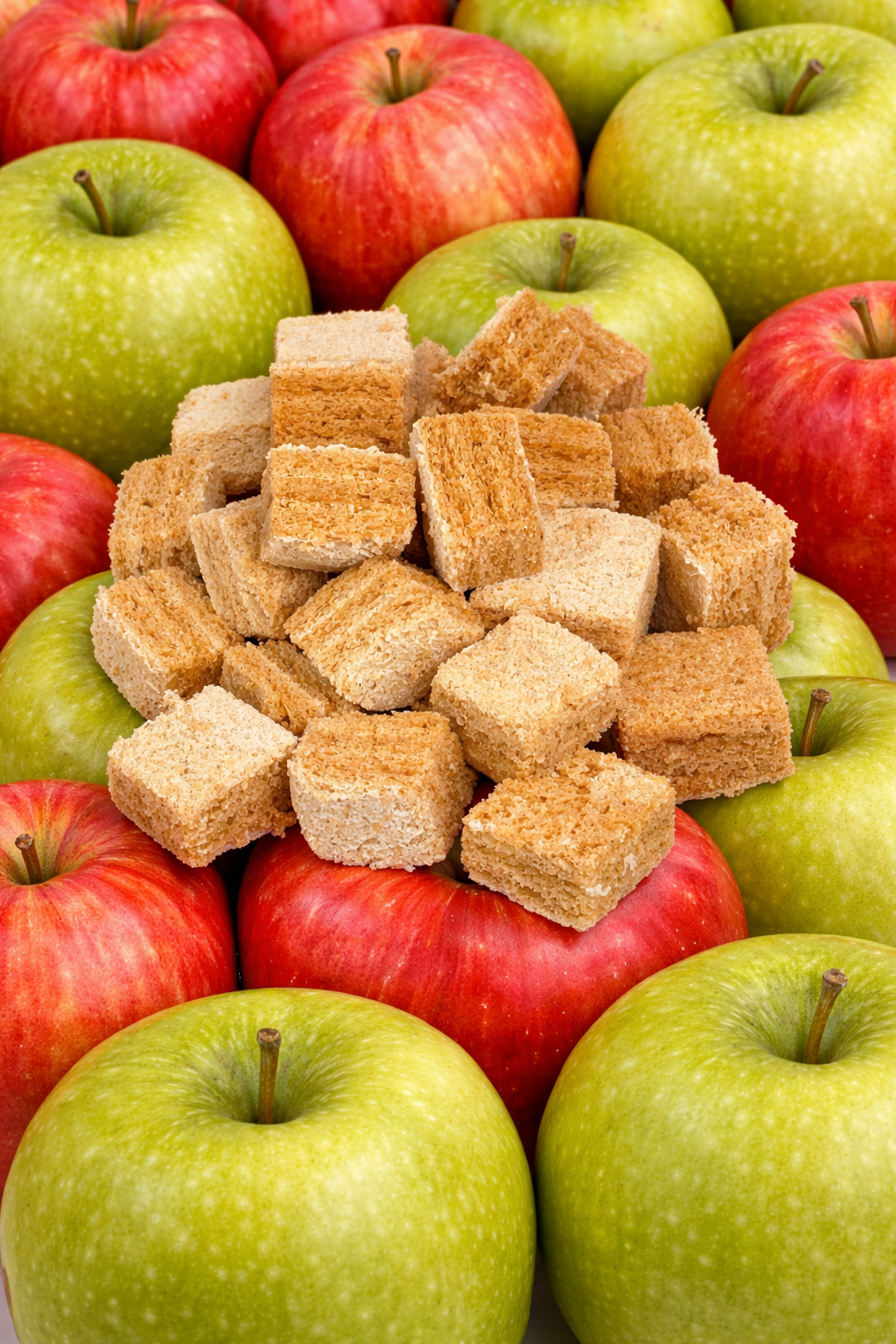
Our approach is rooted in two primary ingredients, Swiss apples and egg whites (albumin). That is the clean label approach, apples plus albumin, built to keep the apple’s natural structure respected, not destroyed.
Strip the fiber, add sugar, use concentrate, import from unknown orchards. That is not our direction. Our Swissness Standard starts at the farm level, not in the packaging room.
K’Apples, a fibre-first snack for kids, mothers, and sports days
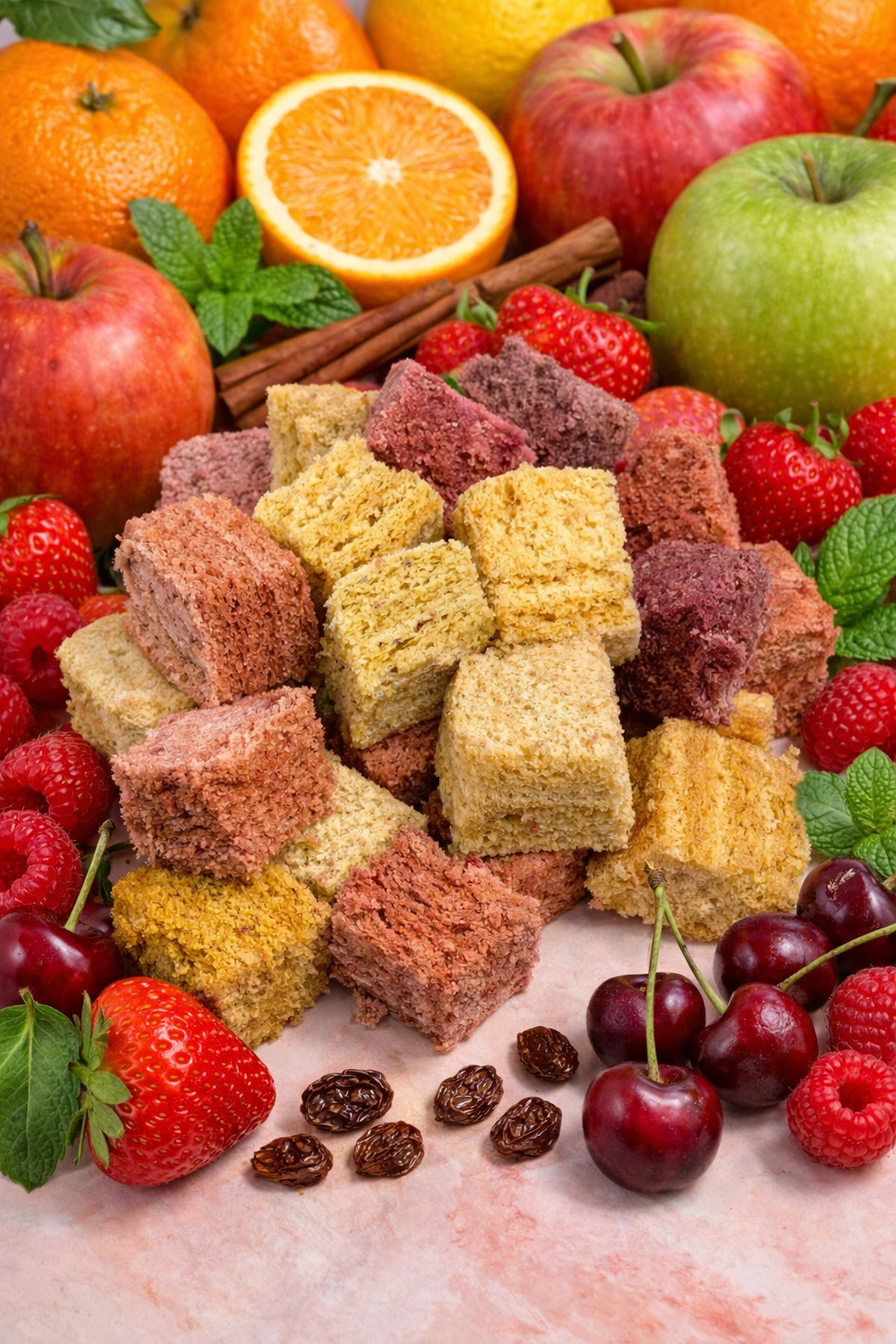
In 2026, we see “fibre snacks” moving from a niche to everyday routines. People want a snack for kids, a healthy snack for mothers, and a convenient option for sports. K’Apples fits that routine because it is a clean label fruit snack concept, not a candy replacement.
Because we keep ingredients tight, we also make room for what your gut actually needs, and that is naturally occurring fibre from fruit. We also keep it gluten-free and we keep it no gluten no sugar added natural product, so it stays aligned with what many families want to offer without compromises.
- Gluten-free: we build the snack without gluten.
- No added sugar: we do “no sugar added natural product”, so sweetness comes from the fruit base only.
- Clean label: no chemicals, minimal processing, and a two-ingredient core.
Fibre meets flavour, awards and Swiss innovation in 2023, 2024, and 2026
People ask us in 2026, why does this taste so good if we avoid the shortcuts? We answer with a simple truth, the apple’s natural structure is respected, not destroyed, so you get both texture and fibre integrity. Full stop.
We have won innovation prize in 2023 and 2024 in Switzerland. We also won Inovation prize 2026 in Europe. We have also won Gold for K'Apples with apple and cinnamon and Silver for Raspberry and Strawberry tastes 2026 in Europe.
When we say Fibermaxxing in 2026, we mean it like a gut-health snack takeover everyone is talking about, snacks designed to keep fibre relevant, not just visible.
How to choose between gentle dehydration and processed fruit snacks (quick checklist)
If you have ever stood in front of a fruit snack wall and felt lost, here is our direct checklist for 2026.
- Look for clean label ingredients: fewer ingredients, minimal processing, and no “chemical” workarounds.
- Confirm fibre is naturally occurring: choose snacks that keep fruit fibre as part of the cellular matrix.
- Avoid concentrate-driven sweetness: if sweetness is rebuilt, fibre integrity usually suffers.
- Prefer gentle dehydration: water removal keeps fruit structure closer to the original.
- Choose no gluten no sugar added natural product if that fits your family: it helps keep the snack aligned with everyday goals.
And yes, taste matters. In 2026, fibre snacks only work if they are genuinely enjoyable for kids and adults. That is why we focus on apple structure and flavour clarity.
That is why we do not build heavily processed fruit snacks. We build a no gluten no sugar added natural product that keeps the fibre part honest.
Try it the practical way, clean-label snack options from Kapples
If you want an easy comparison, start with our flavour range. It is designed as a natural, fibre-first alternative for families who care about gut-health snack takeover trends in 2026.
You can explore all-flavours packs directly here, and compare what “no gluten no sugar added natural product” means on the shelf:
- K’Apples all flavours pack
- K’Apples all flavours, variant selection
- K’Apples flavour range for clean-label snacking
- K’Apples all flavours, clean snack idea
For variety in one box, you can also start with a mix, designed for people who want a healthy snack bars routine that fits busy days.
And if you like sampling the family of flavours, the Maxi Kit is a straightforward way to try multiple tastes without locking yourself into one option.
Our K’Apples are highly recommended to try for ladies and gentlemen from 3 to 103 years old.
Conclusion
So, is gentle dehydration a better choice than heavily processed fruit snacks for preserving fibre? In 2026, yes, when gentle dehydration respects the fruit’s natural structure and keeps fibre integrity close to the original. Heavily processed fruit snacks often drift toward ultra-processed patterns, lower fibre quality, and added sweetness that competes with gut-health goals.
Our position is simple, no shortcuts, no concentrates, and no “natural flavour” workarounds. We build a no gluten no sugar added natural product with local apples and albumin, and we treat fibre integrity as an honest commitment, the Swissness Standard in every bite.
Frequently Asked Questions
Is gentle dehydration a better choice than heavily processed fruit snacks for preserving fibre for kids?
In 2026, gentle dehydration is usually the better choice than heavily processed fruit snacks for preserving fibre because drying focuses on water removal, not reformulation. Many ultra-processed snack options are also lower in fibre quality, which matters when you want a healthy snack for kids that truly contributes to daily fibre goals.
Do dried apple snacks keep the same fibre as fresh fruit in 2026?
WebMD notes that dehydrated apple chips can have the same calorie, protein, fat, carbohydrate, fibre, and sugar content as fresh fruit in an example comparison. That is exactly why gentle dehydration tends to support fibre preservation when the fruit base is respected.
What should I look for on a fruit snack label to know if it preserves fibre?
Look for clean label ingredients, minimal processing, and an ingredient list that does not rely on added sugars or concentrate-based rebuilding. If you see lots of “added” workarounds, it often means fibre integrity is not the priority.
Are ultra-processed fruit snacks lower in fibre than less processed options?
Yes. In 2026, the general pattern is that ultra-processed foods tend to be lower in fibre, micronutrients, and phytochemicals than less processed foods. So for the goal “preserve fibre,” the processing level matters as much as the fruit story on the front label.
How much naturally-occurring dietary fibre should I aim for in 2026?
WHO recommends at least 25 grams of naturally-occurring dietary fibre as found in foods for everyone older than 10 years. When you compare snacks, choose the one that actually helps you get there, not just one that sounds “fruit healthy.”
Is a no gluten no sugar added natural product also better for fibre preservation?
No gluten no sugar added natural product can help you stay aligned with the wider goal of fewer added sugars, but fibre preservation still depends on gentle dehydration and minimal processing. We keep both priorities together, apples plus albumin, so the snack stays clean and fibre-integrity focused.
