
· By www.kapples.ch
Marshmallow Ingredients: Gelatin or Egg White Changes the Recipe
Marshmallow Ingredients: Gelatin or Egg White Changes the Recipe because gelatin creates a springy set, while whipped egg whites trap air and make a mixture lighter. We’ll show you what each ingredient does, when a recipe can leave one out, and how to choose a method for the texture and shape you want.
Key Takeaways
| Formula | What creates the structure? | Best suited to |
|---|---|---|
| Gelatin only | Gelatin sets the cooked syrup; whipping adds air. | Classic, springy marshmallows that can be cut or piped. |
| Egg whites with fruit | Whites create foam; fruit solids or a gelling ingredient such as pectin supports the structure. | A light, fruit-led marshmallow-style texture. |
| Gelatin and egg whites | Gelatin sets the mixture, and the whites aerate it. | A formula designed to combine a stable set with extra foam. |
- Gelatin and egg whites have different jobs, so one is not a direct substitute for the other.
- A gelatin-only recipe can set without egg whites. An egg-white formula needs another source of structure, such as pectin or fruit solids.
- Bloom powdered gelatin in cold water before dissolving it to help prevent lumps.
- A candy thermometer helps you follow the syrup stage the recipe depends on.
- Agar-agar sets differently from gelatin, so use a recipe developed for agar rather than swapping it in one-for-one.
- For a real-world fruit-and-egg-white example, compare how egg whites and gelatin contribute to fruit-snack texture.
Gelatin and egg whites do different jobs
Gelatin is a gelling agent. Once hydrated and dissolved, it forms a network as the mixture cools, helping a marshmallow set, keep its shape, and develop its familiar springy bite.
Whipped egg whites form a foam by trapping air in a network of proteins. That aeration makes the mixture lighter, but egg whites alone do not create gelatin’s characteristic elastic set.
That distinction explains why a gelatin-only marshmallow can set without egg whites, while an egg-white-based formula needs another source of structure, such as pectin or fruit solids. A combined recipe uses gelatin for the set and whites for aeration, so removing either ingredient can change both the proportions and the mixing method.
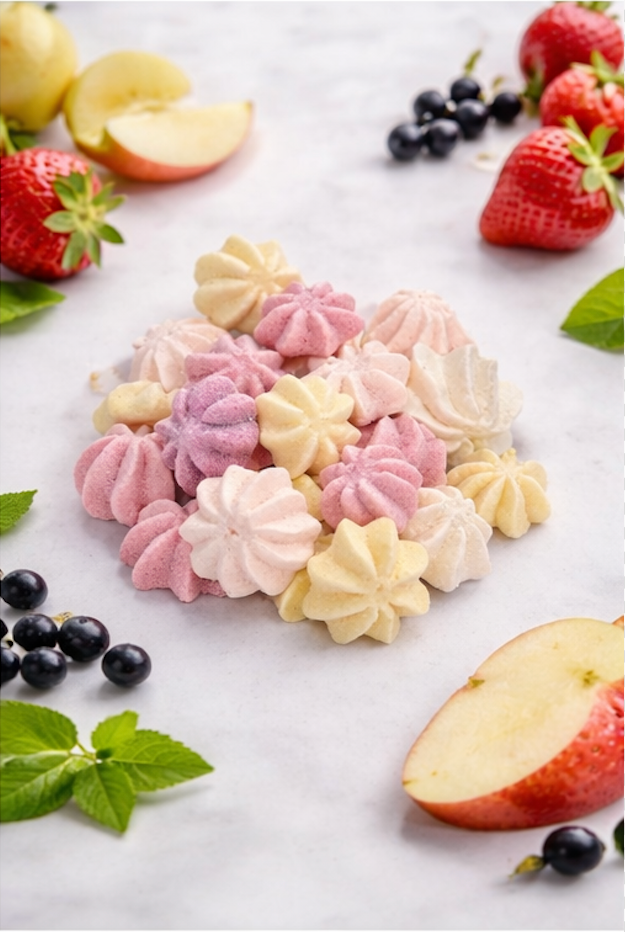
For a fruit-based example, Nuages are natural apple marshmallows made in Switzerland from Swiss apples and egg whites, without gelatin or artificial preservatives. Their ingredient combination makes them a useful illustration of a fruit-and-egg-white approach rather than a conventional gelatin-only formula.
To compare the distinct roles in more detail, we also explain how egg whites and gelatin stabilize fruit snacks differently.
How a gelatin-only marshmallow gets its structure
Blooming gelatin means sprinkling powdered gelatin over cold water and letting it absorb the water before melting it. Dry or incompletely hydrated gelatin added straight to hot syrup can form lumps that are difficult to dissolve smoothly.
Next, cook the sugar syrup to the stage specified by the recipe. Many marshmallow formulas use the soft-ball range, about 235–240°F (112–116°C), but the right target depends on the recipe’s proportions and the firmness it is designed to produce.
With the mixer running, gradually add the hot syrup to the prepared gelatin, following the recipe’s stated order. The steady addition helps distribute the syrup and gelatin through the mixture as whipping incorporates air.
Egg whites are not essential in this method: the gelatin and cooked syrup provide the set, and whipping creates the airy marshmallow foam. A candy thermometer is useful because a syrup’s final temperature affects how much water remains in it and, in turn, how firm the cooled result becomes.
What changes in an egg-white-based recipe
Egg whites contribute aeration, not a standalone gelatin-like set. Whip them to the peak stage specified by the recipe: soft peaks are easier to fold into another mixture, while over-whipped whites can turn dry and resist smooth incorporation.
Egg-white marshmallow-style recipes therefore need a compatible structural plan. Apple pectin can support a fruit-and-egg-white mixture, but pectin sets differently from gelatin, so the recipe must be developed around that combination.
For example, Nuages made with Swiss apples and egg whites use cooked apple pectin and slow-baking for their texture. This fruit-based method shows why an egg-white recipe can work without simply copying a gelatin formula.
Our natural apple products are without gluten and have no added sugar; we use no chemicals and try to use local ingredients. K’Apples apple-and-cinnamon received European Gold, while the raspberry and strawberry flavours received European Silver.
Combining egg whites, gelatin, and syrup
When a formula uses both gelatin and egg whites, hydrate the gelatin before heating it and whip the whites separately to the specified stage. Preparing them separately helps prevent gelatin lumps and protects the foam from unnecessary handling.
Some recipes stream hot syrup into whipping whites and then incorporate prepared gelatin; others dissolve gelatin into the syrup. The right sequence depends on the formula, so follow its instructions rather than treating different methods as interchangeable.
When the recipe calls for syrup to be added to the whipping whites, pour it in a steady, thin stream while the mixer runs. A controlled stream reduces splashing and helps distribute the syrup’s heat and sugar through the foam.
Use pasteurized egg whites when a recipe does not reliably cook them through. Hot syrup warms the foam, but that alone does not guarantee that the whites have been pasteurized.
Adjust the formula for piping, cutting, and setting
For cuttable marshmallows, choose a formula with a dependable gelling agent and allow the full setting time. Egg-white foam alone may not keep clean edges when you slice it.
For piping, work within the recipe’s timing window. A warm mixture can spread before it holds its shape; one that has started setting can clog a nozzle or pipe unevenly.
Use a candy thermometer when the recipe depends on a specific syrup stage. Syrup that falls short of its target can leave a soft or sticky batch, while syrup cooked too far can create a firmer, chewier result.
Humidity can make sugar-based marshmallows tacky, so set them in a dry environment and follow the recipe’s coating and storage directions. For egg-white formulas, follow the recipe’s storage guidance as well, since ingredients and preparation methods can differ.
Troubleshoot texture by tracing the likely cause
A soft or poorly set batch can come from syrup that missed its target stage, gelatin that was not properly hydrated, or insufficient setting time. Identify which step supplies structure in your formula before changing ingredient amounts.
Lumps often point to gelatin that was added before it hydrated or was not fully dissolved. Bloom it separately, then incorporate it while fluid rather than adding dry powder directly to the mixture.
A dense mixture can signal inadequate whipping or syrup added too quickly. Build the foam gradually and stream the syrup steadily so it can spread through the mixture instead of weighing down one spot.
Sticky surfaces can result from humidity or from a batch that has not finished setting. Before adding more gelling agent, review the syrup stage, whipping, and setting conditions that the recipe relies on.
Why agar is not a direct gelatin swap
Agar-agar activates through boiling and generally forms a firmer, less elastic gel as it cools. Gelatin, by contrast, sets into a more elastic network, so the two gelling agents produce different textures.
A one-for-one swap can leave a marshmallow too firm, brittle, or poorly aerated because agar and gelatin differ in activation, texture, and setting behavior. Choose a recipe designed for agar instead of simply removing gelatin and adding agar in its place.
Egg whites can still add air to an agar-based mixture, but they do not make agar behave like gelatin. If you want a plant-based gelling agent, start with a complete agar formula that accounts for its boiling and setting requirements.
Frequently Asked Questions
Can sheet gelatin replace powdered gelatin in a marshmallow recipe?
Yes, if you match the recipe’s required gelatin strength and measure the sheets by weight. Bloom the sheets in cold water, then gently squeeze out excess water before using them as directed.
Can a gelatin-only marshmallow mixture be piped into shapes?
Yes. Pipe it while it is still fluid enough to pass through the nozzle, using a piping bag fitted with the shape you want; the mixture will firm as it sets.
Is gelatin in marshmallows good for you?
Gelatin supplies protein, but its presence does not determine whether a marshmallow is nutritious overall. Consider the whole ingredient list and portion, including the sugar and other ingredients in the recipe.
What is the difference between marshmallow fluff and a set marshmallow?
Marshmallow fluff is made to stay soft and spreadable, while a set marshmallow has enough structure to hold a defined shape. Their recipes and intended uses differ, so fluff is not simply a set marshmallow before it has finished cooling.
How should I store marshmallows made with egg whites?
Store them in a clean, airtight container and follow the recipe’s guidance for temperature and storage time. If the recipe leaves the egg whites uncooked, keep the marshmallows refrigerated and use them promptly.
How can I tell when whipped marshmallow mixture is ready to set?
Follow the recipe’s visual cue, such as a specified peak or a thick ribbon that briefly holds its shape when lifted. The mixture should still be workable enough to transfer to its pan or piping bag before it becomes difficult to spread.
What is the secret to fluffy marshmallows?
For a fluffy result, build an even foam and handle it gently as you combine the ingredients.
What does gelatin do to marshmallows?
It gives a cooled marshmallow its elastic set and helps it keep its shape.
What is a substitute for gelatin in marshmallows?
Choose a marshmallow recipe designed for agar; it will have a different texture from one set with gelatin.
See also: K Extra New Photo.
Conclusion
Marshmallow Ingredients: Gelatin or Egg White Changes the Recipe by changing what builds the structure: gelatin sets the mixture, egg whites create foam, and fruit pectin or solids can support a purpose-built egg-white formula. Choose the recipe that matches your preferred texture, follow its syrup and mixing steps in order, and use a gelling agent according to the method it was designed for.
