
· By www.kapples.ch
Marshmallows and Retail Displays: Texture and Merchandising, A Practical Guide
Marshmallows and Retail Displays: Texture and Merchandising work best together when the display helps shoppers understand what the product feels like while keeping it protected. We can make that decision easier with accurate descriptions, clear packaging, thoughtful placement and a tidy assortment.
Key Takeaways
- Describe texture precisely, and make sure the words and images match the marshmallow shoppers will receive.
- Use a window or close-up photography to show the product while keeping sale packs sealed.
- Choose shelf-ready packaging, a counter fixture or a larger display to suit the assortment and location.
- Keep marshmallows away from heat, damp and direct light, and rotate stock so older packs sell first.
- Group varieties by a clear choice, such as flavour or colour, and keep names beside the corresponding products.
- For context on fruit-based texture, read our explanations of how apples can create a marshmallow-like texture and what natural apple marshmallows are.
What texture tells shoppers, and how to show it honestly
Texture shapes expectations before a shopper opens a pack. Use words such as soft, springy, airy or chewy only when they describe the product accurately; an exaggerated photo or description can disappoint buyers and weaken trust.
Traditional marshmallows get their light, elastic structure from air whipped into a sweetened mixture, often with gelatin helping to stabilize it. Fruit-based marshmallows may use other ingredients and processes, so their texture can differ; explain the particular product rather than implying every marshmallow has the same bite.
Give shoppers a useful view of size and surface with a clear package window or close-up product photography, then pair it with a short, accurate texture description. Keep sale units sealed instead of exposing them to avoidable handling.
Our Swiss-made Marshmallows come in multiple flavours and are described as having five times less sugar than the original marshmallow. At $5, they give a retailer a specific assortment to present with a message focused on the qualities shoppers can identify.
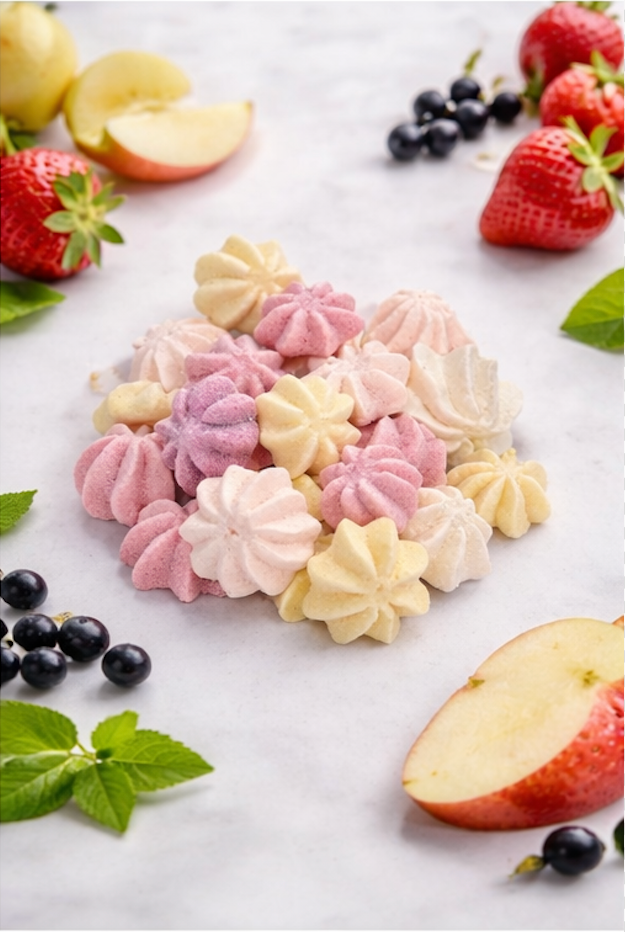
For a fruit-based product, describe its own ingredients and texture rather than borrowing familiar claims about a conventional marshmallow. That distinction helps shoppers compare varieties on clear terms.

Choose a display format and location that suit the product
How should we display merchandise in a retail store? Match the fixture to the assortment and the available space. Shelf-ready packaging gives staff a stable, easy-to-replenish shelf presence; a compact counter display suits a small range near checkout; and a freestanding or aisle-end display gives a wider selection room to stand out.
Place the retail display where shoppers can see it, but avoid direct sunlight, heat sources and damp areas. Visibility does not help if the location softens the product, makes packaging less presentable or exposes stock to moisture.
An endcap or island can earn attention, but placement alone does not guarantee sales. BMC Public Health reported that the median percentage of end-of-aisle displays containing snack food was 38% at the front of stores and 33% at the back.
Median share of end-of-aisle displays with snack food was 38% at the front and 33% at the back.
Source: BMC Public Health
A purpose-built stand can define the footprint and make a mixed range easier to shop. Our Display stand for resellers is filled with K’Apples best sellers, including 65 g fruit snacks, K’Extra and assorted K’Sticks; the listed price is $403, and that curated mix makes it a practical example of a ready-to-present assortment.
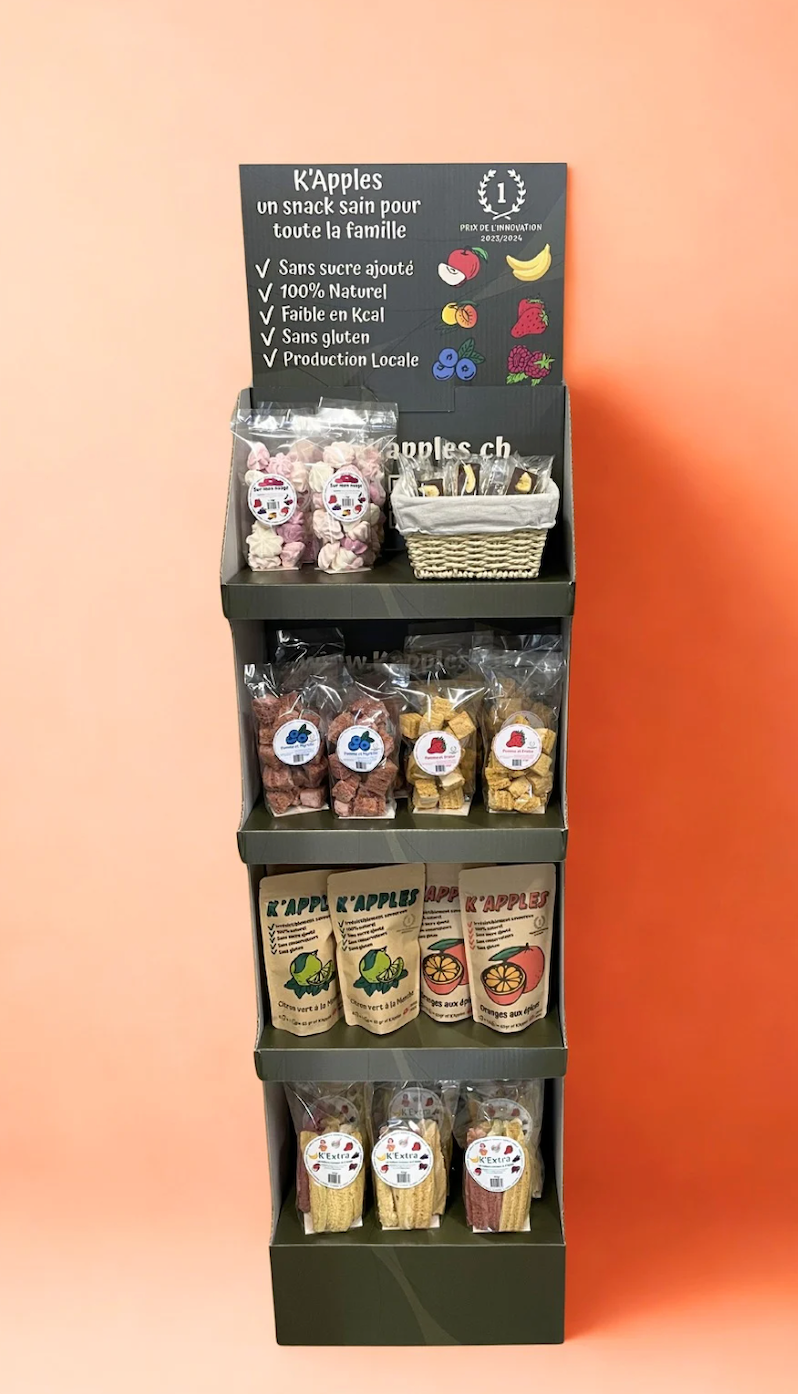
For more about its reseller assortment, see what is included with the K’Apples display stand. A cashwrap placement can suit a compact, easy-to-grab selection, while an aisle display needs a stable base and enough room for shoppers to approach without blocking the route.
Make the display easy to notice and easy to understand
Put the product name and its clearest differentiator where shoppers see them first. A simple backer panel with readable type usually communicates more than a crowded panel of competing claims, while consistent display graphics help a POP display remain understandable from a distance.
Use colour to distinguish flavours, but carry the same system across packaging, shelf labels and graphics. Colour can support quick comparison, while a printed flavour name makes the choice clear to shoppers who cannot or do not want to rely on colour alone.
Choose large, recognisable product photography for the distant view, then add a close-up or viewing window to show the product at shelf level. Keep the image faithful to its actual size, colour and shape so the display helps shoppers assess the product instead of setting a false expectation.
Build a short product story around information shoppers can absorb quickly, such as a fruit or flavour cue. K’Apples products are 100% natural, made without gluten or added sugar, and made without chemicals; we try to use local ingredients. Keep each claim legible and relevant to the product shown.
Use recognition as supporting information, not as a substitute for a clear product name and flavour description.
Organize the assortment around clear shopper choices
Group products by a choice shoppers can recognize, such as flavour family, colour or format, then keep the arrangement consistent with the planogram. That way, a familiar item remains easy to find after staff replenish the display.
Give every variety a concise name and place its description close to the product. For seasonal shapes, bagged pieces and specialty flavours, keep the format or flavour cue clear; colour can help shoppers scan, but it should not carry the whole message.
Right-size the assortment for the fixture. A compact counter display benefits from a focused core selection, while a larger unit can separate flavours into labelled groups; a gift buyer may value variety, while a snack shopper may prefer a familiar flavour.
For flavour and range planning, the links below lead to individual selections across K’Apples and related product ranges. Keep the display message true to each product, even when tailoring the assortment to a particular shopper.
K’Apples flavour ranges: K'Apples. All the flavours · K'Apples mix of fruits.
More K’Apples and related ranges: K'Apples maxi kit · K'Sticks. Healthy apple bars.
Additional range options: M'Apples cooked apple jelly assortment · Marshmallows.
Protect texture, packaging and food safety
Keep marshmallows sealed and away from heat, humidity and direct light. Excess heat can soften or deform pieces, while moisture can make surfaces sticky and encourage them to clump.
Rotate stock so older units sell first. Check the fixture routinely for opened or damaged packs, and replenish it from suitable storage rather than keeping backup stock exposed beside the display.
For samples, use a controlled, food-safe serving setup that keeps customers from touching shared stock. Keep utensils and portions clean, replace samples as needed, and place allergen information close to the product without covering package details.
For more on how ingredients can shape fruit-snack texture, read our overview of egg-white protein and texture. A sample station can support discovery, but it should remain separate from sealed sale units.
Use interaction and regular audits without adding clutter
A QR code, flavour guide or other interactive feature should support the decision, not compete with it. Keep the product name, flavour and key information more prominent, and place the feature where it does not block access to packs.
During a display audit, check that products face forward, labels remain legible, the assortment matches the planogram, stock is in good condition, and the fixture is clean and stable. Note recurring issues such as heat exposure, empty flavour slots or damaged packs, then adjust placement, replenishment or the fixture itself.
Choose display materials for stability, print quality, cleaning needs and the way the material can be handled after use. Corrugated displays can suit temporary promotions and are easy to assemble, while durable fixtures can support longer use; make environmental messaging consistent with the actual materials and disposal guidance.
We share more about the innovation prize-winning reseller display stand. Use recurring audit notes to refine the display structure rather than simply increasing graphic size.
For retailers planning related range presentation, the K’Extra product image can be used as a visual reference alongside product names and clear flavour labels.
Frequently Asked Questions
What are the 5 R’s of merchandising?
The 5 R’s are the right product, right place, right time, right quantity and right price. Together, they help retailers plan what to stock, where to display it, and how to keep the offer aligned with shopper demand.
What are five common types of retail displays?
Common formats include countertop displays, shelf displays, endcaps, freestanding floor displays and dump bins. The best choice depends on the package format, the amount of space available and how shoppers move through the store.
Should marshmallows be refrigerated?
Most standard marshmallows do not need refrigeration, and cold-to-warm temperature changes can cause condensation on packaging or product surfaces. Room-temperature storage in a sealed pack is the usual approach for conventional marshmallows.
How long do marshmallows stay fresh after opening?
Standard commercial marshmallows commonly retain good quality for about two to three weeks when tightly sealed at room temperature. Fruit-based recipes can differ because their ingredients and moisture levels affect how the texture changes over time.
Can all marshmallows be toasted over a fire?
Conventional marshmallows are commonly toasted because their airy structure softens and browns with direct heat. Fruit-based or specially formulated varieties can behave differently, so their ingredient mix and structure determine whether they hold their shape over a flame.
Conclusion
Strong Marshmallows and Retail Displays: Texture and Merchandising choices make the product easy to understand, easy to compare and easy to keep in good condition. Show the real texture, choose a suitable fixture and location, organize flavours clearly, and build routine checks into replenishment.
When a display communicates accurately and protects the product, shoppers can make a confident choice without handling open food or sorting through clutter.
