
· By www.kapples.ch
No added sugar vs sugar-free: the label trap, and how to read snacks like a pro
When a “sugar-free” claim appears on the front of a package, many people assume it is automatically healthier. In reality, “no amount of added sugars or non-nutritive sweeteners is recommended or considered part of a healthy or nutritious diet.”
Key Takeaways
| Quick truth | No added sugar vs sugar-free are not the same claim, and the label wording changes what you should check next. |
| Start with the ingredient story | “No added sugar” usually means no sugar added during processing, but it does not guarantee total sugar is zero. |
| Check what “sugar-free” allows | “Sugar-free” can still include small amounts that meet the label rule per serving. |
| Think in servings, not slogans | Compare per-serving sugar values and consider how many snacks you eat in a day. |
| Choose “clean-label” style | Look for fruit-based ingredients you recognize, and avoid turning snacks into “sweetener by another name.” |
| Example: fruit-first snacking | If you want a practical shortcut, start with a brand approach like K'Apples mix, built around no added sugar. |
| Best for families | For parents choosing a healthy snack, also read the back label every time, especially for “0g” claims. |
Below, we break down the “No added sugar vs sugar-free: the label trap” step by step, so you can buy with confidence for school, sports, and everyday snack moments.
Why the “label trap” happens with No added sugar vs sugar-free
The trap is simple: we read the front-of-pack claim as a health promise. But claims are about specific rules, and people often stop reading right after the slogan.
With the No added sugar vs sugar-free: the label trap, the key issue is this, “sugar-free” can still mean “not zero” at the level of what is allowed per serving. Meanwhile “no added sugar” can still include sugar that is naturally present in ingredients, like fruit.
From a family perspective, we see the same pattern every day. Parents want a healthy snack bar or snack for kids that makes sense for school. Athletes want a snack for sports that feels lighter. Mothers need something reliable for busy days. So we teach a better habit, compare what’s claimed, then confirm with the ingredient list and nutrition facts.
Our approach: we aim for a 100% natural product, with no chemicals, and we try to use local ingredients. We also make our snacking plan easy to understand, gluten-free, no sugar added, and designed for real life, not confusion.
Read the claim correctly: what “no added sugar” really means
“No added sugar” is about whether sugar ingredients were added during processing. It does not automatically mean the product contains zero sugars from the recipe itself, especially when fruit is part of the formulation.
This is where the No added sugar vs sugar-free: the label trap often starts. Shoppers assume “no added” equals “no sugar.” But “no added” is not the same as “no sugar present.” If you are buying a healthy snack bars style product, or a snack for kids to pack for the afternoon, you still need to check the nutrition facts per serving.
For us, the practical goal is straightforward. We make a no gluten no sugar added natural product that stays true to fruit flavor. You can enjoy it as a healthy snack, not as a sweetener experiment. And because it is no sugar added, we keep the “front label story” and the “back label reality” aligned.
If you want a quick reference on how we think about clean label fruit snacks, see The Definitive Guide to Clean Label Fruit Snacks.
What “sugar-free” can still allow, and why it matters
“Sugar-free” is one of the most confusing terms on packages. It sounds like an absolute, but regulatory definitions often use thresholds tied to “per serving” amounts.
In other words, the No added sugar vs sugar-free: the label trap is not about being “bad,” it is about being precise. If a label allows a small amount of sugar under the sugar-free definition, the product can still fit your preferences better or worse depending on how much you eat.
For kids snacks and daily snacking routines, “small amounts” can add up over a day. That is why we do not treat sugar-free language as a shortcut. We treat it as a reason to look deeper.
No added sugar vs sugar-free: how to check a label in under 60 seconds
When you are standing in front of the shelf, you need a repeatable process. The goal of the No added sugar vs sugar-free: the label trap is to make you slower, so we do the opposite.
- Step 1, verify the claim meaning: “No added sugar” is about sugar added during processing, “sugar-free” is about what is allowed per serving.
- Step 2, check the ingredient list: if you see lots of sweeteners, treat sugar-free as “sweet taste without the word sugar,” not as “no impact.”
- Step 3, read sugar per serving: look at “sugars” and if present “added sugars,” then multiply by how many servings you realistically eat.
- Step 4, compare your snack category: a snack for sports is not the same as a snack for kids at the end of class.
We want snack decisions to be calm. If you are choosing a healthy snack bar, a fruit snack, or a healthy snack for mothers, label reading should reduce uncertainty, not create it.
If you want another practical example of how parents approach confusing sugar language, you can also read Healthy snacks for school: the ultimate parents guide.
What “100% natural” and “no chemicals” should look like in practice
For us, clean snacking means we try to keep ingredients understandable. We also use local ingredients when we can, and our philosophy is no chemicals in our 100% natural product.
This matters in the No added sugar vs sugar-free: the label trap because many “sugar-free” products rely on sweeteners to keep taste. Even when sugar is low per serving, you can still end up with an ingredient list that does not feel “clean” for everyday use.
Our solution is a straightforward product concept. We focus on fruit and a recipe structure that aims to deliver taste without the need for added sugar. That is how we support a no gluten no sugar added natural product that works as a healthy snack, a healthy snack bar, a snack for kids, and even a snack for sports.
If you want a way to browse “all flavours” in one place, here is a direct starting point: K'Apples all flavours for a complete no added sugar sampler.
A smarter “best for” choice: what we recommend for different people
Because the No added sugar vs sugar-free: the label trap can hit everyone differently, we recommend based on the situation.
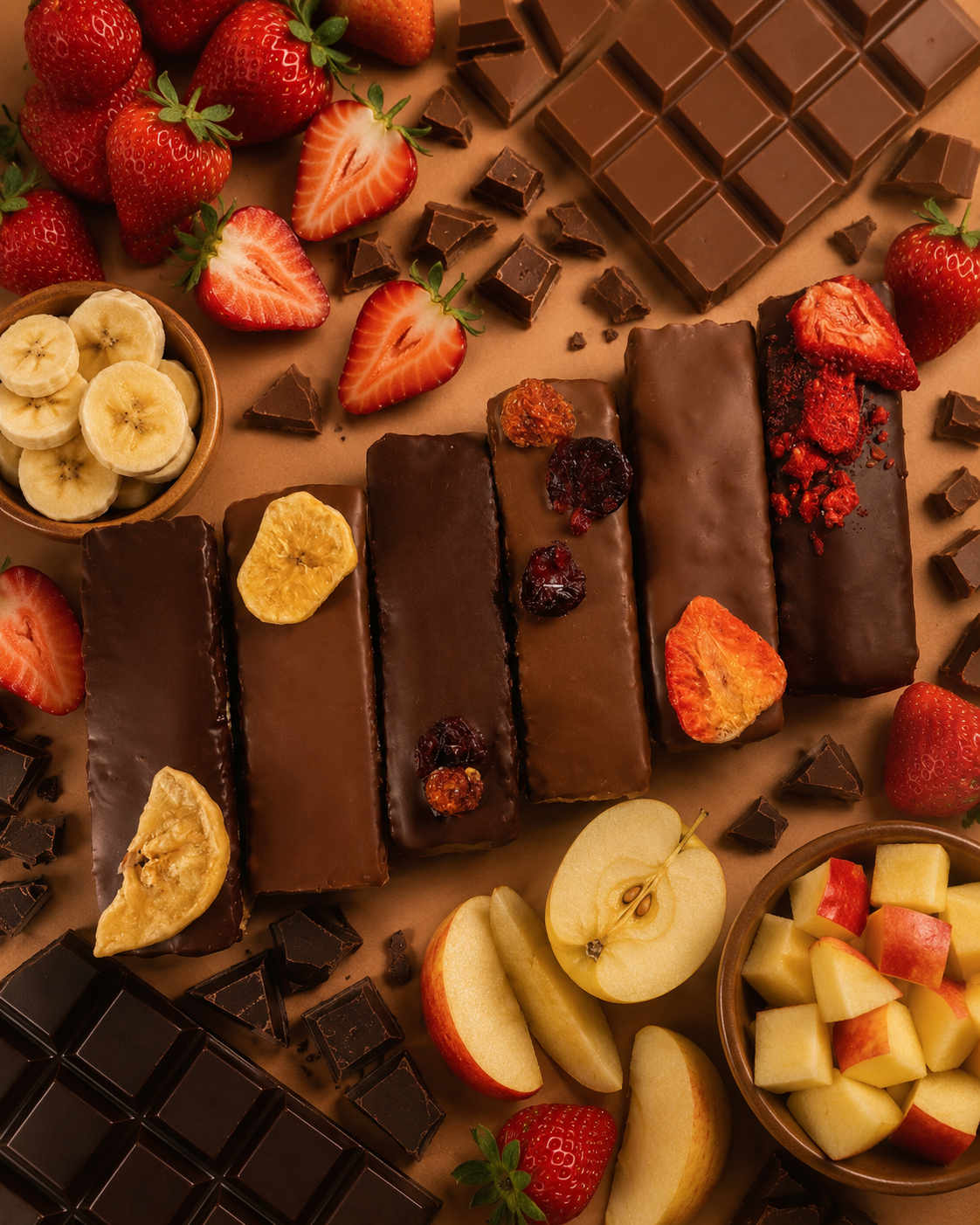
- Best for parents and school days: choose a no gluten no sugar added natural product that is easy to pack and still tastes like fruit. For example, try K'Sticks healthy apple bars for a snack for kids that feels less like “dessert math.”
- Best for sports: pick something stable, not sticky, and that fits a routine. A healthy snack most innovative snack in Europe 2026 gold medal snack should also be realistic for training days.
- Best for mothers: aim for consistency, so you are not re-deciding every time. A healthy snack bars option with no sugar added helps you say yes faster.
- Best for “trying everything”: start with a curated variety so the family finds a few favorites. Our K'Apples all flavours sampler is designed for exactly that.
We also design our snack line with awards in mind because people want to trust what they give their children. We have won innovation prize in Switzerland in 2023 and 2024, and we also won innovation prize 2026 in Europe. We have won gold for K'Apples with apple and cinnamon, and silver for Raspberry and Strawberry tastes 2026 in Europe.
How awards and recipe choices support real label clarity
We do not treat awards as marketing decorations. We treat them as proof of an approach, balancing taste with clear ingredients.
When you see “no sugar added” versus “sugar-free,” the confusion usually comes from mismatched expectations. Our direction is to keep the label story honest, so you do not need to decode it every time.
For a direct “what should we buy” starting point, you can browse our variety kits here: K'Apples Maxi Kit and Fruit mix K'Apples.
Price and value: comparing “claims” to real snack decisions
Many buyers compare products based on the word on the front of the pack. But the No added sugar vs sugar-free: the label trap is exactly why that can lead to the wrong value decision.
Instead, compare how the product fits your day. We also believe in giving families options at different price points. From our collections, you can see examples like:
- K'Apples mix: $7.00
- K'Sticks healthy apple bars: $5.00
- M'Apples assortment (3 jars): $5.00
- K'Apples all flavours: $10.00
- K'Apples Maxi Kit: $25.00
- Display stand for resellers: $408.00
Those numbers are not the point by themselves. The point is to avoid paying for confusion. If you choose a no gluten no sugar added natural product, your “label reading time” drops, because the claim and the ingredients align.
Want a direct product page to start comparing flavours by taste? Here are a few:
- K'Apples sampler, one flavour route
- K'Apples sampler, another option
- Fruit mix for variety
- K'Extra, the best pieces
Conclusion: escape the No added sugar vs sugar-free: the label trap
The No added sugar vs sugar-free: the label trap is not solved by picking the slogan you like best. We solve it by reading the claim correctly, checking sugar values per serving, and choosing products that match your ingredient expectations.
When we make our no gluten no sugar added natural product, we aim for consistency. We try to use local ingredients, we use no chemicals in our 100% natural product, and we design snacking for real routines, from a snack for kids and a healthy snack for mothers to a reliable snack for sports. If you want a calm shopping experience, choose the label approach that makes the ingredients and the claim agree, and you can enjoy your healthy snack, without the trap.
Frequently Asked Questions
Is “sugar-free” really the same as “no added sugar”?
No. No added sugar vs sugar-free: the label trap starts when shoppers treat both claims as identical. “No added sugar” focuses on whether sugar was added during processing, while “sugar-free” can still allow small amounts per serving under label rules.
Can a “sugar-free” snack still have some sugar?
Yes, and that is the heart of the No added sugar vs sugar-free: the label trap. “Sugar-free” can still mean less than the label threshold per serving, so you still need to check sugars on the nutrition facts.
What should parents look at first when buying a healthy snack for kids?
Start with the claim meaning, then confirm on the back label. For No added sugar vs sugar-free: the label trap, we recommend reading the ingredient list and checking sugar per serving, especially for snack for kids going to school.
Is “no added sugar” better than “sugar-free” for everyday snacking?
For many people, yes, because “no added sugar” usually aligns more directly with the recipe approach. But the No added sugar vs sugar-free: the label trap can still happen if you do not check sugar per serving, and how many servings you eat in a day.
Are sugar alcohols or sweeteners the reason some “sugar-free” products taste sweeter?
Often, yes. That is why the No added sugar vs sugar-free: the label trap is not only about grams of sugar, it is also about what the product uses to create sweet taste.
What’s a simple way to pick a no gluten no sugar added natural product snack?
Look for products that explicitly commit to no sugar added and keep ingredients clean and understandable. For us, our 100% natural product uses local ingredients when possible and no chemicals, so your healthy snack decision is clearer and easier.
