

· By www.kapples.ch
The transparency gap in industrial versus artisanal fruit snack manufacturing
The transparency gap in industrial versus artisanal fruit snack manufacturing is getting harder to ignore, because shoppers increasingly expect brands to show how food is made, not just what it tastes like. In 2023, the share of consumers who say transparent product information is important reached 76%.
Key Takeaways
| What’s really “transparent” | We look for ingredient clarity, plain processing descriptions, and traceable sourcing, not just “healthy” claims. |
| Why industrial can lag | Industrial supply chains can rely on concentrates and standardized inputs, which makes storytelling harder and details less specific. |
| Why artisanal can win trust | Artisanal makers can show a tight ingredient list and minimal processing, including where key ingredients come from. |
| Clean-label check | Use our The 2026 Clean Label Snack Checklist approach to evaluate transparency in a consistent way. |
| Where shoppers verify in 2026 | In 2026, more people look up details online (and on-pack), so missing clarity becomes more visible across brands. |
| Best “starter” products to compare | For a direct side-by-side look at tastes and ingredient choices, start with our full product range. |
-
Question: “What is the transparency gap in industrial versus artisanal fruit snack manufacturing?”
Answer: It is the difference between what people need to know (ingredients, sourcing, processing) and what brands actually make easy to understand. -
Question: “How do I check transparency in 2026?”
Answer: Use clear ingredient definitions, minimal-processing explanations, and verifiable origin details. -
Question: “Do certifications fix the transparency gap?”
Answer: They can help, but the real win is readable ingredient logic that matches how the snack is made.
Why transparency has become a decision factor for fruit snacks in 2026
When we talk about The transparency gap in industrial versus artisanal fruit snack manufacturing, we are not just talking about labels. We are talking about whether the story behind the ingredients is understandable for real routines, like snack for kids at school, a healthy snack for mothers during busy days, or something portable for sports.
In 2026, shoppers expect more than a “marketing summary.” They want to know what the snack is built from, why it is made that way, and how much of the original fruit character remains after processing.
In our experience, that expectation splits into two categories:
- Ingredient transparency: Can you read and understand the ingredient list, with minimal additives and clear naming?
- Process transparency: Do you get a straightforward explanation of how the fruit becomes a snack, not vague language?
That is why we focus on a no gluten no sugar added natural product approach. We try to use local ingredients, and we use no chemicals in our 100% natural product. When ingredient simplicity is paired with a clear production story, the transparency gap closes.
Related read: 2026 Healthy Snack Showdown (artisanal Swiss vs. industrial)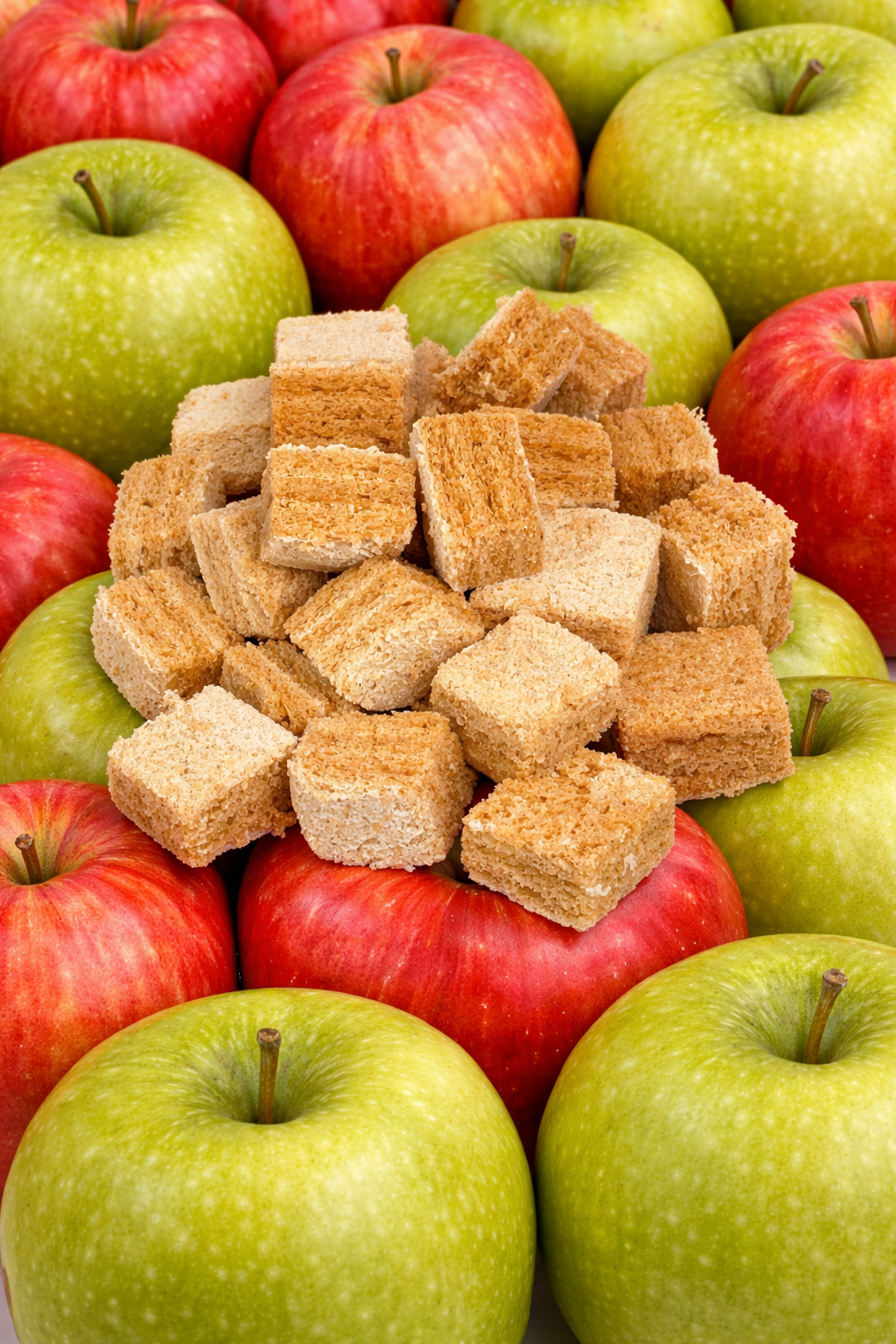
Industrial manufacturing: where the transparency gap starts
Industrial processing is built for scale, consistency, and speed. That is not automatically a problem, but it can create a transparency gap in industrial versus artisanal fruit snack manufacturing when the supply chain becomes complicated to explain clearly.
For example, many industrial fruit snacks can rely on standardized inputs and concentrated ingredients. Even if the final product tastes fruit-like, the manufacturing path can be less obvious. That makes it harder for shoppers to connect “what’s on the label” with “how the snack was made.”
In 2026, we see three typical patterns that widen the gap:
- Ingredient definitions feel distant: the ingredient list may be long, or names may be technically correct but not easy to connect to real fruit.
- Processing details are high-level: descriptions remain vague, so shoppers cannot tell what was changed, removed, or added.
- “Healthy” becomes a shorthand: when health claims stand in for process clarity, trust becomes harder to validate.
Artisanal manufacturing: how we close the transparency gap with clean-label choices
Artisanal fruit snack making closes the transparency gap when it keeps ingredient logic simple and explains processing without hiding the key decisions. For us, that means the no gluten no sugar added natural product philosophy and a clear focus on fruit-based foundations.
We build our range around local apples and egg whites, using minimal processing. That is how we keep a readable connection between the snack and the ingredients, and it supports our goals for a healthy snack that can work as snack for kids, for snack for mothers, and as a more practical option for snack for sports.
Our clean-label approach is not only about the absence of things. It is also about the presence of an understandable method.
- Minimal processing: we prioritize fruit character and fiber.
- Clear ingredient naming: fewer, more recognizable ingredients help reduce confusion.
- No chemicals: our 100% natural product is made with care and clarity.
If you want to compare transparency across brands, we recommend starting with our lineup of tastes on K'Apples all flavors and then checking the “how it’s made” explanations behind the clean-label story.
The best transparency checklist for fruit snack ingredients in 2026
In 2026, the easiest way to spot the transparency gap is to evaluate products using a simple checklist. We do not want shoppers to guess, so we publish our own approach and keep it practical.
Our 2026 Clean Label Snack Checklist is built around key stages that map directly to how shoppers think about transparency. We focus on ingredient count, additive scrutiny, functional value, and ethics and transparency, so the label becomes more meaningful.
Here is how we recommend applying it when comparing industrial versus artisanal fruit snack manufacturing:
- Ingredient audit: prefer fewer ingredients, and make sure each ingredient name is understandable.
- Additive check: look for artificial additions, and question vague “functional” ingredients.
- Processing explanation: ask whether the brand explains what happens to the fruit.
- Origin clarity: local sourcing and traceable inputs make transparency easier to validate.
When these points line up, transparency stops being a slogan and becomes a product reality. That is how we keep our range aligned to “no gluten no sugar added natural product” and support a healthy snack choice for families.
Also see: The Definitive Guide to Clean Label Fruit SnacksTranslating transparency into real-life choices: kids, mothers, sports
Most people do not buy fruit snacks to study manufacturing. They buy to solve a moment, a craving, a routine. That is why the transparency gap matters in daily life, especially when you need something reliable for snack for kids or for a healthy snack when life gets busy.
In our range, we position our clean-label approach as support for those moments. We focus on local apples and our minimal-processing method so the product fits people who want a healthy snack that is also easy to understand.
Here are three practical “transparency to behavior” links we see in 2026:
- For kids: shorter ingredient lists and clear fruit-based methods reduce confusion around what they are actually eating.
- For mothers: no gluten no sugar added natural product positioning makes it easier to choose without second-guessing.
- For sports: the snack format supports portability, and the ingredient logic supports the “clean routine” many athletes try to keep.
If you want a clear example of a product designed for routine, take a look at our K'Sticks. It is priced at $5.00 and built around apples and egg whites, which keeps the ingredient story straightforward. You can view it here: K'Sticks: Healthy Apple Bars.
How award-winning innovation changes what transparency should mean
Transparency is not only a label detail. In 2026, it is also about whether a brand earns credibility through consistent product choices. We believe our innovation should be measurable through real recognition.
We have won innovation prize in 2023 and 2024 in Switzerland. We also won Inovation prize 2026 in Europe. On top of that, we won Gold for K'Apples with apple and cinnamon and Silver for Raspberry and Strawberry tastes 2026 in Europe.
Those awards matter because they support the idea that our clean-label approach is not just a narrative. We build the products with a focus on fruit integrity, and we use no chemicals in our 100% natural product, which aligns with what we explain to shoppers.
For readers who want to compare flavors as part of that “transparent choice,” we suggest starting with a multi-flavor collection, like K'Apples all flavors and then checking a specific taste page such as the apple-based options.
Best ways to compare industrial versus artisanal fruit snack manufacturing without getting lost
Comparing The transparency gap in industrial versus artisanal fruit snack manufacturing should be a simple process. In 2026, we recommend you focus on what you can verify quickly, then go deeper only when it matters.
Here are our best comparison steps:
- Start with ingredients: if the product is built from fruit plus a small number of understandable inputs, transparency is usually easier to confirm.
- Compare how the brand explains processing: artisanal makers tend to describe minimal processing in a way that matches the ingredient list.
- Look for “no gluten no sugar added natural product” clarity: it helps families who want predictable choices.
- Use collections to test taste differences: this avoids cherry-picking only the best-looking label.
To make that easy, here are collection and product entry points from our range that show multiple flavors and snack formats. These pages help you compare choices with a clean-label lens:
- Browse K'Apples all flavors
- See the assorted K'Apples variety
- Compare fruit mixes and apple-based profiles
And if you want a more direct match between taste comparisons and snack formats, you can explore:
- K'Sticks healthy apple bars (fruit-focused bars)
- M'Apples cooked apple jellies (assorted)
- Melange de fruits (mix format)
For retailers or families who want a larger tasting selection, we also offer a reseller display option. The transparent intent is the same, it is about making product information easier to see at the point of choice. You can find it here: Display stand for resellers.
Where our approach fits: our 100% natural, no gluten no sugar added standard
We are not interested in transparency as a branding layer. We want it to describe what we actually do in production, so there is no mismatch between the snack you buy and the story we tell.
That is why we keep our standard clear: no gluten no sugar added natural product, with local ingredients when possible, and no chemicals in our 100% natural product. We also aim for a format that works as healthy snack bars snack for kids snack for mothers snack for sports, so the “why” behind the ingredients stays connected to everyday use.
If you want to explore flavors directly, start with our full collection here: K'Apples all flavors selection, and then compare snack formats across bars, mixes, and jellies.
Conclusion
The transparency gap in industrial versus artisanal fruit snack manufacturing is not only a question of labels, it is a question of how clearly brands connect ingredients to the way the snack is made. In 2026, shoppers actively look for details, and they increasingly expect transparency about both ingredients and process.
Our solution is straightforward: we build around local apples, use minimal processing, and keep our clean-label promise as a no gluten no sugar added natural product, made with no chemicals. With our innovation prize wins in Switzerland (2023, 2024) and in Europe (2026), plus gold and silver recognition for our K'Apples tastes, we aim to make The transparency gap in industrial versus artisanal fruit snack manufacturing smaller in real life, for snack for kids, snack for mothers, and snack for sports.
Frequently Asked Questions
What does “transparency gap” mean in industrial versus artisanal fruit snack manufacturing?
The transparency gap in industrial versus artisanal fruit snack manufacturing means shoppers may not easily understand the ingredient story or the manufacturing process. Artisanal brands often keep ingredient lists simple and explain minimal processing, while industrial brands may use inputs that are harder to describe clearly. In 2026, that difference becomes more noticeable to families comparing healthy snack options.
How can I tell if a fruit snack is really “no gluten no sugar added” in 2026?
For no gluten no sugar added natural product claims, check the ingredient list and look for clear, readable ingredient definitions rather than vague wording. We also prioritize a 100% natural approach using local ingredients and no chemicals, so the label matches what we do. This makes the transparency gap in industrial versus artisanal fruit snack manufacturing easier to spot when you compare brands.
Are award-winning fruit snacks automatically more transparent?
Not automatically, but awards can be a helpful signal when they align with real product choices. We have won innovation prize in Switzerland (2023 and 2024) and in Europe (2026), plus Gold for K'Apples with apple and cinnamon and Silver for Raspberry and Strawberry tastes in 2026. When combined with clean-label clarity, it supports trust and helps close the transparency gap in industrial versus artisanal fruit snack manufacturing.
Is a clean-label fruit snack the same as a transparency-first fruit snack?
They overlap, but clean label focuses on what is in the product, while transparency-first also focuses on how it is made and where ingredients come from. In 2026, shoppers want both, and that is why we keep our approach explicit. That is how our healthy snack bars and snack for kids choices stay consistent with the transparency gap conversation.
What should I look for when comparing industrial and artisanal fruit snack ingredients?
Look for short, understandable ingredient lists, clear definitions, and explanations of processing that match the ingredients. If the product leans heavily on generic “functional” descriptions, the transparency gap in industrial versus artisanal fruit snack manufacturing can widen. Our product philosophy is built to make these comparisons easy, including no gluten no sugar added positioning.
Why do people use QR codes or apps to learn more about fruit snacks in 2026?
Because many shoppers actively seek more product details, including how food is made and what ingredients mean. In 2026, the transparency gap becomes visible when brands do not provide deeper information where shoppers expect it. That is why we believe healthy snack brands should be prepared with clear, verifiable stories for families choosing snack for sports or everyday snack for mothers.
