
· By www.kapples.ch
How to Compare Packaged Fruit Snacks: Ingredients, Added Sugar, and Fruit Content
How to Compare Packaged Fruit Snacks: Ingredients, Added Sugar, and Fruit Content starts with reading the ingredient list and Nutrition Facts label together. Compare like-sized portions, identify the form of fruit, and weigh added sugars, total sugars, and fiber rather than relying on the front of the package.
Key Takeaways
| What to compare | What to look for |
|---|---|
| Serving size | Compare equal weights, then check the nutrition for a portion you would actually eat. |
| Ingredient list | See whether fruit appears near the beginning and look for sweeteners under different names. |
| Sugars | Use added sugars to assess sweeteners added in processing, and total sugars to account for all sugars. |
| Fruit form and fiber | Whole and dried fruit, puree, juice, leather, and gummies differ in structure and fiber. |
| Overall nutrition | Consider dietary fiber, calories, and other relevant nutrients alongside sugars. |
| Package claims | Words like “natural” and “made with real fruit” do not tell you how much fruit is in a snack. |
There is no single healthiest fruit snack for everyone. Our fruit snack sugar comparison guide and guide to spotting added sweeteners offer more label-reading context.
Use this infographic to compare packaged fruit snacks by checking the ingredient list, added sugar, and fruit content. A quick label guide helps you spot key differences between products.
Start with the same serving size
Serving sizes vary, so a pouch with a larger portion can appear higher in sugar or calories simply because it contains more food. For a fair comparison, use the same weight for each snack, such as 100 g: divide the nutrient amount by the serving weight, then multiply by 100.
Check both the stated serving size and the servings per package. A pouch that looks like a single portion may contain multiple servings, so compare the label’s values with the amount someone is likely to eat as well as the normalized per-100-g figures.
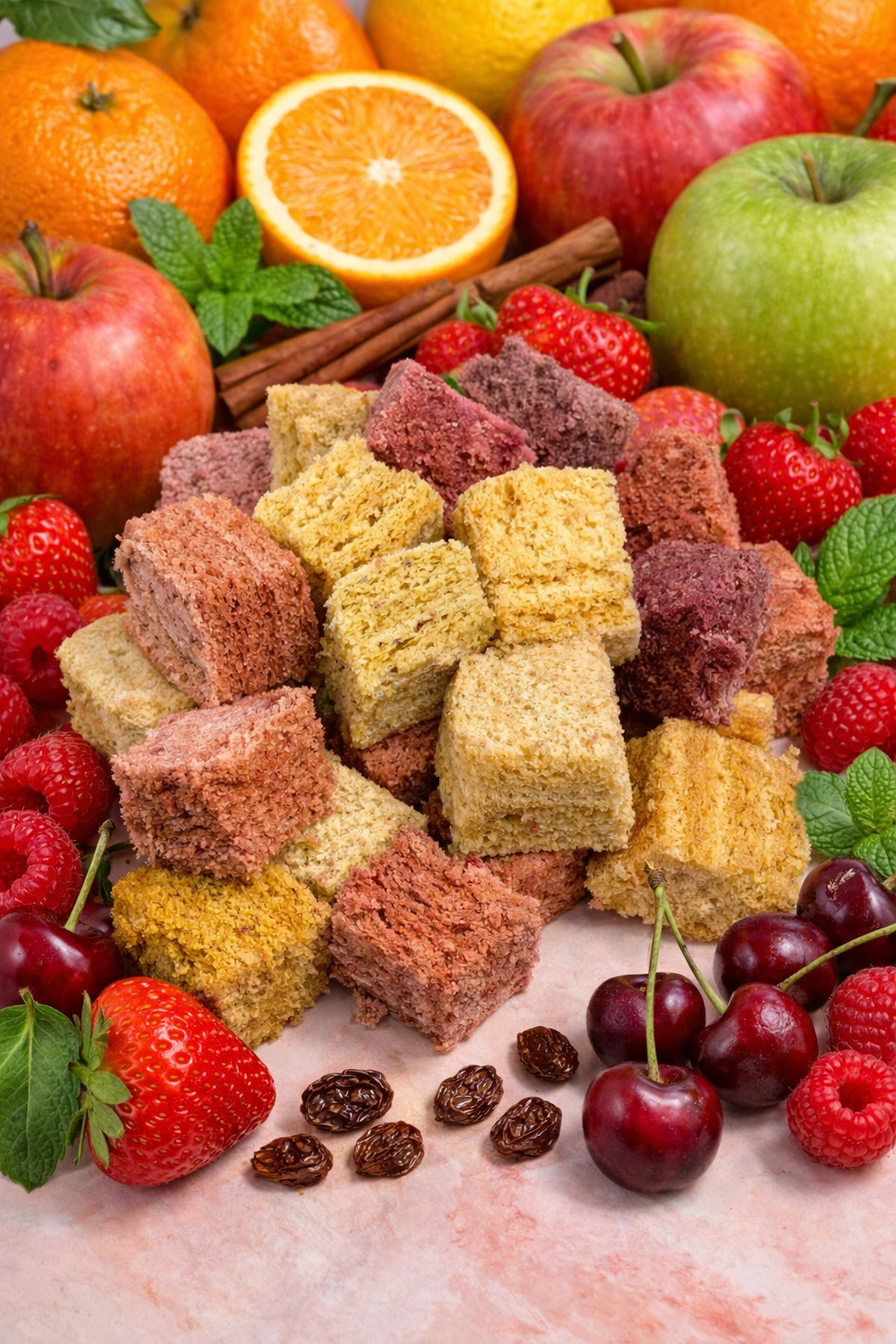
For example, our K'Apples mix is a colourful mix of flavours, with sizes from 50 g to 350 g and options including Forest berries, Oriental fusion, and general mix. At $7, it illustrates why comparing packages by weight matters: a larger bag may hold several realistic portions.
Read the ingredient list for fruit and sweeteners
Ingredients are generally listed in descending order by weight. Look for fruit, fruit puree, or dried fruit near the beginning, and notice whether sweeteners or starches appear before the main fruit ingredients.
Added sweeteners may appear as sugar, syrups, honey, or juice concentrates used to sweeten a snack. UCSF SugarScience lists at least 61 different names for sugar on food labels, so check the full ingredient list rather than scanning only for the word sugar.
Fruit juice concentrate deserves attention when it is used as a sweetener. It can add sweetness, but it does not provide the same structure and fiber as whole or dried fruit.
Read the ingredients alongside the Nutrition Facts panel: the list tells you what is used to make the snack, while the panel shows amounts such as total sugars, added sugars, and fiber. Our guide to recognizing hidden sweeteners in fruit snacks gives more examples of names to look for.
Separate total sugars from added sugars
Total sugars include sugars naturally present in fruit as well as sugars added during processing. The separate added sugars line helps you see how much sugar was added, but a low number there does not mean the snack has little total sugar.
Compare added sugars per equal serving and consider total sugars too. Percent Daily Value adds context: the U.S. Food and Drug Administration identifies 5% DV or less as a low source of added sugars.
A “no added sugar” claim does not mean “sugar-free.” Fruit contributes naturally occurring sugars, so check both lines on the Nutrition Facts label to understand the snack’s sugar profile.
Judge fruit content by the form of the fruit
Fruit snacks can contain fruit in different forms, and those forms do not retain the same structure. Whole and dried fruit preserve more of the original fruit structure and fiber than juice, while dried fruit is concentrated when water is removed, making portion size and total sugars important to compare.
| Fruit form | What it means for comparison |
|---|---|
| Whole or dried fruit | Retains more fruit structure and fiber than juice; dried fruit is concentrated, so compare portions and total sugars. |
| Fruit puree | Contains fruit components, while blending and straining affect texture and the fiber that remains. |
| Juice or concentrate | Provides less of the fruit’s structure than whole fruit; concentrate can also be used to sweeten a product. |
| Fruit leather or gummies | Leather is often made from puree; fruit-flavored gummies may use sweeteners, gelling agents, and flavoring. |
“Made with real fruit” does not say how much fruit the snack contains, and fruit flavor alone does not make a snack a serving of fruit. Compare the listed fruit ingredients, their order, the nutrition panel, and the snack’s actual form.
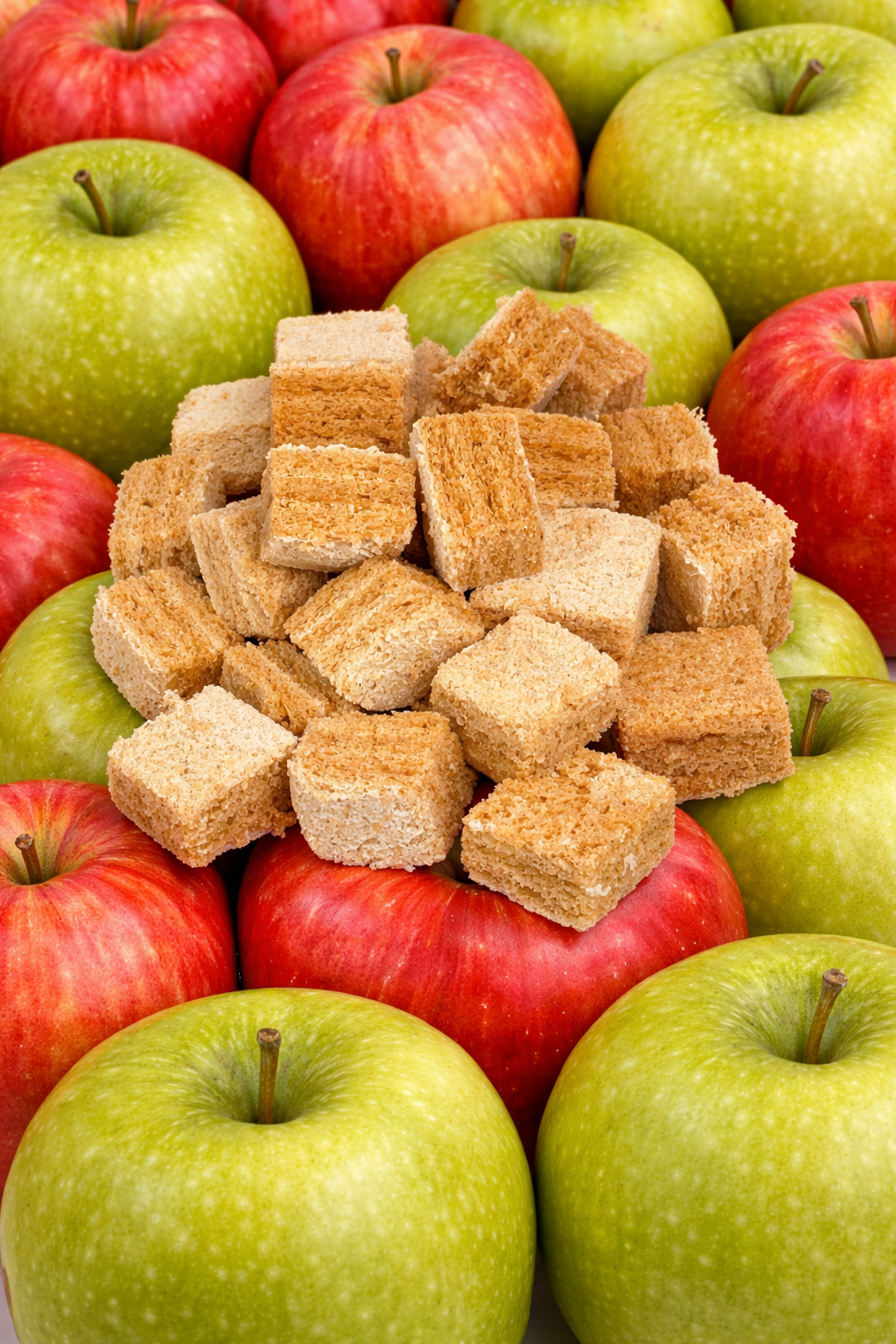
Our K'Apples. All the flavours range consists of apple puree snacks in flavours including apple with cinnamon, pear with cardamom, strawberry, raspberry, black currant, blueberry, forest berries, and orange with cinnamon. The range is $10, and its puree format gives readers a concrete example to consider when comparing fruit forms.
Compare fiber and the rest of the nutrition profile
Compare dietary fiber per equal serving. Whole or dried fruit commonly retains more fiber than juice-based or fruit-flavored products, although the amount in a packaged snack depends on its ingredients and processing.
Dried fruit can provide fiber, but water removal concentrates the fruit, its sugars, and its energy into a smaller portion. Use the serving size to judge how much you plan to eat, then look at total sugars and fiber together.
Check the full Nutrition Facts panel, including calories and nutrients that matter for your needs. No single fruit snack suits every person or occasion, so assess the ingredient list and overall nutrient density instead of choosing by sugar alone.
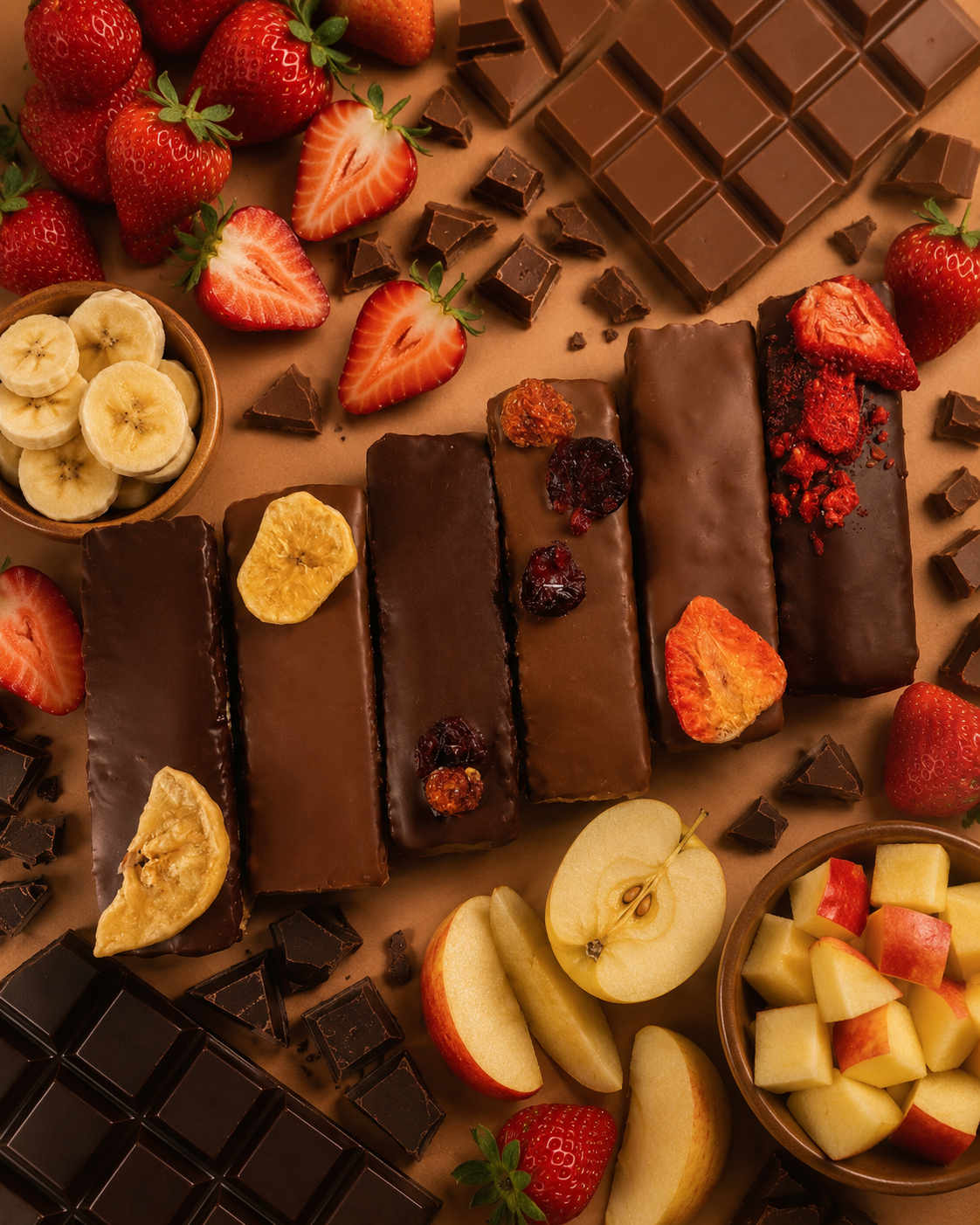
Bars also vary in their ingredients. Our K'Sticks. Healthy apple bars are described as made with fruit, a touch of egg white, and a thin layer of chocolate, with several fruit-and-chocolate taste options; they cost $4. When comparing any bar, consider its fruit ingredients and additions such as protein sources or chocolate because the bar format alone does not determine its nutrition.
Put package claims and everyday use in perspective
Claims such as “natural,” “organic,” and “no artificial colors” describe particular attributes; they do not establish that a snack is mostly fruit or low in added sugar. Use the ingredient order and Nutrition Facts panel to assess those questions.
For children, consider both portion size and stickiness. Sticky foods can cling to teeth, so serve them as part of a meal or alongside water rather than encouraging frequent grazing.
Our products are gluten-free and have no added sugar. We try to use local ingredients, and we make our 100% natural product without chemicals; these attributes describe our approach, while the label-reading steps above help you compare fruit content, added and total sugars, fiber, and portions across snacks.
For more on our ingredients and approach, read how we make our gluten-free, no-added-sugar apple snacks. The best choice for your needs still comes down to the combination of fruit form, ingredient order, added and total sugars, fiber, and a realistic portion.
Frequently Asked Questions
Can fruit snacks be paired with nuts or yogurt to make a more filling snack?
Yes. Nuts add fat and protein, while plain yogurt adds protein, so either can make a fruit snack feel more substantial. Choose unsalted nuts or plain yogurt when you want to avoid bringing extra sodium or added sweeteners into the pairing.
Are fruit snacks appropriate for babies under 12 months?
For babies under 12 months, offer soft fruit in a texture suited to their stage of eating instead of chewy, sticky, or hard snack pieces. Avoid honey-containing foods before a child’s first birthday.
Can a fruit snack be useful before exercise?
Yes, a small fruit snack can provide carbohydrate when you want a quick bite before activity. Choose a texture that is easy to chew, and drink water as needed.
Does freezing a fruit snack change its texture or nutritional value?
Freezing can make a puree pouch firm or change a soft snack’s texture as ice crystals form and melt. It does not remove the fruit’s fiber, though thawing can affect moisture and consistency.
How should I store an opened fruit puree snack?
Refrigerate an opened puree snack promptly and use a clean spoon or utensil to avoid introducing food residue. Do not leave moist puree sitting at room temperature for an extended period.
Which is the healthiest fruit snack?
The healthiest choice depends on your needs; compare labels for snacks you would realistically eat and choose the one that best fits them.
Are there any fruit snacks with no added sugar?
Yes. Snacks made from fruit without sweeteners can have no added sugar, although they may still contain naturally occurring sugars from the fruit. Check the ingredient list and the added sugars line on the Nutrition Facts panel.
What is a healthier alternative to fruit snacks?
Whole fruit is often a healthier alternative because it retains its natural structure and fiber. Pairing fruit with nuts or plain yogurt can make a more filling snack.
See also: K Extra New Photo, K'Apples. All the flavours.
Conclusion
How to Compare Packaged Fruit Snacks: Ingredients, Added Sugar, and Fruit Content comes down to a consistent portion, a close look at ingredients, and a balanced reading of the Nutrition Facts panel. Compare fruit form, added and total sugars, fiber, and realistic serving size together, then choose the snack that fits your needs.
