
· By www.kapples.ch
Post-training recovery: the synergy of apple fructose and egg protein
Post-training recovery: the synergy of apple fructose and egg protein is best understood as a practical pairing of complementary foods, not a uniquely proven formula. A whole apple contributes carbohydrate, water and fiber; eggs provide complete protein for muscle repair.
Key Takeaways
- Can you eat an apple after exercise? Yes. It supplies carbohydrate as part of whole fruit, along with water and dietary fiber.
- Are eggs good protein after the gym? Yes. Eggs contain all nine essential amino acids, which support muscle repair and remodeling.
- How do you combine apples and eggs? Pair an apple with cooked eggs or egg whites for a light option, or add oats, bread, rice or potatoes when you need a fuller meal.
- Is this exact pairing a proven synergy? The foods have complementary roles, but that alone does not establish that the apple-and-egg combination has been independently tested as a special recovery formula.
- When should you eat? Fit recovery food to your appetite and schedule. Prioritize prompt carbohydrate intake when another demanding session is coming soon.
- Need a portable snack idea? Our guide to apple snacks for athletes discusses ways to fit fruit-based snacks into training routines.
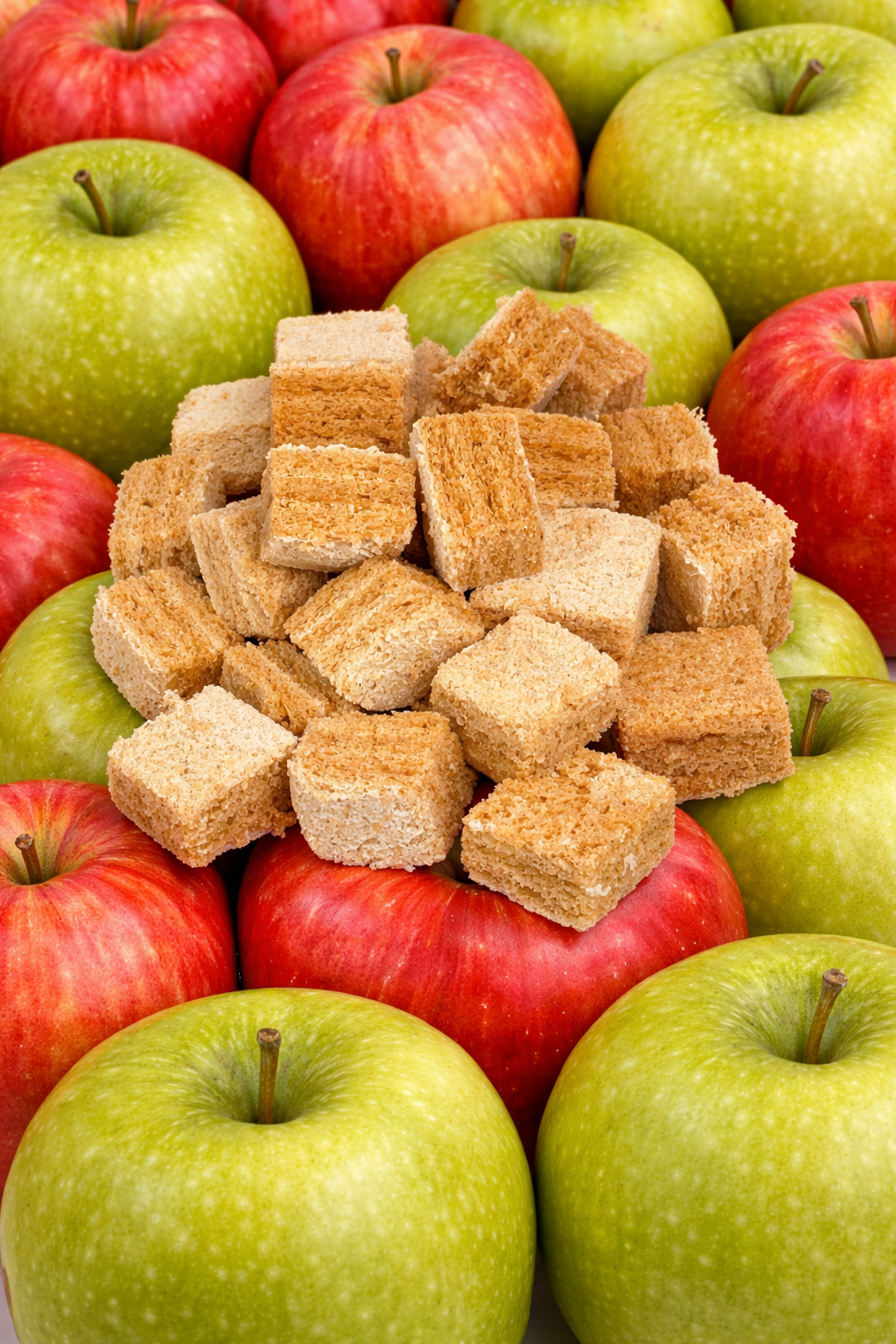
What apples and eggs each contribute after training
A whole apple provides carbohydrate that can contribute to energy replenishment after exercise. It also contains water and fiber, and its naturally occurring sugars are part of the fruit’s structure, not the same food format as isolated fructose in a drink.
Eggs provide complete protein containing all nine essential amino acids. That protein supplies building blocks for muscle protein synthesis, repair and remodeling after training.
The apple-and-egg carbohydrate-protein pairing addresses different recovery needs, but it should not be presented as a proven special synergy. Evidence for the roles of carbohydrate and protein does not establish that this exact combination has been independently tested.
Think of an apple as one carbohydrate source and eggs as one protein source. Either may need to be joined by other foods when the serving is small, the workout was demanding or the next session is close.
For a deeper look at apples and energy replenishment, read our guide to post-workout glycogen recovery and apples. The useful distinction is the whole-fruit food matrix: an apple is eaten with its water and fiber, while isolated fructose in a drink is consumed in a different form.
How egg protein supports muscle repair
Are eggs good protein after the gym? Yes, provided the portion contributes enough protein to the meal. A commonly used post-training range is about 0.25–0.4 g of protein per kilogram of body weight, adjusted for the individual and the rest of the day’s diet.
Whole eggs provide protein alongside fat and other nutrients, so they can suit a more substantial meal. Egg whites provide protein with very little fat, which can work well when you want a leaner protein portion or a lighter-feeling snack.
Choose according to appetite, the rest of the meal and personal comfort. Cook eggs thoroughly for food safety, using boiled, scrambled or omelet-style eggs when you want a straightforward prepared portion.
An apple alone does not supply a substantial protein serving for muscle repair, and eggs alone do not address carbohydrate replenishment. Our guide to egg white protein explains why egg whites are a useful protein ingredient in fruit snacks.
For a ready-made example of apple and egg whites together, K'Apples is a Swiss-made snack combining locally sourced apples with pure egg whites, with no added sugar or salt. Our apple snacks are without gluten or sugar added, and we aim to use local ingredients in our 100% natural products, made without chemicals.
Build a balanced apple-and-egg recovery snack
For a quick, light option, pair an apple with cooked eggs or egg whites. For a more filling recovery meal, add a carbohydrate-rich staple such as oats, bread, rice or potatoes, then include enough protein to suit your needs.
A portable bar that combines apple and egg-white protein can help when preparing a meal is not practical. After a demanding workout, pair it with other foods to make a full meal.
Our K'Sticks bars are described as combining apple and egg-white protein in roughly a 4:1 carbohydrate-to-protein ratio. That makes them an example of a compact carbohydrate-and-protein snack, while the rest of your food can fill out a larger recovery meal.
Let hunger guide the format: choose a fuller food-based meal when you feel hungry or training was demanding, and a smaller snack when your appetite is low. If you start with a snack, you can eat a more complete meal later.
Timing recovery food around your next session
Eat a regular meal or snack after training when it fits your schedule and appetite. For most people, total daily food intake and consistent meals matter more than a strict recovery window or so-called golden hour.
When another demanding session is coming soon, prompt carbohydrate intake deserves more attention. PubMed Central states that contemporary guidelines recommend ingesting 1–1.2 g·kg−1⋅h−1 of carbohydrate in the initial 4-h post-exercise window.
If your next hard session is many hours away, a balanced meal within your normal eating routine can replenish energy without forcing an unusually large snack immediately after exercise. After a long or high-volume endurance session, an apple and egg portion may need additional carbohydrate; after a shorter, lighter workout, a smaller snack may be enough.
Adjust for workout demands, digestion, and hydration
After resistance training, include enough protein in your meal to support muscle repair. After prolonged endurance exercise, give greater attention to replacing carbohydrate used during exercise as well as including protein.
Apple fiber can make a snack more filling, but some people find it uncomfortable immediately after intense exercise. If that happens, try a smaller portion or allow more time before eating.
The fat in whole eggs can slow stomach emptying compared with egg whites, so egg whites may feel lighter soon after exercise. Whole eggs can suit a more substantial meal when you have time and appetite for it.
Replace fluid according to sweat loss and the conditions of the session. After prolonged, hot or very sweaty training, consider sodium and other electrolyte replacement as well as water.
For a portable fruit option, K'Sticks. Healthy apple bars are made with fruit, a touch of egg white and a thin layer of chocolate, with multiple fruit and chocolate taste options. Their listed price is $4.00, and their compact format suits a snack when you are away from a kitchen.

Make the portion fit appetite and preparation time
When time is short, use an apple-and-egg snack as a starting point and add an easy protein or carbohydrate food if the portion does not meet the needs of the session. When appetite is low, begin with a small, easy-to-tolerate portion and have a fuller meal later instead of forcing a large meal immediately after exercise.
For a longer or more intense session, plan a larger recovery meal with both carbohydrate and protein. After a brief, easy workout, return to normal meals and use a snack only if you are hungry.
K'Sticks are a portable example for days when preparation time is limited: the fruit bars contain egg white and a thin chocolate layer.
More apple snack and flavour selections
The following links lead to additional flavour and format selections. They offer browsing options, not portion-size or recovery-meal recommendations.
- K'Apples flavour selections: K'Apples. All the flavours
- Fruit mix selections: Mélange de fruits
- Kit selections: K'Apples kits
- K'Sticks selections: K'Sticks apple bars
- Other apple snack formats: K'Extra apple pieces, Mapples assortment, Nuages aux fruits, Mystery K'Apples selection
- K'Extra apple snack image
Conclusion
Post-training recovery: the synergy of apple fructose and egg protein is a useful way to think about complementary nutrition, not a claim that this exact food pairing has a unique proven effect. An apple contributes carbohydrate, water and fiber, while eggs bring complete protein for muscle repair.
Choose the portion and timing according to workout demands, appetite, digestion and the time until your next session. Add staple carbohydrates or more protein when the snack-sized pairing does not meet the needs of your recovery meal.
Frequently Asked Questions
How does fructose in a whole apple differ from isolated fructose in a recovery drink?
In a whole apple, fructose is eaten within fruit tissue alongside water, dietary fiber and other naturally present sugars. A drink made with isolated fructose has a different composition and can be consumed at a different pace, so the two are not interchangeable food formats.
Can I use whey protein instead of eggs with an apple after training?
Yes, whey can serve as the protein component alongside an apple if you tolerate dairy and prefer a drink or powder. People with a milk allergy should avoid whey, while those sensitive to lactose may find that product types differ in lactose content.
What should I eat if I feel nauseous after an intense workout?
Start with small sips of fluid and wait until your stomach settles before trying food. When you are ready, choose a small portion of a familiar, mild food rather than a large, rich meal.
Do I need electrolytes after every workout, or only after long or sweaty sessions?
Most short, moderate sessions do not call for a dedicated electrolyte product if you replace fluid and eat your usual meals. The need for electrolyte replacement rises with substantial sweat loss, heat and prolonged exercise, and individual sweat rates vary.
What is the golden hour after exercise?
The “golden hour” refers to the period just after exercise when people aim to eat or drink for recovery; use it as a reminder to plan food, not as a deadline.
