
· By www.kapples.ch
Fructose vs Glucose: why apple fiber stabilizes insulin response
Fructose vs Glucose: why apple fiber stabilizes insulin response is a question about more than sugar: the form of the food, its fiber, the portion, and the person all help shape what happens after eating. Apple fiber may slow the pace of digestion and influence a blood-glucose rise, but it does not guarantee a particular insulin response.
Key Takeaways
- Blood glucose and insulin are related but different measurements. A smaller glucose rise does not prove that insulin did not respond.
- Glucose, fructose, and sucrose are processed differently; a smaller immediate glucose effect from fructose does not make it metabolically irrelevant.
- Apple pectin is a soluble fiber that can form a viscous gel during digestion, while insoluble fiber such as cellulose adds structure and bulk.
- A whole apple keeps more of its original structure than juice or purée. Food form and serving size affect how quickly and how much carbohydrate someone consumes.
- Glycemic index describes a glucose response to available carbohydrate, while glycemic load also reflects the amount in a serving.
- For a practical overview of fruit snacks and glucose response, read our guide to glycemic response and why no added sugar matters.
How digestion connects carbohydrates, blood glucose and insulin
Digestible carbohydrates are broken down into smaller sugars and absorbed through the intestine. When glucose enters the bloodstream, blood glucose can rise, and insulin helps move glucose into tissues and regulate the amount circulating in the blood.
Do apples raise blood sugar? Yes, apples contain digestible carbohydrates, so blood glucose can rise after eating one. The size and timing of that rise vary with portion, the rest of the meal, glucose tolerance, and individual physiology.
A blood-glucose result and an insulin measurement describe different outcomes. A smaller post-meal glucose rise does not show that insulin did not respond, nor does it prove that insulin sensitivity improved.
That distinction matters when discussing the fructose vs glucose response. No single food can guarantee stable glucose or insulin for everyone; the response depends on what and how much a person eats, as well as their own glucose regulation.
Fructose, glucose and sucrose are not interchangeable
| Sugar | What happens after eating | What to keep in mind |
|---|---|---|
| Glucose | It is absorbed into the bloodstream and generally raises blood glucose directly, prompting an insulin response. | The response varies with the amount eaten and a person’s glucose regulation. |
| Fructose | It is absorbed and processed largely by the liver, so its immediate effect on blood glucose often differs from glucose’s. | A smaller immediate glucose rise does not mean fructose has no metabolic effects. |
| Sucrose | Digestion splits this two-sugar molecule into glucose and fructose. | Foods containing sucrose supply both sugars rather than behaving like either one alone. |
Natural sugars in whole fruit come with the fruit’s structure and dietary fiber. That food matrix, along with portion size and other foods eaten at the same time, affects the overall glycemic response.
This is why comparing a spoonful of one sugar with a whole apple does not tell the whole story. The type of sugar matters, but so do the food it comes in and the amount consumed.
What apple fiber does during digestion
Pectin is a soluble fiber found in apples. When it hydrates, it can form a viscous gel in the digestive tract, which may slow gastric emptying and carbohydrate absorption and moderate the pace of a post-meal glucose rise.
Insoluble fibers such as cellulose work differently. They add structure and bulk and support intestinal transit rather than forming the same gel as pectin.
Fiber can influence the timing and size of a response, but it does not cancel the apple’s digestible carbohydrates or guarantee a stable blood glucose or insulin response. For an overview of apple fiber types, see our guide to the fibers found in Swiss apples.
For people considering insulin resistance, soluble, viscous fiber such as pectin is often discussed because of its potential to slow digestion and absorption. No single fiber works as a stand-alone treatment, and a short-term change in digestion is not proof of lasting improvement in insulin sensitivity or reduced diabetes risk.
What apple polyphenols may contribute
Apples also contain polyphenols, plant compounds that may influence how the body processes carbohydrates. Their possible effects are distinct from the physical action of fiber, and they should not be taken as proof that an apple improves long-term insulin sensitivity.
This infographic explores how apple fiber may relate to glucose response and contrasts fructose with glucose. It presents the relationship as a possible effect, not a guaranteed outcome.
Why a whole apple differs from juice, purée and dried fruit
A whole apple keeps its cellular structure and fiber, takes chewing, and tends to be eaten more slowly than juice. Juicing separates liquid from much of the pulp, making it easier to drink the carbohydrate from several apples in a short time.
Unsweetened purée can retain fiber when the pulp remains, but blending or cooking disrupts the intact fruit structure. Dried apples retain some fiber, yet their carbohydrates are more concentrated by volume, so a small handful can contain the carbohydrates of a larger amount of fresh fruit.
For a purée-based example, K'Apples. All the flavours are apple purée snacks offered in multiple flavours and in 65 g and 100 g size options. The $10 snack illustrates a processed apple form whose effect still depends on its portion and the meal around it.
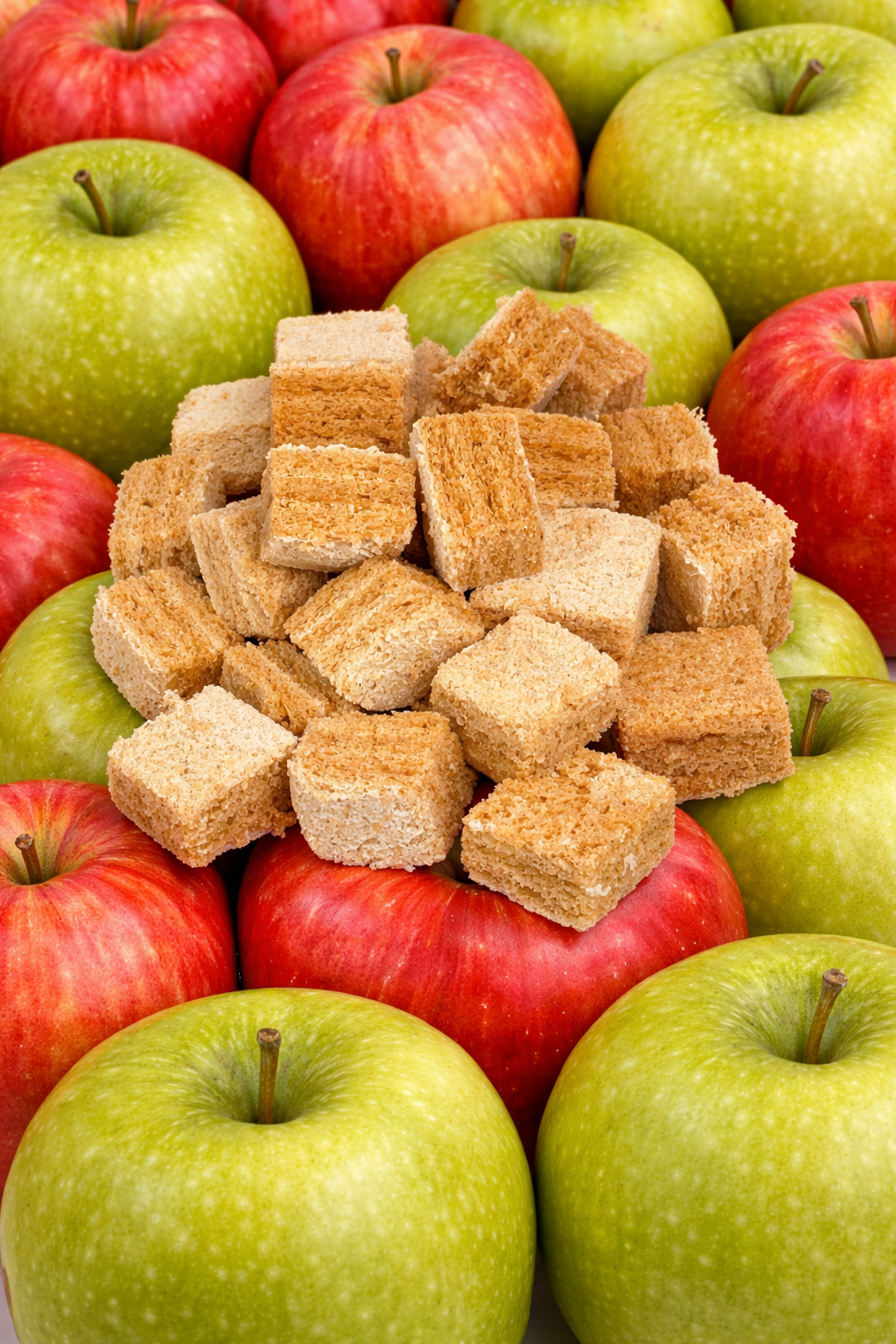
Purée is not a stand-in for chewing a whole apple, even when it retains pulp. For a closer look at the distinction between apple purée and juice concentrate, read our guide to their fiber differences.
How to interpret apple glycemic response
The glycemic index (GI) compares the blood-glucose response to a standard amount of available carbohydrate in a food. It describes glucose response, not insulin response or long-term insulin sensitivity.
Glycemic load (GL) accounts for both GI and the available carbohydrate in a serving. In practical terms, it helps show why portion size matters: a food’s GI alone cannot tell you how much carbohydrate is in the amount you actually eat.
Apple variety and ripeness, food form, serving size, glucose tolerance, and the rest of the meal can all affect the response someone observes. A GI value listed for a particular product can be a reference for that product, but it does not predict every individual’s insulin response or apply to all apples and apple preparations.
Our natural apple snack glycemic index and nutrition chart lists a GI range of 32–38 for K'Apples Natural Apple Snacks. That product-specific figure is not a personal prediction; our fruit snack GI and GL comparison chart also explains why food form and serving size matter when comparing snack types.
Practical ways to include apples in a glucose-conscious meal
Choose a whole apple when you want to keep the fruit’s structure intact. Pairing fruit with a meal or snack containing protein, fat, or other fiber may slow digestion, although those nutrients do not erase the apple’s carbohydrate.
Pay attention to the amount you eat, especially with juice, purée, and dried fruit, where it can be easier to consume carbohydrate quickly. For diabetes-conscious eating, consider the whole meal and your own glucose response rather than labeling apples universally suitable or unsuitable; a clinician or dietitian can help tailor choices.
For a range of flavours rather than a claim that each flavour or serving creates the same glucose response, K'Apples mix brings together options including classic apple cinnamon and apple with blueberry, lime and mint. It is priced at $7 and provides a colourful assortment to consider as part of a portion-conscious snack.
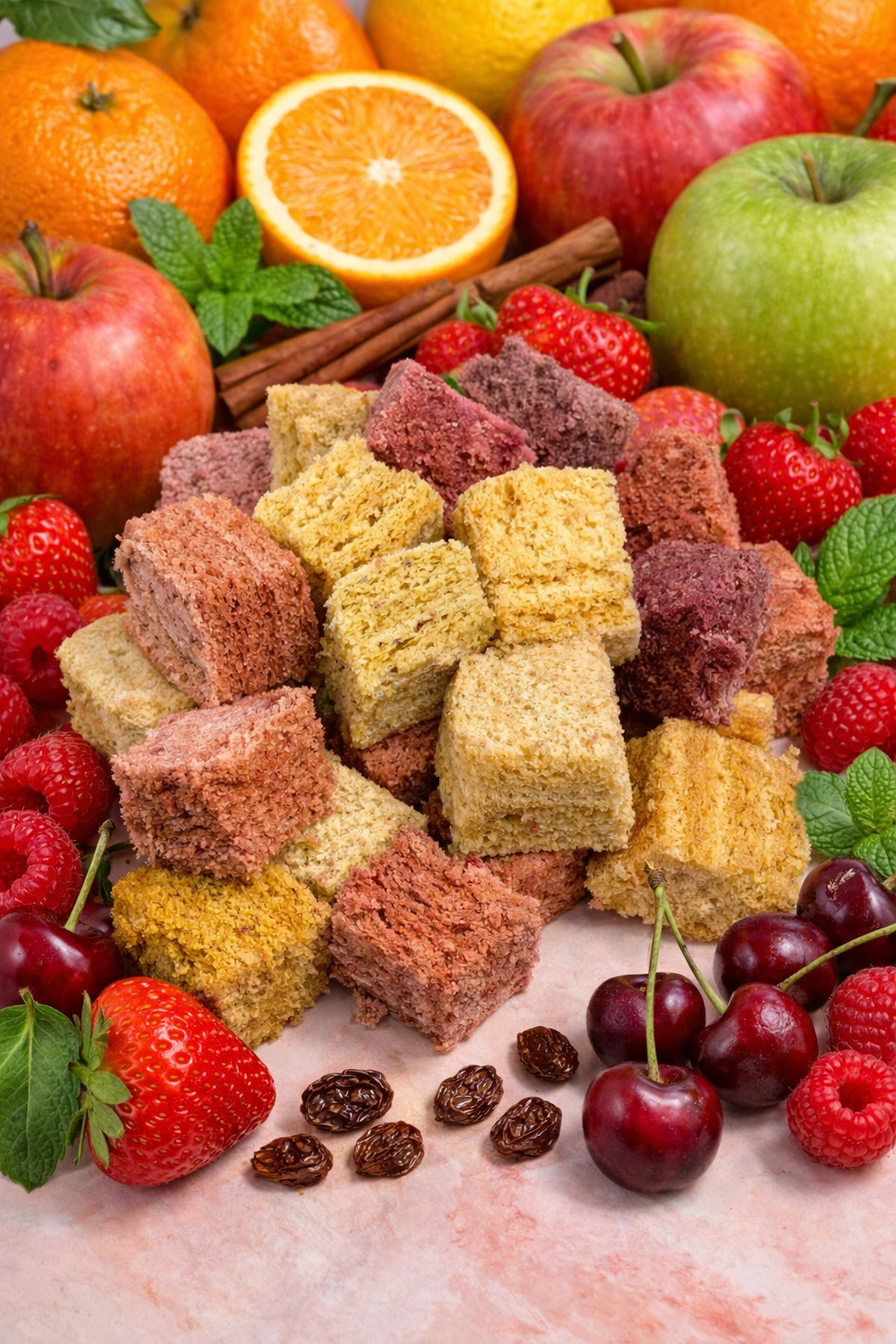
We try to use local ingredients, and our product is 100% natural, without chemicals, gluten, or added sugar.
When counting carbohydrates, include the fruit rather than assuming its fiber makes the carbohydrate irrelevant. Our diabetic carbohydrate-counting guide offers a practical starting point for thinking about portions and meal totals.
Additional product and flavor links
K'Apples flavor options: Option 1, Option 2, Option 3, Option 4, Option 5, Option 6, Option 7, Option 8, Option 9, Option 10, Option 11, Option 12, Option 13, Option 14, Option 15, Option 16, Option 17, Option 18, Option 19, Option 20, Option 21, Option 22, Option 23, Option 24, Option 25, Option 26, Option 27, Option 28, Option 29, Option 30.
K'Apples mix options: Mix option 1, Mix option 2, Mix option 3.
Other product selections: Maxi Kit option 1, Maxi Kit option 2, Maxi Kit option 3, Maxi Kit option 4, Maxi Kit option 5, Maxi Kit option 6, K-Extra product page, K-Extra image.
K'Sticks selections: Option 1, Option 2, Option 3, Option 4, Option 5, Option 6, Option 7, Option 8, Option 9, Option 10, Option 11, Option 12, Option 13, Option 14, Option 15, Option 16, Option 17, Option 18, Option 19, Option 20, Option 21, Option 22, Option 23, Option 24.
Additional selections: Mapples product page, Mapples option 1, Mapples option 2, Mapples option 3, Mapples option 4, Nuages option 1, Nuages option 2, Nuages option 3, Nuages option 4, Nuages option 5, Nuages option 6, Mystery selection.
See the broader all-products collection for additional site selections.
Frequently Asked Questions
Does cooking an apple remove its fiber?
No, cooking does not remove the apple’s fiber, although heat softens the fruit and changes its texture. If you discard cooking liquid, some water-soluble compounds may go with it, but the fiber remains in the cooked fruit.
Can apple pectin supplements be expected to work like eating a whole apple?
No, a supplement supplies pectin without reproducing the whole apple’s mix of fibers, cell structure, water, and other compounds. Its form and dose also differ, so it should not be treated as a direct substitute for the food.
Can people with fructose malabsorption tolerate apples?
Tolerance varies, and apples can trigger symptoms for some people with fructose malabsorption because they contain fructose. A dietitian can help identify an individual’s threshold and suitable alternatives without unnecessary restriction.
Is eating apple skin difficult for some people to digest?
It can be for people who are sensitive to tougher textures or who have certain digestive conditions. Peeling may make an apple easier to chew, while leaving the skin on retains its contribution to the fruit’s fiber and plant compounds.
Which fruits spike insulin the most?
There is no single ranking that predicts insulin response for every person, since studies and individual responses can differ. A fruit’s portion, ripeness, preparation, and the meal around it all influence the result.
How can I compare my glucose response to different apple forms?
If you use a glucose meter or continuous glucose monitor, discuss a consistent testing approach with your healthcare professional and compare similar portions under similar meal conditions. That can help you observe your own glucose pattern, but it does not measure insulin directly.
What's the best fiber for insulin resistance?
Soluble, viscous fibers such as pectin may be helpful because they can slow digestion and carbohydrate absorption. No single fiber treats insulin resistance on its own; including fiber-rich foods as part of an overall balanced eating pattern is more useful than relying on one type.
What food stabilizes insulin?
No single food guarantees stable insulin for everyone. Meals that combine fiber-rich foods with protein and healthy fats may slow digestion and influence the post-meal response, while portion size and individual glucose regulation also matter.
Conclusion
The fructose vs glucose distinction explains why different sugars can produce different immediate blood-glucose patterns, while apple fiber and food structure help shape digestion and carbohydrate absorption. A whole apple, juice, purée, and dried fruit are not interchangeable, and no one form guarantees a particular insulin response.
Fructose vs Glucose: why apple fiber stabilizes insulin response is best understood as a question about possible influences, not a promise. Consider the portion, the food form, the whole meal, and your own needs when choosing apples.
