
· By www.kapples.ch
Boutique Merchandising and Clean Label Economics: A Practical Guide
Boutique Merchandising and Clean Label Economics work together when a shop makes products easy to notice, understand, compare, and buy at a sustainable margin. We can apply the same merchandising principles in specialty food and fashion boutiques, while keeping food-specific ingredient information distinct from fashion details such as materials and care.
Key Takeaways
| Retail priority | What to put into practice |
|---|---|
| Curate with purpose | Choose a focused range for identifiable customer needs, then use specialist guidance to explain its differences. |
| Make claims precise | Describe ingredients, sourcing, materials, and care in plain language. A clean-label phrase alone does not explain a product. |
| Plan for perceived value | Compare price with product attributes and customer demand, then test local price sensitivity. |
| Merchandise across channels | Use clear groupings and readable signs in-store, and concise descriptions and comparison details online. |
| Protect cash flow | Review landed cost, margin, turnover, stock levels, supplier terms, and food waste together. |
| Learn from local results | Test one change at a time, then compare sales and customer feedback over comparable periods. |
For a food-focused look at ingredient transparency and product selection, we also share a guide to clean-label fruit snacks.
What boutique merchandising and clean-label economics cover
Merchandising coordinates a retailer’s assortment, placement, presentation, and customer guidance. Each choice affects what shoppers notice first and how easily they compare options, so a strong product range needs a clear in-store and online presentation.
In a food boutique, clean-label merchandising means making ingredients and sourcing understandable. In a fashion boutique, the comparable task is to explain materials, fit, care, and other relevant product attributes, rather than applying food-label language.
A boutique stands out through a focused assortment and useful specialist guidance. Curation helps customers see why a selection suits their needs, while knowledgeable service answers questions that a shelf or product page cannot.
Economic conditions also affect fashion boutiques. Inflation, household budgets, and consumer confidence can change willingness to spend, so we should review demand and price sensitivity rather than assume all shoppers make the same choices.
For food retailers building a focused range, our guide to identifying natural products for a boutique offers another perspective on product selection.
For example, an assortment can bring together different apple snack flavours while still making each option easy to distinguish. This image illustrates how a grouped range can help shoppers see variety at a glance.

Explain clean-label claims with precise, useful information
Clean label is not a universally defined or regulated certification. Retailers should explain what they mean in specific terms, such as a short ingredient list or ingredients shoppers can readily identify, rather than treating the phrase itself as proof of a product’s qualities.
Use plain language for ingredients and sourcing, and keep signs and online descriptions consistent. A short ingredient list or a natural-sounding phrase does not automatically prove that a product is healthier or safer, so describe the facts without adding unsupported health promises.
Our 100% natural products are made without chemicals, and we try to use local ingredients, including local apples. Our products are without gluten or added sugar, and we explain specific attributes in product information rather than asking a broad claim to do all the work.
Our guide to clean-label standards in Switzerland explores how ingredient and sourcing details can make product information clearer.
Clear ingredient information is especially useful when staff can explain it consistently. Retailer guidance matters: Acosta says 70% of all shoppers want retailers to help them understand clean label products.
Made with fruits, a touch of egg white, and a thin layer of chocolate, K'Sticks. Healthy apple bars provide a concrete example for explaining a product’s ingredients and flavour options. Their options include apple, strawberry, banana, or forest berries with different chocolates; each is priced at $4.

Build an assortment around customer segments and perceived value
Start by identifying customers through their preferences, use occasions, and spending comfort, then give each group a clear reason to choose from the range. A customer segment is a planning aid, not a claim that every person in an age group or household shops alike.
For food, compare ingredient lists, flavours, portion or pack sizes, and occasions. For fashion, compare relevant attributes such as material, fit, care, and season so shoppers can assess meaningful differences instead of sorting through near-identical options.
Balance familiar choices with a small number of distinctive options. An assortment crowded with similar products makes comparison harder and ties up stock that could serve a different customer need.
Perceived value matters alongside price, but local price sensitivity still needs testing. Clean label sales outperformed total store sales by a compound annual growth rate of 8% versus 6%, respectively, over four years, according to Acosta.
At higher prices, 40% of men will pay for clean label products compared to 28% of women.
Source: Acosta
K'Apples. All the flavours gives a food boutique a range of apple purée snacks to compare by flavour and pack size. The range comes in 65 g and 100 g, with one-time purchase or subscription choices, and is priced at $10.
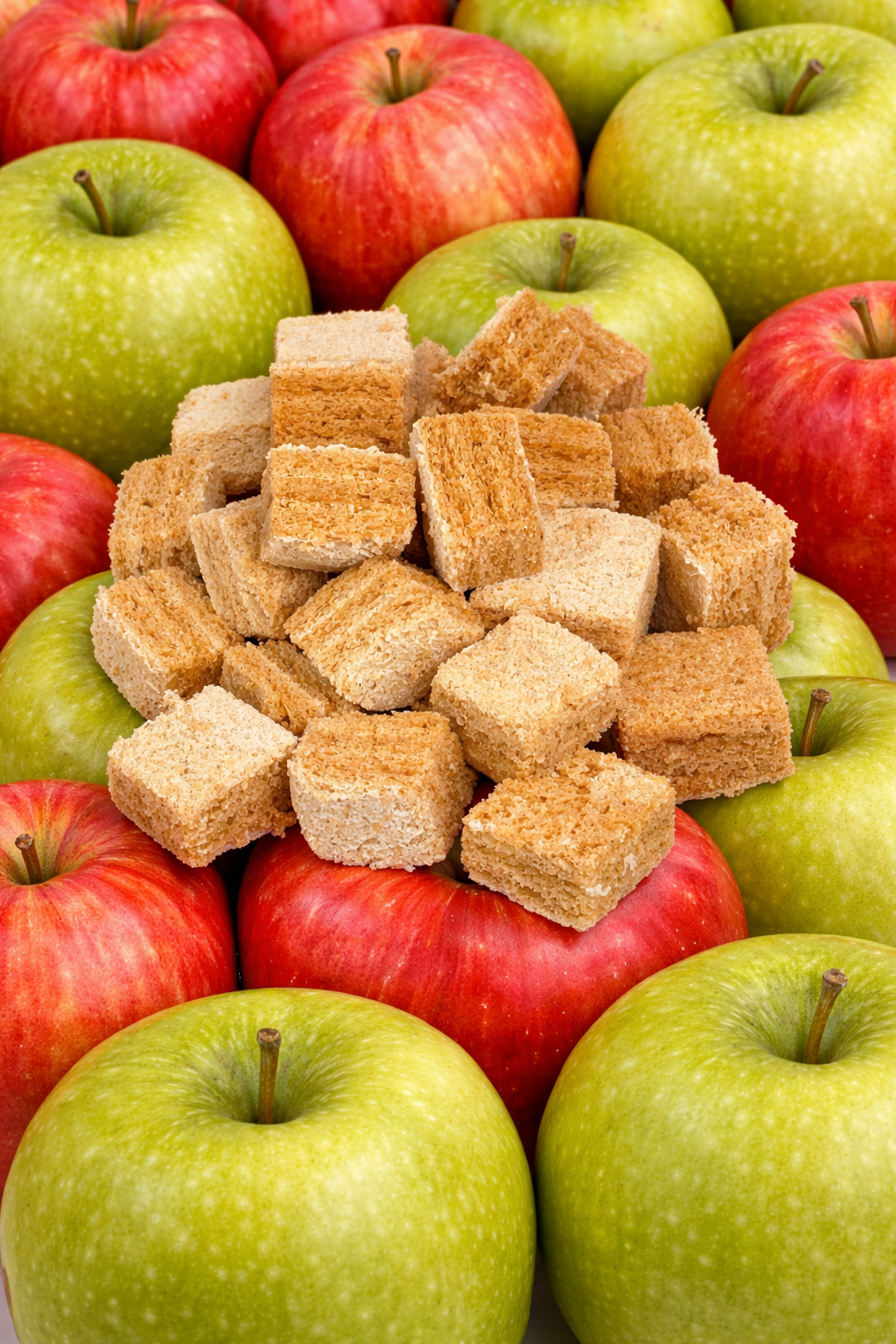
A flavour image can help demonstrate how a clear range supports browsing without crowding the display.
Make displays and product information easy to shop
Place products where their intended shoppers naturally pause, then group them by flavour, use, material, fit, or another attribute that helps people compare. Clear groupings reduce search effort and make a boutique’s visual merchandising easier to understand.
Use readable signs to call out specific differences such as ingredients, sourcing, or pack size. Crowded displays and vague promotional claims make comparison harder, while concise labels help shoppers find the detail they came for.
Apply the same discipline online. Clear product names, short descriptions, and visible comparison details make a digital product page part of the merchandising experience, not simply a checkout step.
Our guide to clean-label snacks in Switzerland offers further context for presenting snack information to shoppers. Awareness is already widespread: Acosta says 83% of shoppers are already knowledgeable about clean label products or have heard the term.
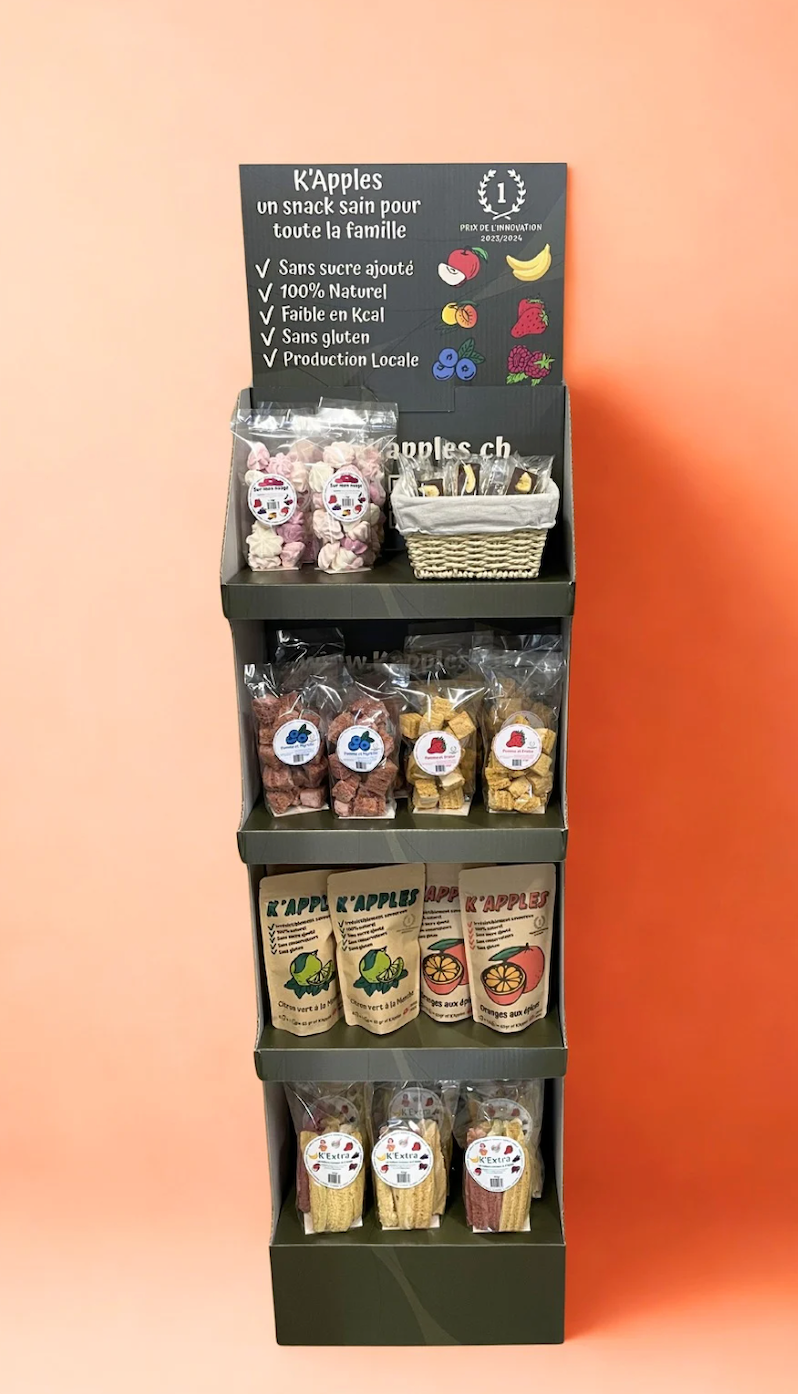
A fixture can bring a considered range together in one place, provided the products and signs remain easy to see. The Display stand for resellers is filled with best sellers, including apple snacks, K’Extra, and assorted K’Sticks; the stand costs $403.
Check the economics behind a clean-label assortment
Calculate gross margin as selling price minus landed cost, and include freight, packaging, and other direct costs where they apply. Leaving these costs out can make an item’s apparent margin look stronger than the amount it contributes.
Track inventory turnover and average stock alongside margin. A high-margin product that sells slowly can tie up cash, while food products can also create spoilage or write-off costs.
Ask suppliers about minimum orders, lead times, and consistency of ingredients or sourcing. These terms affect working capital and whether the shop can keep a selected product available.
Watch basket size and complementary purchases as well as single-item sales. A well-planned assortment can encourage useful add-ons without relying on discounts to move stock.
For boutiques testing a range of pack sizes and flavours, K'Apples. Different kits offers baked-apple snacks in Starter, Seasonal, Maxi, All berry, Canton Vaud, Grand Degustation, and Citrus kits. At $62, the kits include 65 g and 100 g size options.
Complementary products can add range without making a display harder to shop. Retailers comparing product formats can also view K’Extra and its product image.
Manage sourcing changes without losing customer trust
Ask suppliers to communicate changes to ingredients, origins, or production early enough for signs and online descriptions to be updated. Outdated product information can undermine trust when customers rely on it to make a choice.
When a formulation changes, compare the new ingredient information, taste, intended use, and cost before deciding how to describe it. A reformulation is a product change to assess, not an automatic improvement.
Describe local sourcing as a specific, supportable detail. When the origin is known, name what is local and where it comes from rather than relying on a broad promise.
Keep a substitution plan for supply interruptions. Staff can then explain differences in ingredients, origin, or other attributes rather than describing a replacement as identical.
For example, a visible flavour variation can help staff explain that products within one range may differ in ingredients and taste.
Test merchandising changes with store-specific evidence
Change one element at a time, such as sign wording, shelf position, or assortment size. This makes it easier to connect a result to the change rather than to several simultaneous adjustments.
Compare sales, margin, stock turnover, and waste over comparable periods. Account for seasonality and promotions that could affect the result independently of the display or assortment.
Ask customers and staff what they found easy to understand or difficult to compare, then consider that feedback alongside sales data. Neither sales figures nor comments alone explain every reason shoppers make a choice.
Keep a change when it improves the outcome that matters, such as product discovery, margin, or repeat purchase, without making the display harder to shop. This turns shopper insights into a practical routine for refining the boutique.
Frequently Asked Questions
What platform is best for a boutique?
The best platform is one that fits the shop’s sales channels and daily workflow, with inventory, point of sale, and online orders managed in a coherent way. We would also prioritize reliable product-variant handling and reports that staff can use without specialist training.
Who is the target market of a clothing business?
A clothing business should define its audience through the wardrobe needs it serves, such as workwear, occasion dressing, or everyday basics, then consider fit preferences, budget, and shopping habits. A clear point of view helps the boutique make consistent choices about styles and service.
How can a small boutique estimate demand before committing to a large order?
Collect interest through a small sample range, customer interviews, or a waitlist that records preferred options and intended purchase timing. Compare those signals with sales of similar items before deciding how much stock to commit to.
What should a retailer do when customers interpret a clean-label claim differently?
Explain the exact product fact behind the claim and distinguish it from a broader interpretation, such as an assumption about health or safety. Use a short staff reference with approved wording so answers stay consistent across the shop and online.
Conclusion
Boutique Merchandising and Clean Label Economics bring product choice, clear information, customer experience, and retail viability into one practical framework. We can build trust by stating supportable facts, make products easier to compare through thoughtful displays, and protect cash flow by tracking costs, stock movement, and shopper response.
