
· By www.kapples.ch
How K’Apples Are Produced: From Apple Purée to a Dehydrated Snack
Our K’Apples production process starts with a fruit base and ends with a snack preserved through slow hot-air drying. Here’s how apple preparation, ingredients, baking and dehydration each affect the result, and what to look for when comparing fruit snacks.
Key Takeaways
| Question | Short answer |
|---|---|
| What is the base of K’Apples? | K’Apples use pureed Swiss apples and fruit purées, with egg whites also used. |
| How does dehydration differ from baking? | Dehydration removes moisture; baking cooks and sets a mixture, often encouraging browning. A process can include both. |
| What gives a purée snack its texture? | Purée thickness, ingredient composition, drying conditions and final moisture all contribute. |
| Does drying remove natural sugar? | No. Water loss concentrates the fruit’s natural sugars by weight, so dried fruit can taste sweeter. |
| What should I check on an ingredient list? | Look at the fruit base, added ingredients, coatings and allergens, including egg and milk where relevant. |
| Does dried fruit automatically stay shelf-stable? | No. The final moisture, water activity, handling and packaging all influence storage stability. |
How apples become the base of a fruit snack
Fruit-snack production commonly begins with sorting and washing. Removing damaged fruit and washing away surface dirt help make the starting material more consistent; inedible parts such as stems, cores or stones are then removed before usable fruit is puréed.
K’Apples are made from pureed Swiss apples, with cooked applesauce and fruit purées also used as the base.
A smooth purée spreads into a more even layer than irregular pieces, which helps it dry more uniformly. Chunks vary in size and thickness, so moisture escapes at different rates and the finished snack can have a more varied texture.
For the wider farm-to-snack story, the visualized Swiss apple lifecycle describes sourcing and preparation, including the use of apples that meet quality standards even when they have cosmetic imperfections.
What goes into an apple-based snack
K’Apples use pureed Swiss apples and egg whites. Apples provide the main fruit flavour and naturally occurring sugars, while egg white can help give a mixture structure as it is whipped and folded into the fruit base.
Spices such as cinnamon and cardamom bring aroma and flavour without needing added sugar. K’Apples are described as having no added sugar; our products are also gluten-free, and we try to use local ingredients.
Egg is an important allergen to consider when comparing fruit snacks. Read the full ingredient list for other ingredients too: fruit-based recipes differ from snacks that include coatings or additions such as chocolate, which can bring other allergens into the recipe.
The spiced fruit-purée approach helps explain why an apple base can work with different flavour combinations. The flavour range makes that variety clear while retaining an apple-based snack format.
K’Apples. All the flavours brings together several taste options and 65 g and 100 g sizes. At $10, it suits readers who want to compare different fruit and flavour combinations within the apple-purée snack format.
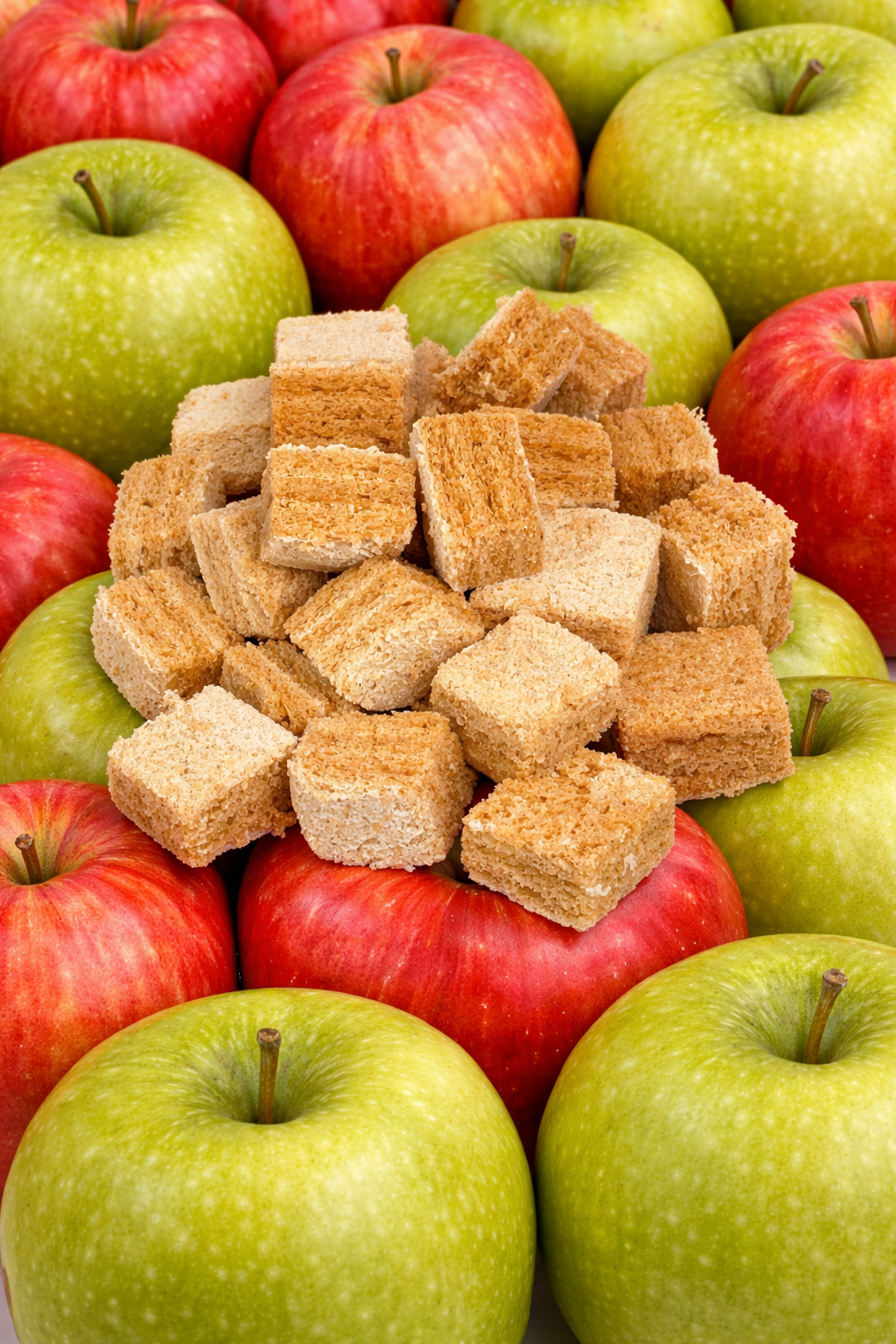
Dehydration and baking do different jobs
K’Apples are described as preserved through slow hot-air drying. Moving warm air carries moisture away from the fruit mixture, which concentrates its flavour and supports preservation.
Dehydration and baking perform different jobs. Baking uses higher heat to cook a mixture, set its structure and encourage browning; dehydration focuses on moisture removal, so one method does not rule out the other in a production process.
Frying differs from both: it cooks food in hot oil, while hot-air drying removes moisture without immersing the snack in oil. Texture alone cannot identify the method, because ingredients, thickness, time, temperature and final moisture all affect whether a snack feels soft, chewy or crisp.
See how fruit is transformed into a snack through the production process. The infographic highlights baked and dehydrated options.
Moisture, cooling and product stability
Removing water reduces the moisture available to many microbes, but drying alone does not guarantee shelf stability. The formulation, final water activity, hygienic handling and packaging all affect how well a snack keeps.
The drying target also shapes texture. Too much remaining moisture can leave a fruit snack sticky or less stable, while excessive moisture removal can make it hard or brittle.
Cooling the snack before packaging helps prevent warm product from creating condensation inside the pack. That moisture can soften the texture and undermine stability, so cooling is part of the production sequence rather than an afterthought.
Packaging that limits moisture exchange helps protect the texture created during drying. The principles behind dehydrated fruit-purée snacks show why a smooth base and careful moisture control matter together; storage life depends on both the snack and its pack.
How processing changes flavour and nutrition
As water leaves fruit, its flavour and naturally occurring sugars become more concentrated per gram. That is why a dried snack can taste sweeter even when its recipe has no added sugar.
Heat and exposure to air can reduce some heat-sensitive nutrients, including vitamin C. Low-temperature processing may limit some effects of heat, but it does not guarantee that every nutrient remains unchanged.
Compare nutrition using the serving size and full ingredient composition. Water loss changes the snack’s weight and concentrates nutrients as well as natural sugars, so a comparison with fresh apples needs equivalent portions and a clear understanding of what else is in the product.
Dehydration does not automatically lower sugar content or glycemic response. Serving size, fruit composition and added ingredients all matter when interpreting nutrition information or considering the glycemic index.
Our fresh-to-dried fruit weight and nutrient reference explains the concentration effect; portions and ingredients also matter when assessing dehydrated fruit snacks.
Compare snack formats and judge process claims
Compare a snack’s fruit base, added ingredients, shape and coating alongside its production method. An apple bar containing egg white and chocolate has a different composition from a plain purée-based dried snack, even when both begin with fruit.
K’Sticks. Healthy apple bars are made with fruits, a touch of egg white and a thin layer of chocolate, with multiple fruit and chocolate taste options. At $4, they illustrate a bar format in which the fruit base and coating both contribute to the finished snack.
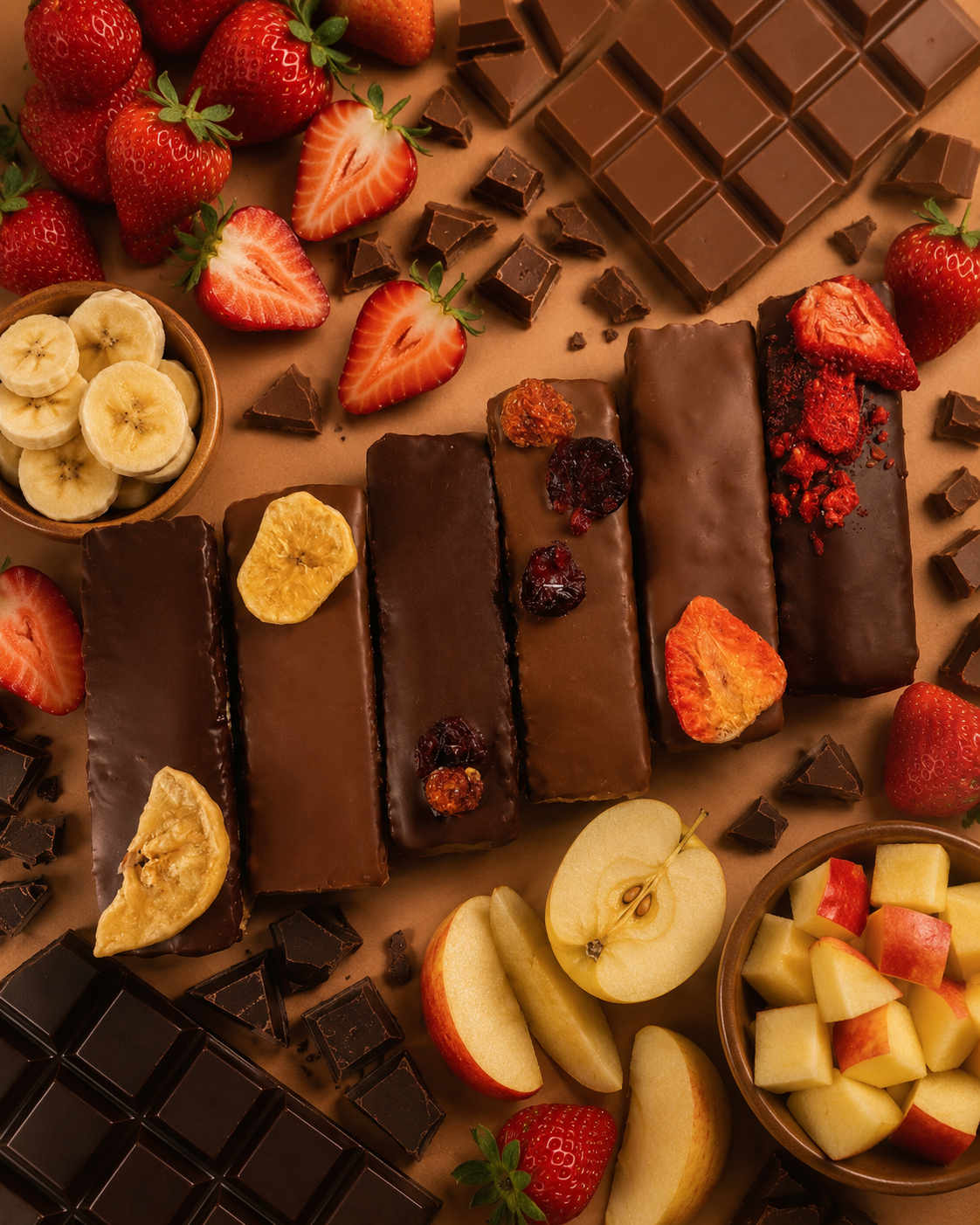
Claims such as gentle baking or vitamin retention need clear process details and relevant nutrient evidence to mean much. A process name alone does not establish a nutrition outcome; for a clean-label comparison, focus on ingredients and processing aids, then consider allergen controls and cross-contact separately.
Our snacks are gluten-free with no added sugar.
For a closer look at apple-based pieces, view this K’Extra snack photograph. Our clean-label fruit snack guide also helps explain how to assess ingredient transparency and processing claims.
See also: K'Apples. All the flavours.
Conclusion
The K’Apples production process starts with an apple-based purée and uses slow hot-air drying to remove moisture and preserve the snack. Understanding how ingredients, drying, cooling and packaging work together makes it easier to compare apple snacks by their real composition and process, rather than by texture or a process label alone.
Frequently Asked Questions
Is hot-air dehydration the same as freeze-drying?
No. Freeze-drying freezes the food and removes ice as water vapour under vacuum, while hot-air dehydration uses moving heated air to carry moisture away. The different methods produce distinct structures and textures.
Can an apple-purée snack be made without egg whites?
Yes. Fruit purée can be formed or bound with other ingredients, such as pectin, starch or plant-based proteins, depending on the recipe. Each choice changes the snack’s structure and ingredient profile.
Does adding cinnamon or cardamom change how quickly a fruit snack dries?
Small amounts of dry spices usually contribute far less moisture than the fruit purée, so their main effect is flavour rather than drying time. A spice blend that contains moist ingredients can change that balance.
Why can two snacks made from apple purée have different chewiness?
Apple varieties differ in pectin and soluble solids, which influence how a purée sets and holds together. The degree of blending also changes how evenly the fruit fibres are distributed through the snack.
Can a dehydrated apple snack still spoil?
Yes. Dried foods are not automatically sterile, and contamination during handling can introduce spoilage organisms after drying. Visible mould, an unusual fermented smell or a swollen package are reasons to discard a snack.
