
· By www.kapples.ch
K'Sticks vs liquid energy gels: which prevents the spike?
K'Sticks vs liquid energy gels: which prevents the spike? The honest answer is that texture alone cannot tell you: carbohydrate dose, ingredients, timing, exercise and your individual response all matter more than whether a fuel is solid or liquid.
Key Takeaways
- A blood-sugar spike is a measured change. Feeling a burst of energy or later fatigue does not prove that blood glucose rose and fell.
- Compare equal carbohydrate amounts. A bar and a gel are not equivalent servings simply because each comes in one package.
- Ingredients matter. Glucose and maltodextrin use one intestinal absorption pathway, while fructose uses another.
- Liquid texture is not proof of a smaller glucose response. It may make a fuel easier to swallow, but does not establish its metabolic effect.
- K’Sticks are apple-based bars with egg white protein. Their fiber and protein make them a different format from a rapidly consumed carbohydrate gel.
- Test a fuel in training. Keep the amount, timing and workout conditions consistent when comparing options.
A blood-sugar spike is not the same as an energy rush
A blood-glucose spike is a rise shown by a glucose measurement, not simply a sudden feeling of energy. Feeling tired later is not proof that your blood glucose first rose and then dropped; pace, effort, hydration, sleep and other factors can affect how you feel.
Do energy gels spike blood sugar? They deliver carbohydrate, so they can affect blood glucose, but the effect depends on the formula, amount consumed, timing, exercise and individual physiology. A gel’s liquid texture alone cannot predict the size of a measured response.
Exercise changes the context: working muscles use carbohydrate for energy, and carbohydrate consumed during activity is handled in a different situation from a snack eaten at rest. That is why the same person may respond differently before and during a workout.
A meaningful comparison needs more than one person’s impression after trying two products. To connect any difference to the bar or gel, compare the same carbohydrate dose at the same time, under similar exercise conditions, using the same glucose-measurement method.
Compare carbohydrate sources and dose, not just the format
Glucose and maltodextrin use the same intestinal glucose transport pathway, while fructose uses a different pathway. Formulas that combine carbohydrate sources can support carbohydrate absorption at higher intake rates, so the label’s carbohydrate types matter alongside the total amount.
Compare nutrition information when carbohydrate doses are matched. Look at total carbohydrate per serving, the listed sources, fiber and protein, and whether the product contains caffeine or electrolytes.
K-Sticks are described as high-fiber, protein-rich apple bars made with Swiss apples and egg whites; they are gluten-free, with no added sugar or salt. Those ingredients give athletes concrete label details to compare with a gel’s carbohydrate formula.
Portable sustained-energy fuel is the role of K’Sticks apple bars. Fiber and protein can make digestion differ from that of a rapidly consumed carbohydrate gel, but the ingredient description alone does not establish a smaller blood-glucose rise.
A low-glycemic description can help set expectations about a food, but it is not a measurement of your personal glycemic response during exercise. For the practical background on apple-based snacks and energy, see the guide to sustained energy and apple puree.
When reading either label, focus on the carbohydrate amount and source rather than front-of-pack language alone. K’Sticks are made with apple and egg white protein, while liquid energy gels vary in ingredients and serving size, so the two formats need a like-for-like comparison.
What a fair K’Sticks-versus-gel comparison can establish
K'Sticks. Healthy apple bars are made with fruit, a touch of egg white, and a thin layer of chocolate, with several fruit and chocolate combinations. The listed price is $4.
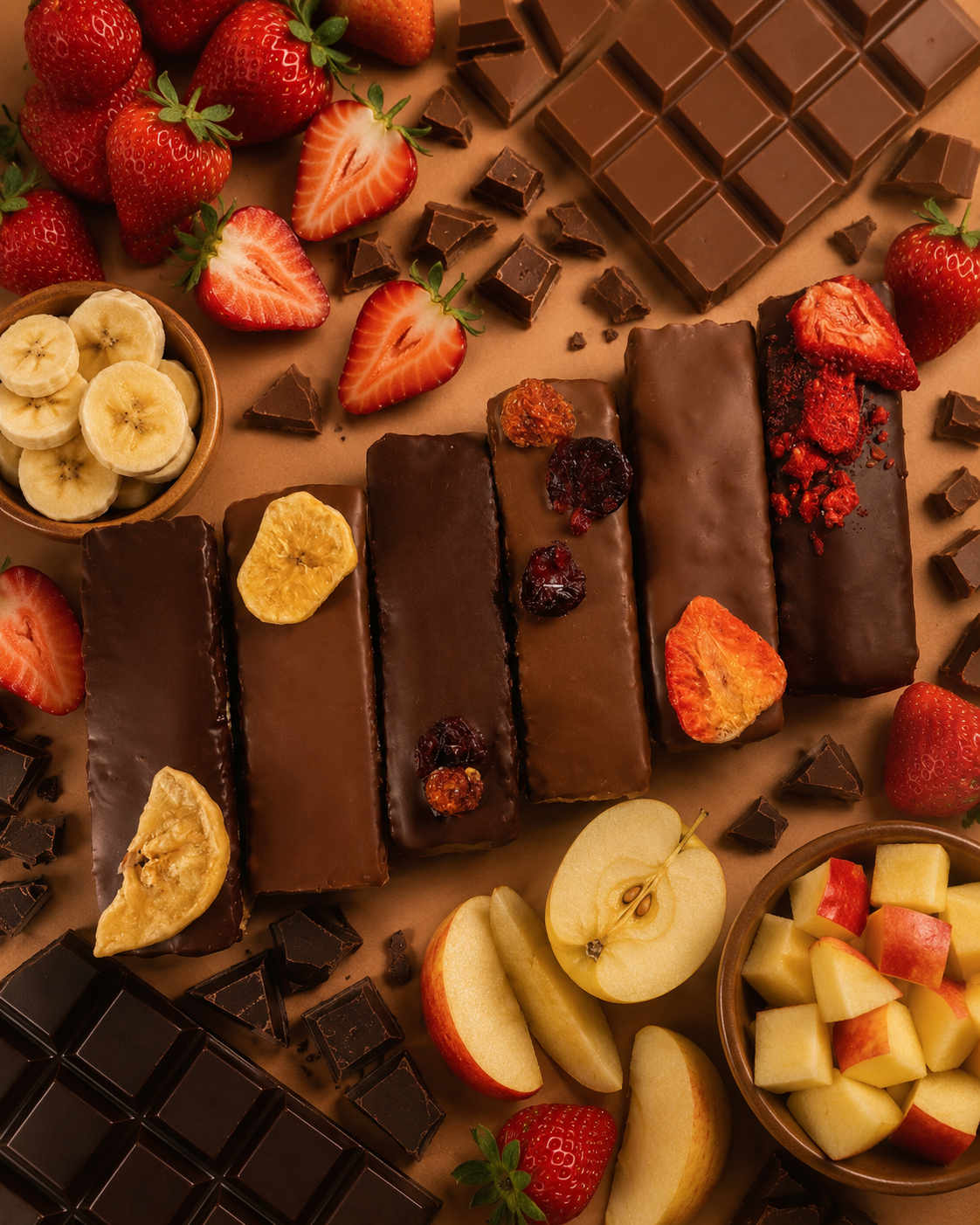
The bar’s listed ingredients do not establish its carbohydrate dose or its glycemic effect. A fair label comparison needs the carbohydrate amount per portion as well as the sources and other ingredients.
“Liquid gel” is not one consistent nutrition profile. Formulas can differ in carbohydrate sources, concentration and other ingredients, so the word gel does not tell you how much carbohydrate you will consume or how your glucose will respond.
A head-to-head test needs to control carbohydrate dose, timing, workout conditions and glucose-measurement method. Without those controls, a difference cannot reliably be attributed to the bar or gel, and neither format can be said to prevent a blood-sugar spike.
We try to use local ingredients, and describe our products as 100% natural and made without chemicals. K’Sticks are gluten-free and have no added sugar, but those product qualities do not substitute for a dose-matched glucose comparison.
Texture affects taking fuel, not necessarily its glucose effect
A thinner texture can make fuel easier to swallow while running, especially when chewing feels inconvenient. That practical advantage does not show that a liquid energy gel will cause a smaller blood-glucose rise than a bar.
Isotonic gels are formulated to be taken without additional water, while more concentrated gels may be intended to be taken with water. Directions vary by product, so consider the water requirement of a concentrated gel.
Compare stomach tolerance and ease of use as well as ingredients. A bar may require chewing, while a gel can be quicker to consume; comfort during movement is important for fueling, but it does not prove a particular glucose response.
K-Sticks are described as apple-based bars made with Swiss cooked apple puree and egg whites, dipped in milk or dark chocolate. That composition gives athletes a specific solid-food option to assess for taste and stomach tolerance in motion.
Match carbohydrate fueling to the workout
For shorter or lower-intensity sessions, a gel or bar may not be necessary. During longer, demanding exercise, carbohydrate fueling can help support performance, so the session’s duration and effort should guide whether you carry fuel.
Taking carbohydrate before exercise is not the same as consuming it during exercise. The workout changes how the body uses fuel, which makes timing an important part of comparing a bar with a gel.
For intense exercise lasting more than 2.5 hours, PMC reports current recommendations suggesting high carbohydrate intake during exercise, with a suggested hourly intake of up to 90 g. That is a high-intake target, not a universal requirement for every athlete or workout.
K'Sticks are identified as a pre-workout product with a high-fiber apple base and no added sugar. The best timing and amount depend on the athlete and session, so a pre-workout snack and an in-workout gel serve different practical moments.
For more on fitting fruit-based snacks into an athletic routine, see our guide to snacks for athletes.
Trial a fuel in training before relying on it
Test a new fuel during a training session that resembles the planned event, rather than making a race or demanding workout the first trial. A familiar route, effort and duration make it easier to judge whether the fuel is manageable while moving.
Change one variable at a time: the fuel, timing or amount. If you change several at once, it becomes harder to identify what may have affected comfort or perceived energy.
If you monitor glucose, compare readings taken in consistent circumstances and interpret them separately from feelings of energy or fatigue. A subjective boost or slump is useful feedback about how you feel, but it is not a blood-glucose measurement.
If you have diabetes or another condition that affects glucose regulation, individualize exercise fueling with a qualified clinician. A comparison between K’Sticks and liquid energy gels cannot replace advice tailored to your health and training.
Frequently Asked Questions
Can I run a 10K without energy gels?
Yes, many runners complete a 10K without gels, though race pace, event duration and what you ate beforehand affect whether carrying fuel is useful. Practise your breakfast and pre-run routine before race day so it feels familiar.
What are the main downsides of using energy gels?
Some runners find gels too sweet, difficult to tolerate, or inconvenient to open while moving. Carrying several sachets also adds packaging to manage during and after a run.
Can I combine a gel or K’Sticks with a sports drink?
Yes, but count the carbohydrate from both sources together so your planned intake reflects the full combination. A sports drink may also contribute fluid and electrolytes, which a bar or gel does not automatically provide.
Can caffeine in an energy gel change when or how I should fuel?
Yes: caffeine can affect alertness, so a caffeinated gel may suit a different point in a session than a non-caffeinated one. Account for caffeine from other foods and drinks, and test your response in training rather than stacking unfamiliar sources on event day.
Do electrolytes in an energy gel prevent a blood-sugar spike?
No, electrolytes serve a different role from carbohydrate and do not establish how your blood glucose will respond. Compare the carbohydrate and electrolyte amounts separately when deciding how a product fits your fueling and hydration plan.
How much carbohydrate should I count when using both a gel and a sports drink?
Count the carbohydrate listed for each serving you actually consume, then add the amounts together. This total helps you avoid treating a drink as hydration alone when it also supplies fuel.
See also: K Extra New Photo, K'Apples. All the flavours.
Conclusion
K'Sticks vs liquid energy gels: which prevents the spike? Without a controlled, dose-matched comparison, neither format can be said to prevent a blood-sugar spike. A liquid texture may help with swallowing, while carbohydrate dose, source, timing, exercise and individual response shape the comparison.
Choose by matching carbohydrate amounts, checking ingredients and testing stomach tolerance during training. K’Sticks offer an apple-based bar with egg white protein; liquid gels offer a varied set of formulas, so assess the actual product rather than relying on format alone.
