
· By www.kapples.ch
No Added Sugar vs. Sugar-Free: The Label Trap and What the Claims Really Mean
No added sugar vs sugar-free: the label trap starts when a front-of-package claim is mistaken for a complete nutrition profile. The two claims make different promises, and neither tells you on its own how many total sugars or carbohydrates you will eat.
Key Takeaways
| What you are asking | The short answer |
|---|---|
| Are sugar-free and no added sugar the same? | No. No added sugar concerns what was added during preparation; sugar-free is a small-quantity threshold for sugars in a serving. |
| Can a no-added-sugar food still contain sugar? | Yes. Naturally occurring sugars from fruit and other ingredients contribute to Total Sugars. |
| Can a sugar-free product contain a little sugar? | Yes. The American Heart Association says one serving contains less than 0.5 grams of sugars, both natural and added. |
| What should I read besides the front label? | Compare serving size, Total Sugars, Added Sugars, Total Carbohydrate, calories, fiber and the ingredients list. Our guide to no added sugar versus sugar-free labels explores the distinction further. |
| Does no added sugar mean low calorie or low carbohydrate? | No. The claim does not set a limit for calories or total carbohydrates. |
| What about fruit sugars? | Their source and form matter. Our natural fruit sugar FAQ looks at fruit sugars and dietary considerations. |
No added sugar and sugar-free make different promises
No added sugar means sugars were not added during processing or preparation. A food can still contain naturally occurring sugars, which are included in Total Sugars on the Nutrition Facts label.
Sugar-free is a quantity claim, not a promise of absolute zero. The American Heart Association says one serving contains less than 0.5 grams of sugars, both natural and added.
So a no-added-sugar food may contain several grams of sugar from fruit, while a sugar-free food may use non-sugar sweeteners to provide sweetness. Neither claim proves that a food is low in calories, low in carbohydrates or healthy overall.
The label trap is simple: one phrase describes the recipe, while the other describes the amount of sugar in a defined quantity. Read the rest of the panel before deciding which claim answers your actual question.
Most participants favor products with this label, ignoring they may still contain high sugar.
Source: University of Bayreuth
Natural sugars still count, and their source matters
Read Total Sugars separately from Added Sugars. Sugars naturally present in fruit, milk and similar ingredients add to Total Sugars without necessarily counting as Added Sugars.
Whole fruit keeps its cellular structure and fiber. Juice and fruit concentrates deliver sugars in a more concentrated form, while purée changes the fruit’s structure; the ingredient source and the processing both shape the food’s nutritional context.
For a fruit-forward example, K’Apples. All the flavours is an apple-purée snack range described by us as having no added sugar. It costs $10 and includes flavours such as apple with cinnamon, pear with cardamom, strawberry, raspberry, forest berries, lime with mint, and lemon with honey, making it a useful example of why fruit-derived sugars can still appear under Total Sugars.
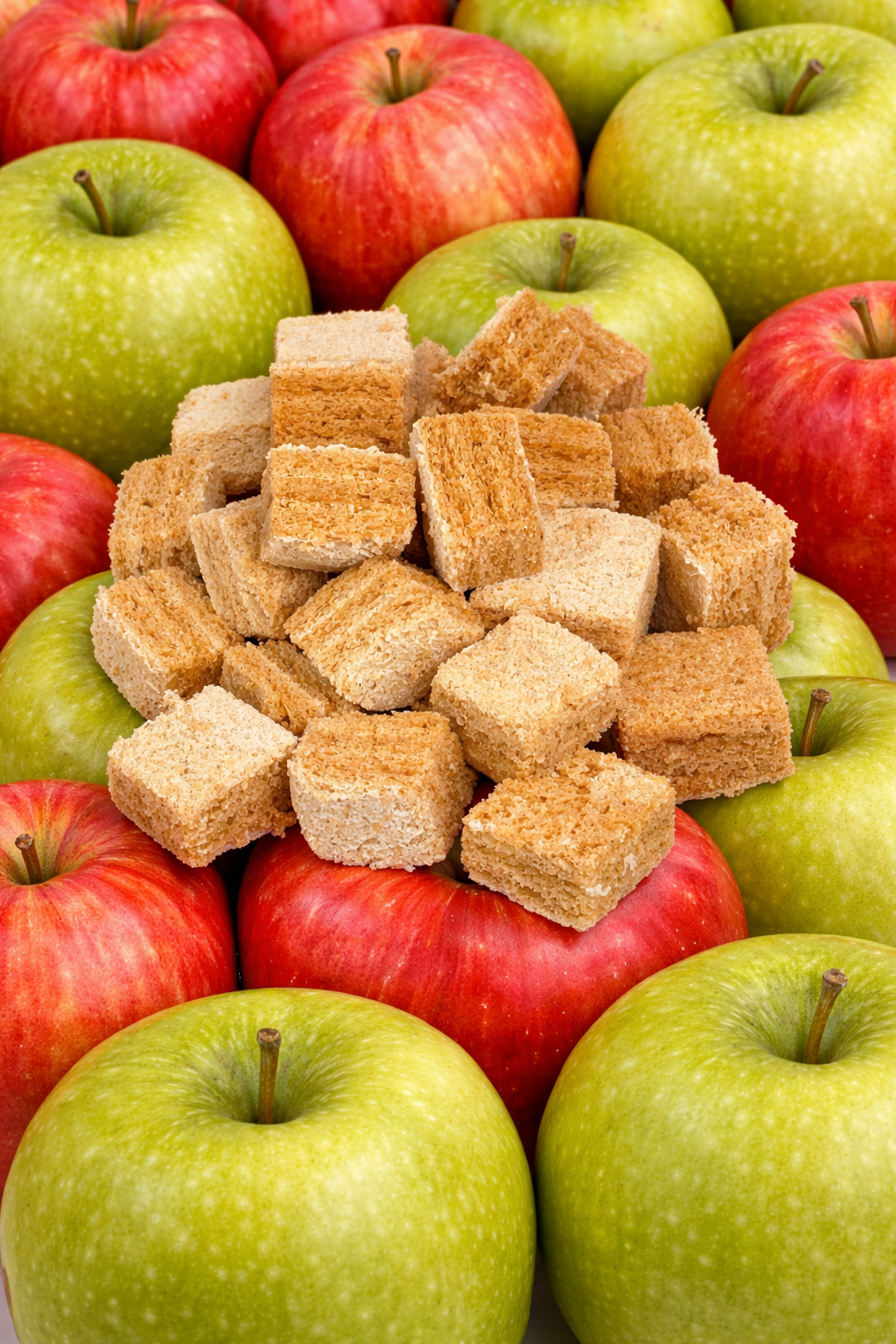
Natural does not mean sugar-free, and sugars from different fruit ingredients do not automatically have the same nutritional context. A whole apple, apple purée, juice and concentrate are not interchangeable simply because each comes from fruit.
Check the ingredients list for sweeteners and added sugars
Look for sugar, syrups, honey and other ingredients used to sweeten a food. The Added Sugars line on the Nutrition Facts label helps show how much added sugar contributes per serving.
Then separate sugar substitutes from sugars. Stevia and sucralose can make food taste sweet without adding sugars; sugar alcohols such as erythritol and sorbitol are a separate ingredient category.
A no-added-sugar claim does not, by itself, rule out sugar substitutes or sugar alcohols. Read the ingredients list as well as the panel; our Clean Label and Additive Dictionary explains common label terms and ingredients.
Keep related claims distinct. Unsweetened does not mean sugar-free, and reduced sugar means less sugar than an appropriate reference food, not no sugar.
Compare serving sizes, sugars and carbohydrates together
Start by comparing products on the same serving basis. Then ask whether the labeled serving resembles the amount you would actually eat, because a small serving can make a sugar claim look more significant than it is for a larger portion.
On the Nutrition Facts label, read Total Sugars and Added Sugars together. The FDA sets the Daily Value for added sugars at 50 grams per day based on a 2,000 calorie daily diet; this provides label context, not an individual target.
If you manage diabetes or track carbohydrate intake, check Total Carbohydrate as well as sugars. Starches and some sugar substitutes can contribute carbohydrates without appearing as sugars on the label.
For a like-for-like comparison, put calories, fiber and the ingredients list beside the sugar figures. Our apple snack glycemic index and nutrition chart offers another way to think about fruit snacks within a broader nutrition picture.
- Limiting added sugars? Focus on the Added Sugars line and ingredients list.
- Tracking carbohydrates? Compare Total Carbohydrate using a realistic portion.
- Choosing a fruit snack? Consider its fruit form, fiber and the rest of its ingredients.
Treat the claim as one clue, not a health verdict
Choose by the need that matters to you: limiting added sugars, monitoring total carbohydrates, or finding a portable snack. Sugar-free is not universally better, and a no-added-sugar product can still contain naturally occurring sugars or affect blood glucose.
For a bar example, K’Sticks. Healthy apple bars combine fruits, a touch of egg white and a thin layer of chocolate. We describe the bars as without added sugar, and the $4 price makes them a clear illustration of why you should assess the full ingredient combination as well as the claim.
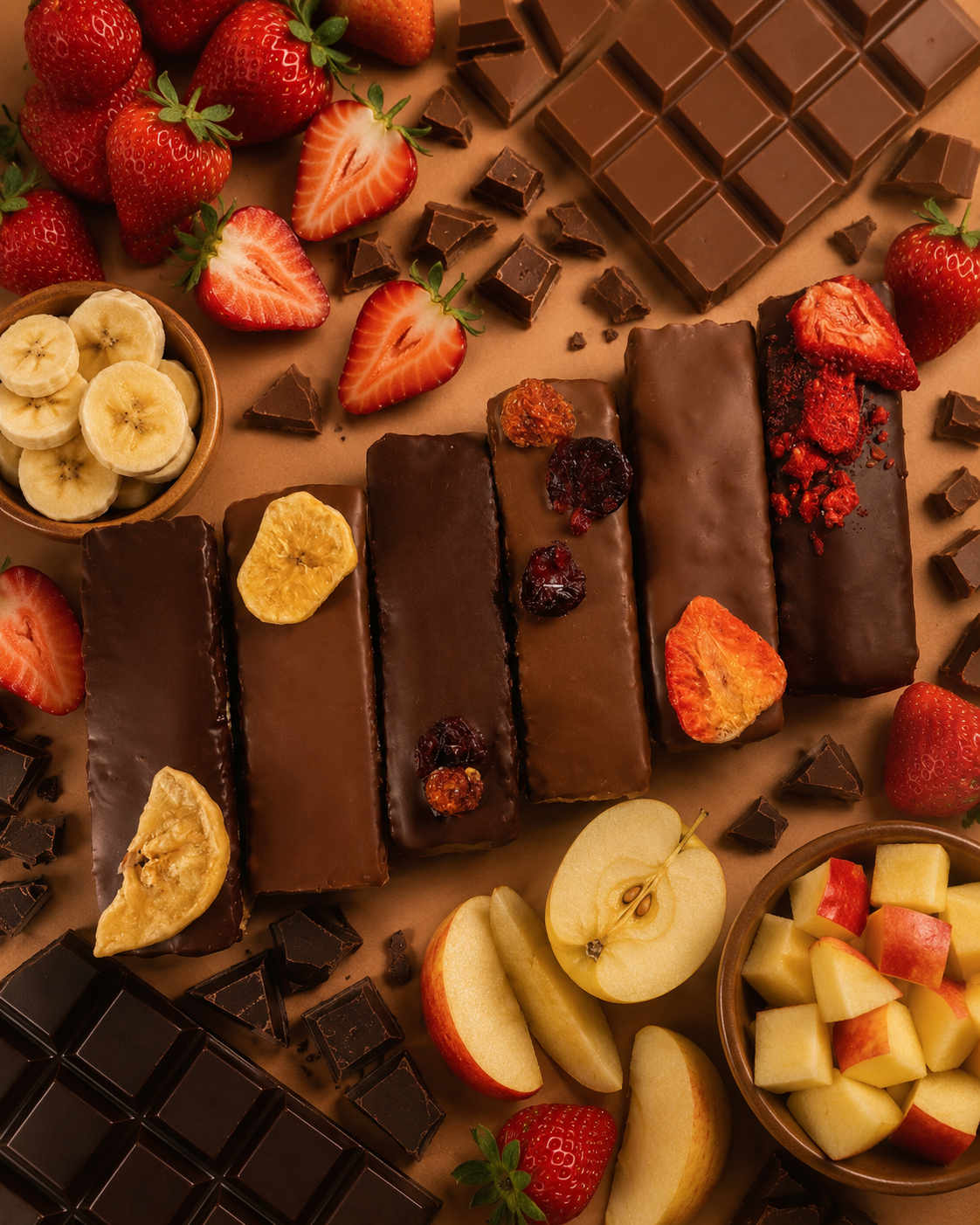
Sweet taste does not prove that sugar was added. The fruit itself can provide sweetness, while a no-added-sugar claim says nothing by itself about how a person’s blood glucose will respond.
We try to use local ingredients. Our snacks are without gluten and have no sugar added.
See also: K Extra New Photo, K'Apples. All the flavours.
Conclusion: No added sugar vs sugar-free, read beyond the claim
No added sugar vs sugar-free: the label trap disappears when you separate what was added from how much sugar is present in a serving. Natural sugars can remain in no-added-sugar foods, and sugar-free products can still contain a small amount under US rules.
Compare serving sizes, Total Sugars, Added Sugars, Total Carbohydrate, calories, fiber and ingredients. The front label is one clue. The full panel is the decision.
Frequently Asked Questions
Can sugar-free sweeteners affect blood glucose even when they do not count as sugars?
Some non-sugar sweeteners have little direct effect on blood glucose when used in small amounts, but responses can vary by sweetener and person. The rest of the food can also affect the response.
Can sugar alcohols such as sorbitol or erythritol cause digestive discomfort?
Yes. Sugar alcohols can draw water into the bowel or be fermented by gut bacteria, which may cause gas, bloating or loose stools, especially when a person consumes a larger amount.
Do sugar alcohols count toward total carbohydrates when tracking carbs?
On US Nutrition Facts labels, sugar alcohols are included within Total Carbohydrate when present. Some people use a separate adjustment for tracking, but the appropriate method depends on their care plan.
Is “no sugar” a regulated US label claim with the same meaning as “sugar-free”?
It does not mean that the product has no carbohydrates or calories.
