
· By www.kapples.ch
Sensory-Led Snack Discovery: A Gentle Guide to Exploring Food with Children
Sensory-led snack discovery turns an everyday snack into a calm chance for children to notice food at their own pace. With a familiar starting point, clear choices and no pressure to taste, adults can make room for curiosity without turning snack time into a test.
Key Takeaways
- Pair one familiar food with one new or less familiar option to keep the snack simple and predictable.
- Invite children to look, smell, touch or taste, while making every step optional.
- Describe observable features such as colour, shape, texture and smell rather than labelling a food good or bad.
- Adjust the activity to the child’s sensory preferences, and change one feature at a time.
- Build exploration into a regular snack-time routine and note what the child does, without scoring the response as success or failure.
- Use fruit snack variety packs as one possible way to offer flavour choices gradually.
Set up a calm, low-pressure snack activity
Start with one familiar food and one new or less familiar food. A small, predictable selection helps children focus on a single new sensory experience instead of managing several unfamiliar choices at once.
Make touching, smelling and tasting invitations, not requirements. A child can watch, move the food with a utensil or finish without trying it; pressure can make exploration feel stressful and reduce the sense of control.
Before serving, account for known allergies, clean hands and surfaces, and food hygiene. Prepare each food in a way that suits the child’s age and abilities, avoiding small, hard or otherwise unsafe pieces that could pose a choking risk.
Keep edible food separate from non-food sensory materials, and supervise children closely while they eat. Snack exploration still involves eating, so safe preparation and attention matter throughout the activity.
Explore a snack through sight, smell, touch, taste and sound
Begin with visual sensory cues: invite the child to notice a food’s colour, shape and size. They can point, look quietly or describe what they see without being asked to take a bite.
From there, offer a gradual path: look, smell from a comfortable distance, touch with a utensil or fingertip, and taste if the child chooses. Children can skip steps, repeat one, or stop at any point.
Use neutral descriptions such as smooth, firm, fruity-smelling, sweet or tart. These words focus attention on what the child notices, rather than asking them to judge the food as good or bad.
If a food naturally makes a sound when handled or eaten, you can notice it together. Skip sound prompts and other added sensory cues if they distract or unsettle the child.
A small selection makes flavour comparison manageable. K'Apples mix is a colourful mix for trying different flavours, with 50 g, 100 g, 200 g and 350 g size options and Forest berries, Oriental fusion and general mix options. Set out one piece or option at a time so a child can compare visible differences and taste choices gradually.
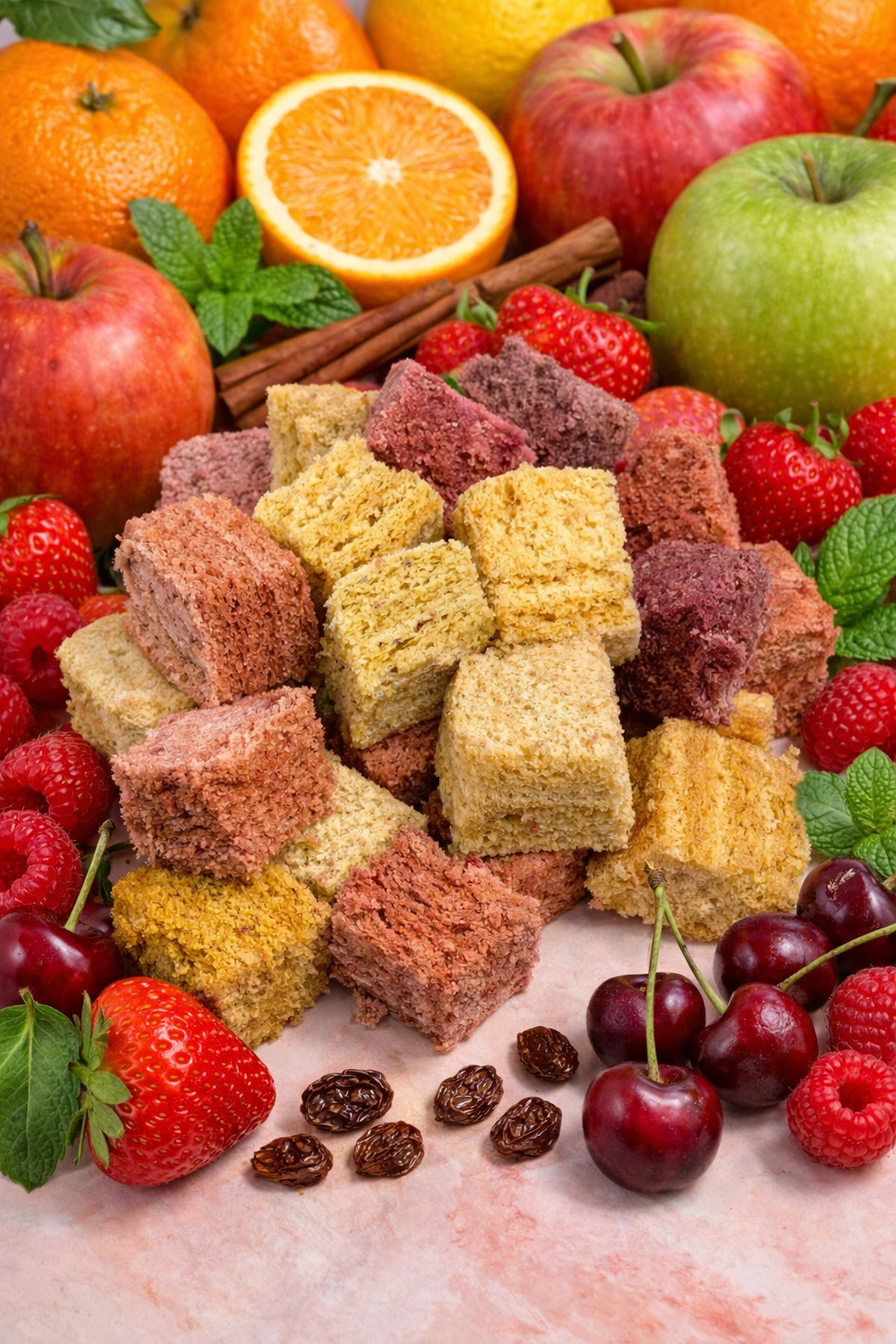
We make our 100% natural products without chemicals, with no gluten and no added sugar, and try to use local ingredients.
Most consumers tune into snack sensory cues and get excited finding new snacks to try.
Source: Cheese Reporter
Change the presentation while keeping the food familiar
Keep most of the snack predictable and change one feature: offer a smaller portion, arrange a familiar food in a new way, or place it in a separate section of the plate. This gives the child a manageable visual or tactile detail to notice without changing the whole snack experience.
Present different flavours separately before combining them. Children can compare colour, smell and taste one option at a time, which can make a mixed flavour or texture feel less overwhelming.
K'Apples. All the flavours is a range of apple purée snacks in multiple flavours and 65 g and 100 g sizes. It suits gradual comparison: offer one flavour first, then introduce another on a different occasion or beside a familiar food.
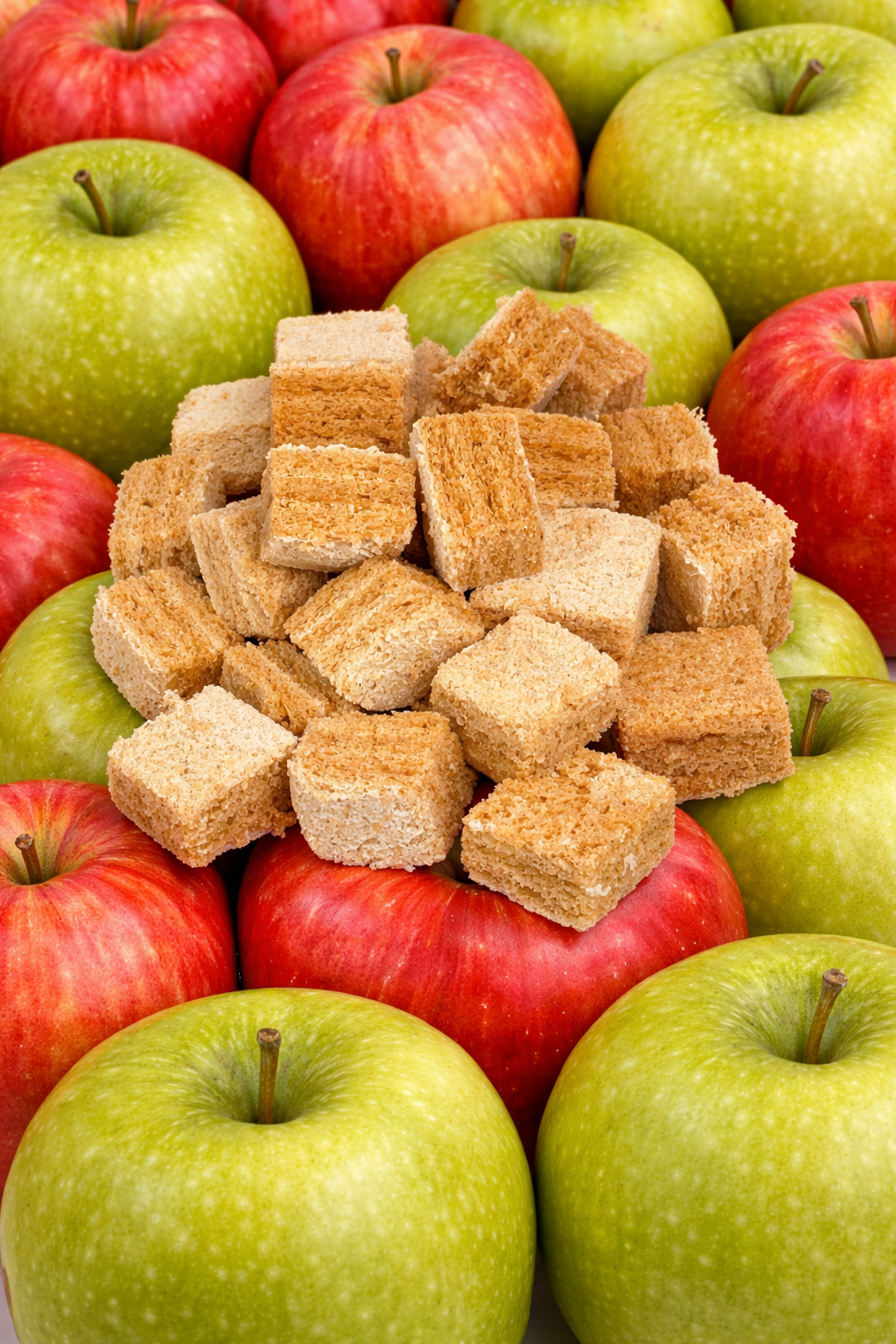
Present a new food clearly rather than disguising it inside a familiar one. Honest food presentation supports trust and lets a child decide whether to look, smell, touch or taste.
Adapt exploration to the child, not to a checklist
Direct touch is only one way to join a sensory-led food exploration activity. A child can observe from a comfortable distance, smell without bringing food close, or use a spoon to move a piece; participation does not depend on handling food.
If a child avoids a particular texture, smell or combination, keep that feature separate and offer another way to observe. Texture aversion and food selectivity can look different from child to child, and the same approach may not suit every setting.
Notice patterns in the child’s mealtime behavior: do they prefer foods kept apart, predictable textures or a quieter space? Change one feature at a time so it is easier to see what makes the activity more comfortable.
Sensory preferences can have many explanations. A single preference or food refusal does not establish a diagnosis, and adults should avoid assuming that one response tells the whole story.
Make snack discovery part of a familiar routine
Choose a consistent, brief point in a home or school snack routine, with familiar seating and predictable steps. A routine helps children anticipate what will happen and gives adults a steady way to offer food exploration.
Afterward, note a few observable details: whether the child looked, smelled, touched, tasted, moved the food away or watched someone else. These records describe the child’s engagement without labelling the activity a success or failure.
Compare comfort across occasions and settings, then pause or simplify if distress increases. A child’s response can vary from one day to another, so a single snack does not define their overall comfort with a food.
Keep the activity playful and voluntary. Do not make tasting a condition for finishing snack or receiving a reward, because that changes exploration into a demand.
Know what food play can and cannot do
Food exploration gives children practice noticing, describing and handling foods. Picking up or moving pieces can also involve small hand movements, but sensory play does not guarantee that a child will accept or eat a new food.
If eating difficulties affect health, growth, nutrition or daily life, seek individualized feeding or nutrition support. Playful snack activities can complement that support, but they do not replace it.
Stop and reassess if the activity brings persistent distress, unsafe eating or concerns about swallowing. Adapt or end the activity rather than pushing a child to continue.
For a visual example of another fruit-snack format, see this fruit snack product image.
Browse additional flavour and format selections
Choose only the options that suit your child’s activity and food-safety needs.
Apple purée selections: apple purée option · apple purée option · apple purée option · apple purée option · apple purée option · apple purée option · apple purée option · apple purée option · apple purée option · apple purée option · apple purée option · apple purée option · apple purée option · apple purée option · apple purée option · apple purée option · apple purée option · apple purée option · apple purée option · apple purée option · apple purée option · apple purée option · apple purée option · apple purée option · apple purée option · apple purée option · apple purée option · apple purée option · apple purée option · apple purée option.
Fruit mix selections: fruit mix option · fruit mix option · fruit mix option.
Tasting-kit selections: tasting-kit option · tasting-kit option · tasting-kit option · tasting-kit option · tasting-kit option · tasting-kit option.
Additional snack-format selections: fruit snack format · apple snack format · apple snack format · apple snack format · apple snack format · apple snack format · apple snack format · apple snack format · apple snack format · apple snack format · apple snack format · apple snack format · apple snack format · apple snack format · apple snack format · apple snack format · apple snack format · apple snack format · apple snack format · apple snack format · apple snack format · apple snack format · apple snack format · apple snack format · apple snack format.
Other product selections: apple snack selection · apple snack selection · apple snack selection · apple snack selection · apple snack selection · fruit snack selection · fruit snack selection · fruit snack selection · fruit snack selection · fruit snack selection · fruit snack selection · fruit snack selection.
Frequently Asked Questions
What are some examples of sensory snacks?
Try a soft fruit purée, a crisp fruit slice prepared safely for the child, or a smooth food alongside one with a more noticeable texture. A sensory snack can also involve comparing colours or smells without eating the foods.
Is food texture an autism thing?
Autistic people can have sensory preferences, but food texture preferences also occur for many other reasons and vary widely among individuals. One texture preference by itself does not determine whether someone is autistic.
How often should I repeat a food exploration activity?
There is no single schedule that suits every child; repeat it when the child is comfortable and the routine allows a calm opportunity. If the activity starts to feel like a demand, give it space before offering it again.
How long should a sensory snack activity last?
Let the child’s attention and comfort set the pace rather than aiming for a fixed number of minutes. End the activity while the child can still leave the table settled and ready to continue their routine.
What should I do if my child’s response to the same food changes from one day to the next?
Record what was different around the snack, such as the room, noise level, timing or who was present. Those details can help you distinguish a change in the food response from a change in the surrounding experience.
Conclusion
Sensory-led snack discovery works best when children have a predictable starting point, clear choices and permission to engage in their own way. Keep the activity safe and brief, notice what the child does, and let familiarity grow without making tasting the goal.
