
· By www.kapples.ch
Why Glycemic Load Matters More Than Calorie Counts for Satiety
Why glycemic load matters more than calorie counts for satiety comes down to context: calories measure energy, while glycemic load (GL) estimates the blood-glucose effect of the available carbohydrate in a portion. Neither number alone can predict exactly how filling a food will feel, but GL adds portion information that calories do not provide.
Key Takeaways
| Question | Short answer |
|---|---|
| Why can similar-calorie foods affect hunger differently? | Protein, fiber, water, volume, texture, and energy density also shape fullness. |
| How is GL different from GI? | GI compares carbohydrate-related blood-glucose responses; GL also accounts for the available carbohydrate in a serving. |
| Does low GL guarantee lasting fullness? | No. It is one food-choice measure, not a complete measure of nutrition or satiety. |
| How can I estimate GL? | Multiply GI by the serving’s grams of available carbohydrate, then divide by 100. |
| Should I stop counting calories? | No. Calories help describe energy intake; use them alongside food composition and portion size. |
| What is a practical approach? | Build balanced meals from minimally processed foods, then use GL as an additional lens when it helps. |
Calories Describe Energy, Not the Whole Experience of Fullness
Calories measure the energy food provides, but they do not tell you how much protein, dietary fiber, or water a serving contains. Volume and texture can also affect how substantial a meal feels while you eat.
That is why two foods with similar calorie counts can affect hunger differently. A food with more water or fiber may take up more space in a meal, while protein can contribute to fullness; energy density also matters because it describes how much energy a given weight of food provides.
Calories still matter when you are considering overall energy intake. Use the number to understand energy, not as a standalone ranking of which foods will satisfy you best.
Two related terms help explain the difference. Satiation is the feeling of fullness that brings a meal to an end; satiety is how full you feel afterward and how long that feeling lasts.
A food may help you feel satisfied during a meal but have a different effect on how long you stay full. That is one reason calorie counts alone cannot describe the full experience of eating.
GI and GL Answer Different Questions
The glycemic index (GI) compares the blood-glucose response to a fixed amount of available carbohydrate in a food with the response to glucose. The Linus Pauling Institute classifies carbohydrate-containing foods as low GI at 55 or below, moderate GI from 56 to 69, or high GI at 70 or above, relative to pure glucose at GI 100.
GI describes a food’s carbohydrate-related response under a defined comparison, but it does not account for how much available carbohydrate you actually eat. GL adds that portion-aware context:
GL = GI × available carbohydrate grams per serving ÷ 100
Available carbohydrate means the carbohydrate that can be digested and contribute to the blood-glucose response. A food can have a high GI but a modest GL when a usual portion contains little available carbohydrate; a large carbohydrate portion can raise GL even when its GI is relatively low.
For example, Harvard Health Publishing notes that watermelon has a high GI of 80, while a serving has a GL of 5 because it contains little carbohydrate. The example shows why a GI value alone does not tell you the portion’s estimated effect.
Use GL as an estimate of a food’s potential blood-glucose effect, not as a measure of calories, nutritional quality, or fullness by itself. Our glycemic load snack chart offers a way to compare GI and GL while keeping serving size in view.
A low-GI food is not automatically low-GL, and a low-GL food is not automatically low-calorie. Portion size and the food’s overall composition still count.
How Blood-Glucose Response May Relate to Hunger
During digestion, carbohydrate is broken down into sugars that enter the bloodstream. The size and speed of the rise in postprandial blood glucose depend partly on how much available carbohydrate you eat, the structure of the food, and how it has been processed.
After eating, insulin helps move glucose from the blood into tissues. But a larger or faster glucose response does not lead to the same hunger pattern in every person, because appetite reflects more than blood glucose and insulin response alone.
Some people may notice hunger or cravings return quickly after certain meals. That experience can be useful personal feedback, but it does not make GI a precise forecast of appetite or of how long an individual will feel full.
A mixed meal adds more variables than a single-food GI value can capture. Protein, fat, fiber, portion size, preparation, and the combination of foods can all affect digestion and the overall response.
For that reason, GL can add perspective to calorie counts when you are thinking about satiety, but neither number predicts a person’s exact appetite response.
Protein, Fiber, Portion Size, and Preparation Matter Too
Fiber-rich foods can add bulk and may slow digestion, while protein can contribute to fullness. When you compare snacks or meals, consider these factors alongside available carbohydrate and GL rather than relying on a simple-versus-complex carbohydrate label.
Pairing a carbohydrate food with foods that provide protein or fiber can make a more substantial mixed meal. Fruit with nuts or yogurt is one practical example, and the combination may change digestion and the meal’s overall response.
Our guide to low-glycemic and high-fiber snacking explores how to think about those food qualities together.
Cooking and food processing can change starch structure and how quickly carbohydrate is digested. Softer, more finely processed foods often digest faster than less processed, intact forms, while ripeness and serving size can change the available carbohydrate in a portion.
Those differences make a single GI value an estimate, not a precise result for every recipe or preparation. Looking at texture, processing, portion, and the rest of the meal gives a fuller picture.
For a fruit-bar example, K'Sticks. Healthy apple bars are made with fruit, a touch of egg white, and a thin layer of chocolate, with several fruit and chocolate taste options. They suit this discussion because their ingredients and texture illustrate why a snack is more than its calorie count.
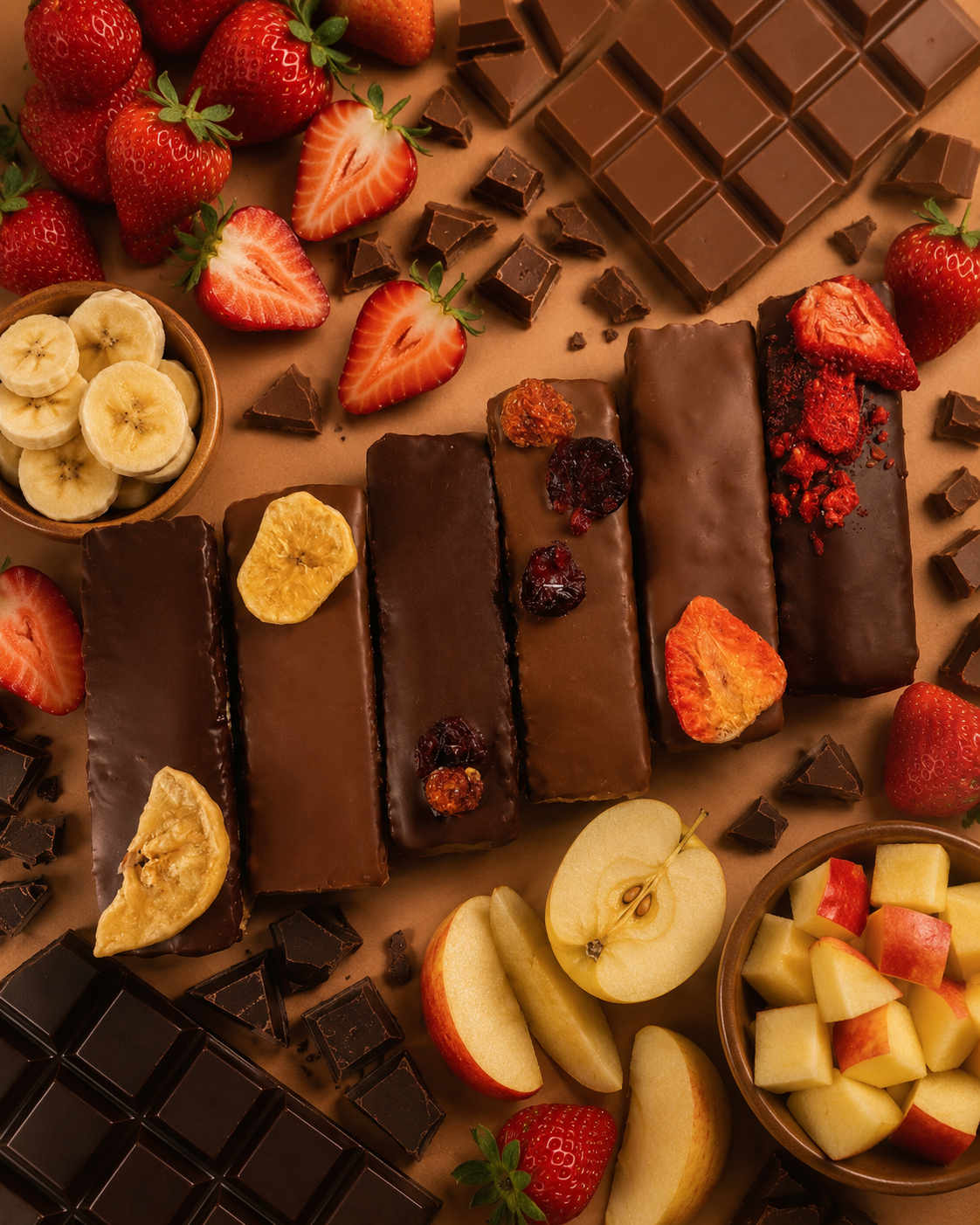
We make our products without gluten or added sugar, try to use local ingredients, and make our 100% natural products without chemicals. Those qualities describe our product approach; they do not, on their own, predict how filling a particular serving will be.
What the Satiety Research Can and Cannot Show
One study found that participants reported 7% greater satiation on a low-GL diet than on a high-GL diet, as reported in PMC (Nutr Cancer). That is a finding from that study, not a guaranteed effect for every person, meal, or low-GL choice.
Adults in a study reported greater satiation on a low-glycemic-load diet than a high-GL one.
Source: PMC (Nutr Cancer)
When comparing diets, consider whether fiber, protein, food choices, or other features also differed. If several parts of the diet changed together, a study may not isolate GL as the sole reason for a difference in reported fullness.
A short-term report of greater satiation does not establish lasting appetite changes, weight loss, or long-term eating behavior. Low-GL choices can be one aid to food selection, but they do not replace attention to overall energy intake, nutritional quality, or individual health needs.
This is also why “low GL” should not mean unlimited portions. The estimate describes carbohydrate-related blood-glucose potential in a serving, not every other feature that matters for health or satiety.
A Practical Way to Use GL Without Counting Everything
Start with minimally processed foods that provide fiber or protein, then consider the portion’s available carbohydrate rather than relying on GI alone. If you want to estimate GL, multiply the GI by the grams of available carbohydrate in the portion and divide by 100.
Use serving size and carbohydrate information to make that estimate when it is useful, but do not expect it to predict your exact glucose response or appetite. Compare foods with similar calories by considering protein, fiber, volume, and energy density as well as GL.
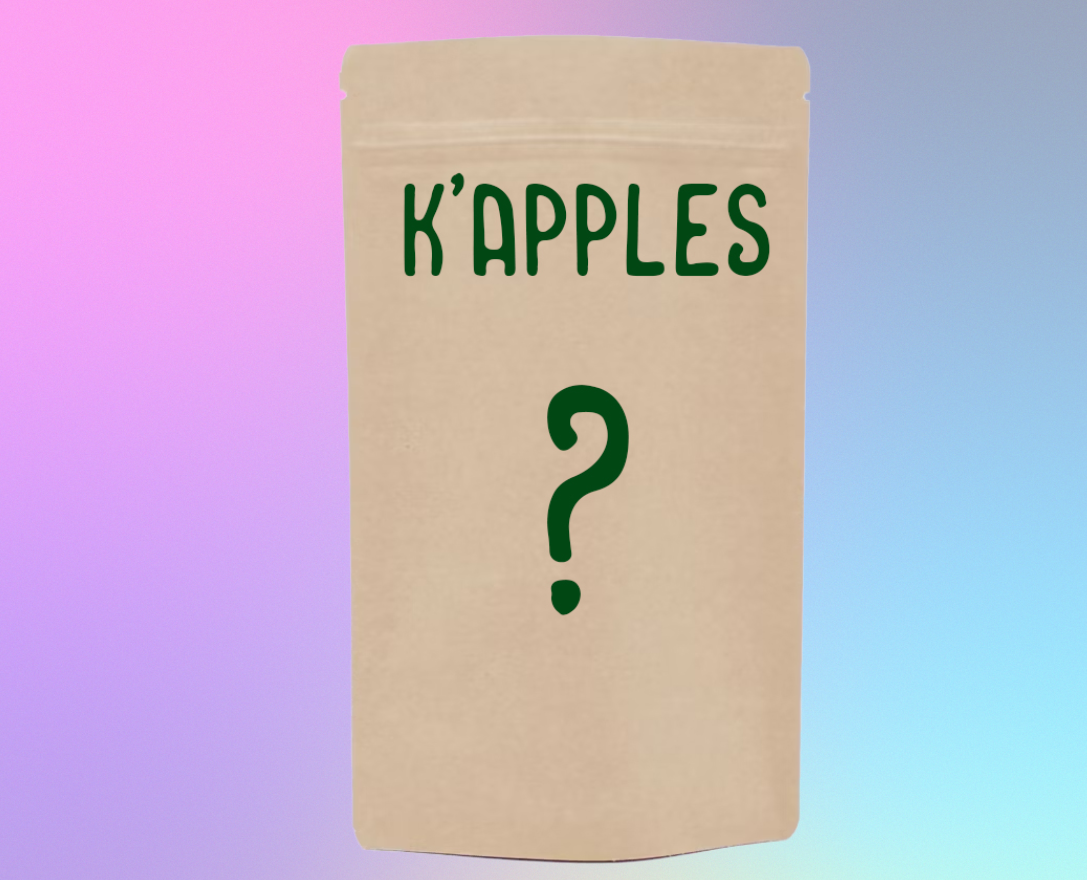
For a portion-focused snack example, Mystery K'Apples brings a new requested flavour each month in unprinted packaging, with size options of 65 g, 100 g, and 200 g. Its different sizes make it a useful reminder to consider the portion when estimating available carbohydrate; the listed price is $5.
For routine meals, build a balanced plate rather than calculating every ingredient’s GL. If carbohydrate counting or a specific clinical meal-planning approach is part of your care, use that guidance alongside your own health needs.
To compare available flavors, browse K'Apples flavor options. You can also view a K'Extra apple-snack image as another visual example of a fruit snack.
Frequently Asked Questions
Can a food with a low glycemic load still be high in calories?
Yes. Foods rich in fat, such as oils and many nuts, contain little available carbohydrate and can have a low GL while still providing substantial energy. GL tracks carbohydrate-related glucose effect, not total calories.
Is glycemic load useful for people with diabetes?
It can help explain how carbohydrate amount and portion size relate to a food’s potential glucose effect. People managing diabetes can use it as an educational lens, while following their own clinician’s advice and glucose-monitoring plan.
Can exercise or the time of day affect an individual blood-glucose response?
Yes. Physical activity, sleep, stress, medications, and the timing of a meal can all influence an individual response, so the same food may not produce an identical reading every time.
Does glycemic load apply to foods with very little available carbohydrate?
The formula can be applied, but a food with almost no available carbohydrate will usually have a very small calculated GL. In that case, GL offers little basis for comparing fullness, protein, fat, or overall nutrition.
Will nutrition labels usually list a food’s glycemic load?
Many labels provide carbohydrate information but do not give a GL value. You can estimate it only when you have a relevant GI value and the serving’s available carbohydrate amount.
Can stress change appetite even when a meal has a modest glycemic load?
Yes. Stress can affect appetite and eating patterns independently of a meal’s GL, so hunger or cravings do not always point to a food’s glucose response.
Is it better to eat foods with a low GL or a high GI?
A lower-GL choice is generally more useful if you want to account for both a food’s GI and the amount of available carbohydrate in a serving. GI and GL measure different things, though, so consider portion size and the rest of the meal rather than relying on either value alone.
Conclusion
Why glycemic load matters more than calorie counts for satiety is that GL adds serving-size context to the carbohydrate picture, while calories describe energy. Neither number is a complete measure of fullness: protein, fiber, volume, texture, preparation, and individual responses matter too.
Use calories to understand energy intake and GL when portion-aware carbohydrate context is helpful. For satisfying choices, look at the whole meal and the serving, not one number in isolation.
